
Kingdom of Saxony (1806–1918)
A concise overview of the Kingdom of Saxony: its origins from the Electorate, Napoleonic transformation, role in 19th‑century Germany, culture, economy and the end of the monarchy in 1918.
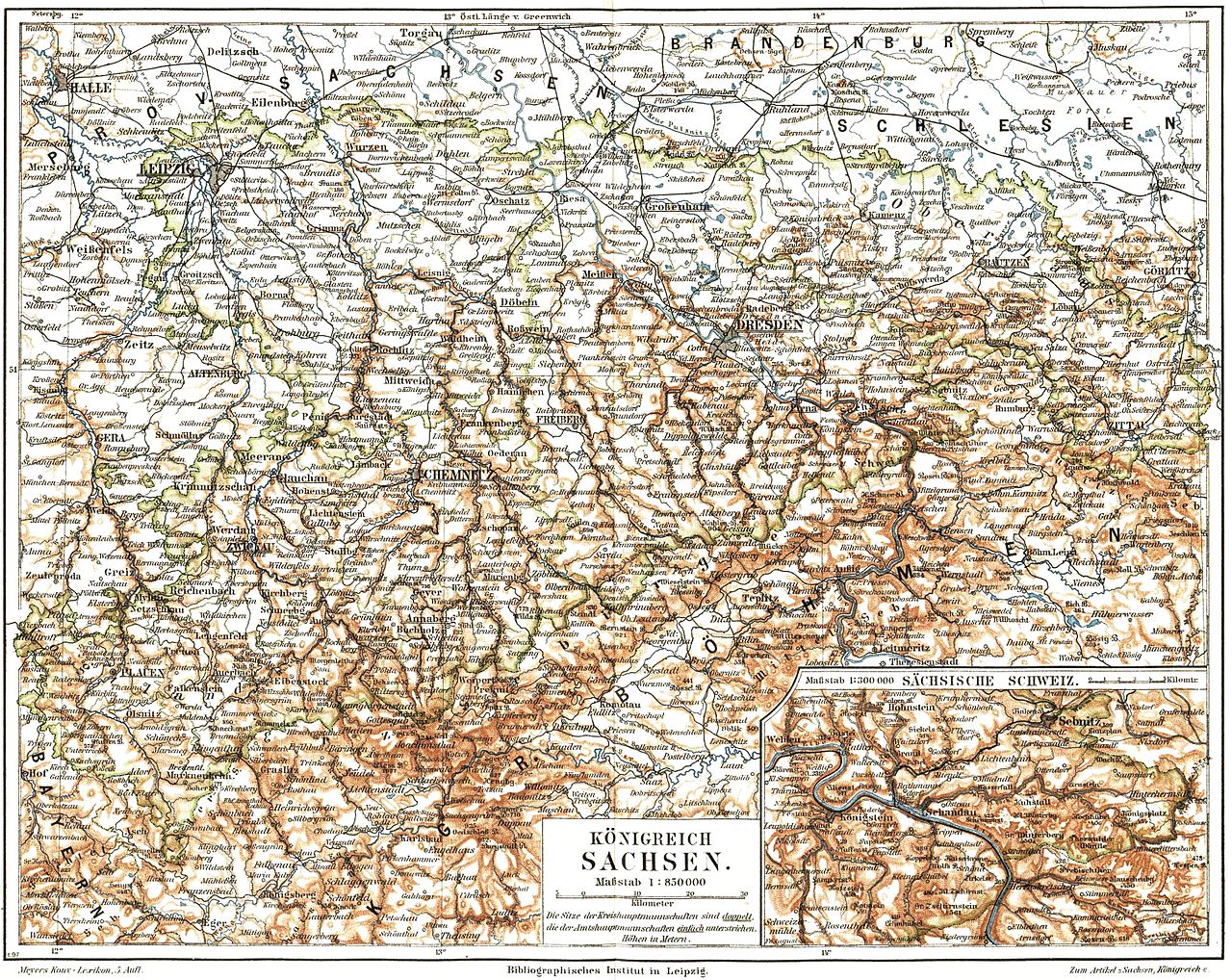
The Kingdom of Saxony (German: Königreich Sachsen) was a sovereign state in central Europe from 1806 until the collapse of the German monarchies in 1918. Located in the region now largely covered by the modern Free State of Saxony, the kingdom had its political and cultural capital at Dresden. Over the course of the 19th century Saxony experienced territorial change, industrial growth, and shifting alliances that tied its fate to wider German and European events, including its membership in the German Empire after 1871 and the social upheavals surrounding World War I which preceded the formation of the Weimar Republic.
Image gallery
8 Images


Origins and Napoleonic era
The kingdom emerged from the Electorate of Saxony, a prominent state within the Holy Roman Empire whose rulers had the rank of prince-elector and participated in imperial elections. In the turmoil following the defeat of Imperial forces by Napoleon Bonaparte, dramatic political reorganization swept central Europe. After the 1805 campaign and the decisive Battle of Austerlitz, the Holy Roman Empire was dissolved and the Electorate of Saxony was elevated to a kingdom in 1806. The new King, formerly the elector, ruled a realm that initially allied with Napoleon and joined the Confederation of the Rhine.
War, territorial losses and recovery
Saxony’s alliance with France proved costly after Napoleon’s fortunes reversed. Defeat in the 1813 campaign, culminating at the Battle of Leipzig, brought foreign occupation and negotiation at the Congress of Vienna. Large tracts were ceded to neighboring powers, including lands associated with Wittenberg, while other major urban centers, notably Leipzig and Dresden, remained within the reduced kingdom. In the post‑Napoleonic settlement Saxony joined the German Confederation, the loose federal structure that replaced the Holy Roman Empire until the drive for German unification later in the century.
Government, society and economy
Throughout its existence the kingdom was ruled by the House of Wettin and retained a monarchical constitution with modernizing tendencies in administration, law and education. Saxony benefited from early industrialization in textile and machine industries, and cities such as Dresden and Leipzig became important centers for manufacturing, trade fairs, publishing and the arts. Railways and improved transport in the 19th century accelerated economic change and urban growth, while rural areas preserved agrarian traditions.
Culture and significance
Saxony’s cultural legacy is notable: Dresden’s art collections, architecture and court patronage contributed to a reputation as a center of music, painting and scholarship, while Leipzig was famous for its book trade, university and musical life. The state played a pronounced role in German intellectual and cultural developments and served as a regional hub linking eastern and western German lands.
End of the monarchy and legacy
In November 1918 popular unrest and Germany’s military collapse triggered the abdication of Saxony’s monarch and the end of the kingdom. The territory was reorganized within the republican structures that followed and is largely represented today by the Free State of Saxony (sometimes referenced as the Freistaat Sachsen). The Kingdom of Saxony remains important to historians as an example of a mid‑sized German monarchy whose choices during the Napoleonic period, industrial transition and national unification shaped its modern identity.
- Principal cities: Dresden, Leipzig, and historically significant towns such as Wittenberg.
- Political evolution: Electorate in the Holy Roman Empire → Kingdom (1806) → member of the Confederation of the Rhine → participant in the German Confederation and later the German Empire.
- Key figures and events tied to its status include the elevation under the last elector who became king, alliances with Napoleon, the defeats culminating at Leipzig, and the 1918 abdication during the aftermath of World War I.
Questions and answers
Q: What was the name of the kingdom that existed from 1806 to 1918?
A: The Kingdom of Saxony.
Q: What did Saxony become part of after World War I?
A: After World War I, Saxony became part of the Weimar Republic.
Q: What was the capital city of Saxony?
A: The capital city of Saxony was Dresden.
Q: Before 1806, what type of state was Saxony in the Holy Roman Empire?
A: Before 1806, Saxony was an Electorate in the Holy Roman Empire.
Q: Who became King when Emperor Francis II was defeated by Napoleon at Austerlitz and the empire dissolved?
A: When Emperor Francis II was defeated by Napoleon at Austerlitz and the empire dissolved, Frederick Augustus I became King.
Q: What organization replaced the Holy Roman Empire after it broke up in 1813?
A: After it broke up in 1813, The German Confederation replaced the Holy Roman Empire as a new organization for German states.
Q: How much territory did Prussia take from Saxony after they were put under Russian occupation following their defeat at Jena?
A: Following their defeat at Jena, Prussia took 40% of territory from Saxony including Wittenberg which is significant for being home to Protestant Reformation.
Related articles
Author
AlegsaOnline.com Kingdom of Saxony (1806–1918) Leandro Alegsa
URL: https://en.alegsaonline.com/art/53609