
Kingdom (biology): taxonomic rank and major groups of life
A biological kingdom is a high-level taxonomic rank used to group organisms by fundamental traits. This article explains its meaning, history, common systems, and notable distinctions.
Overview
In biological classification, a kingdom is one of the highest ranks used to organize and name living things. It sits below the domain level in modern systems and above phylum. Kingdoms group large assemblies of organisms that share basic structural, cellular, and ecological features. The term appears in discussions of biological classification and formal taxonomy, and it applies to all known organisms.
Image gallery
3 Images
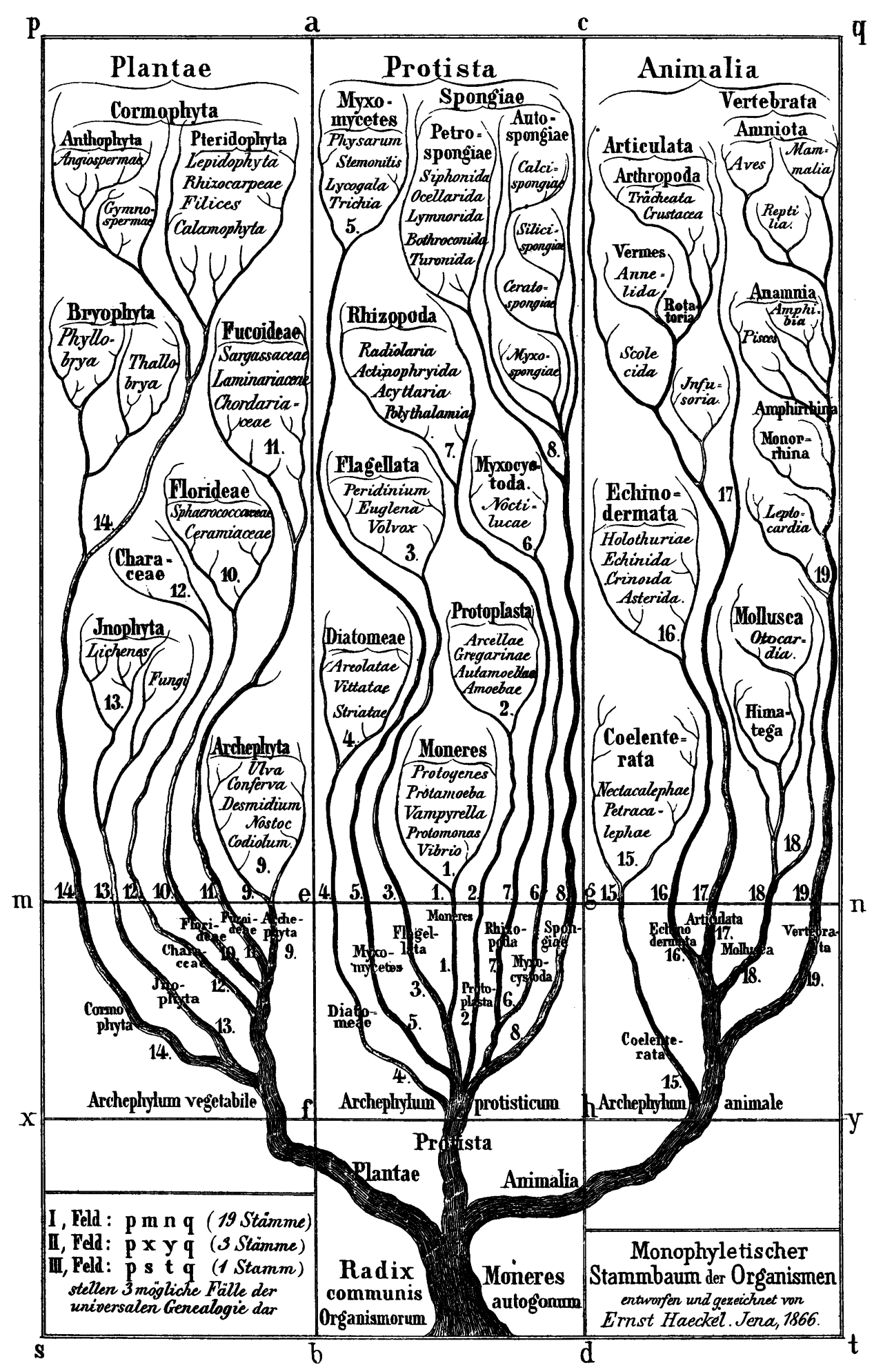

Characteristics that define kingdoms
Taxonomists use several criteria to distinguish kingdoms: cell type (prokaryotic vs. eukaryotic), cellular organization (unicellular vs. multicellular), modes of nutrition (autotrophy, heterotrophy, saprotrophy), reproduction, and evolutionary relationships inferred from genetics. These criteria are guidelines rather than rigid rules, so boundary cases and intermediate forms exist.
Historical development
Classification has evolved from early two- and three-kingdom schemes to more detailed frameworks. Carl Linnaeus set foundations for naming organisms in the 18th century, but later proposals reorganized life into several kingdoms. In the 20th century, Robert Whittaker popularized a five-kingdom model (animals, plants, fungi, protists, and prokaryotes). Molecular studies of ribosomal RNA led to recognition of two distinct prokaryote lineages and the introduction of a three-domain view, which affected how kingdoms are drawn.
Common systems and examples
Different textbooks and researchers use five to seven kingdoms depending on whether they split prokaryotes into separate groups. A typical modern listing distinguishes:
- Bacteria — diverse single-celled prokaryotes;
- Archaea — prokaryotes with distinct biochemistry and genetics;
- Protista or several separate protist groups — mostly unicellular eukaryotes;
- Fungi — mainly multicellular saprotrophs and symbionts;
- Plantae — multicellular, primarily photosynthetic organisms;
- Animalia — multicellular heterotrophs with specialized tissues.
Kingdoms are further subdivided into phyla, classes, orders and lower ranks. Some organisms, such as lichen, represent close associations of organisms from different kingdoms.
Importance, uses, and notable issues
Kingdom-level classification provides a practical way to teach and communicate broad differences among life forms, guide research, and organize biodiversity data. However, advances in molecular phylogenetics continue to reshape higher-level groupings. Debates persist about how many kingdoms to recognize and where to place certain lineages, so modern treatments emphasize evolutionary relationships rather than fixed lists.
Distinctions and practical notes
Remember that "kingdom" is a human-made category reflecting current knowledge; it can change as new data appear. For applied fields—ecology, conservation, education—kingdoms remain useful for summarizing diversity, but specialists often rely on finer phylogenetic groupings when precision is required.
Questions and answers
Q: What is the highest rank in the biological taxonomy of all organisms?
A: The highest rank in the biological taxonomy of all organisms is the kingdom.
Q: What is each kingdom split into?
A: Each kingdom is split into phyla.
Q: How many kingdoms are there in taxonomy?
A: There are 5 to 7 kingdoms in taxonomy.
Q: Does every living thing come under one of the kingdoms?
A: Yes, every living thing comes under one of these kingdoms.
Q: Do some symbionts come under two kingdoms?
A: Yes, some symbionts such as lichen come under two kingdoms.
Q: Is the number of kingdoms in taxonomy certain?
A: No, the number of kingdoms in taxonomy is uncertain.
Q: What is the minimum number of kingdoms in taxonomy?
A: The minimum number of kingdoms in taxonomy is not specified.
Related articles
Author
AlegsaOnline.com Kingdom (biology): taxonomic rank and major groups of life Leandro Alegsa
URL: https://en.alegsaonline.com/art/53580
Sources
- doi.org : 10.1086/394568
- doi.org : 10.5962/bhl.title.4474
- ui.adsabs.harvard.edu : 1969Sci...163..150W
- doi.org : 10.1126/science.163.3863.150
- pubmed.ncbi.nlm.nih.gov : 5762760
- doi.org : 10.1007/BF01796092
- pubmed.ncbi.nlm.nih.gov : 408502
- ncbi.nlm.nih.gov : "Phylogenetic structure of the prokaryotic domain: the primary kingdoms"
- ui.adsabs.harvard.edu : 1977PNAS...74.5088W
- doi.org : 10.1073/pnas.74.11.5088
- pubmed.ncbi.nlm.nih.gov : 270744
- pnas.org : "Towards a natural system of organisms: proposal for the domains Archaea, Bacteria, and Eucarya"
- ui.adsabs.harvard.edu : 1990PNAS...87.4576W
- doi.org : 10.1073/pnas.87.12.4576