
Killing of Peter Fechter
The 1962 shooting and slow death of 18-year-old Peter Fechter at the Berlin Wall became an enduring Cold War symbol and prompted later legal and memorial responses after German reunification.
Overview
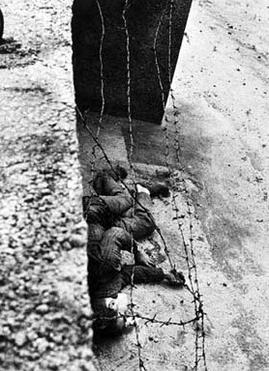
On 17 August 1962 Peter Fechter, an 18-year-old bricklayer from East Berlin, attempted to cross the Berlin Wall into West Berlin. Fechter and a companion climbed the outer barriers near Checkpoint Charlie in an effort to reach his sister in the West. His companion succeeded in getting over the fortifications, but Fechter was shot as he descended into the open, fenced area between the inner and outer barriers often called the "death strip." Wounded and unable to move, he lay exposed and called for help for a prolonged period while crowds gathered on both sides.
Image gallery
6 Images



What happened at the scene
Contemporary witnesses reported that Fechter was struck by gunfire and that blood loss and a pierced lung left him immobile. People on the western side shouted for help and some threw medical kits toward him, but those who might have intervened did not enter the strip to recover him. The nearby on-duty United States checkpoint personnel did not cross the border area to evacuate him, and East German border guards did not provide immediate medical aid. Fechter died after roughly an hour. Photographs and reporting from the incident captured many of these details and helped the event gain international attention.
Legal aftermath
After German reunification, prosecutors examined shootings at the border. In the case of Peter Fechter, two former East German border guards were tried and convicted of manslaughter and given suspended prison sentences of 20 and 21 months respectively. Court records established that Fechter’s fatal injuries were caused by gunshot wounds, although it could not be determined which of several shooters had fired the fatal bullet; one of the alleged shooters had already died earlier. The court concluded the shots, rather than solely lack of medical aid, caused Fechter’s death. These outcomes illuminated the difficulties of assigning criminal responsibility for actions taken under the former state apparatus of the GDR (trial information).
Public reaction and symbolism
Fechter’s slow death, seen and reported by many, became a potent symbol of the human cost of the Cold War division of Germany. International media coverage and images of the incident intensified criticism of the border regime and contributed to public debate about the morality and legality of the Wall. Fechter’s case was often cited by activists, journalists and politicians as emblematic of the suffering of those who tried to escape the GDR.
Commemoration and legacy
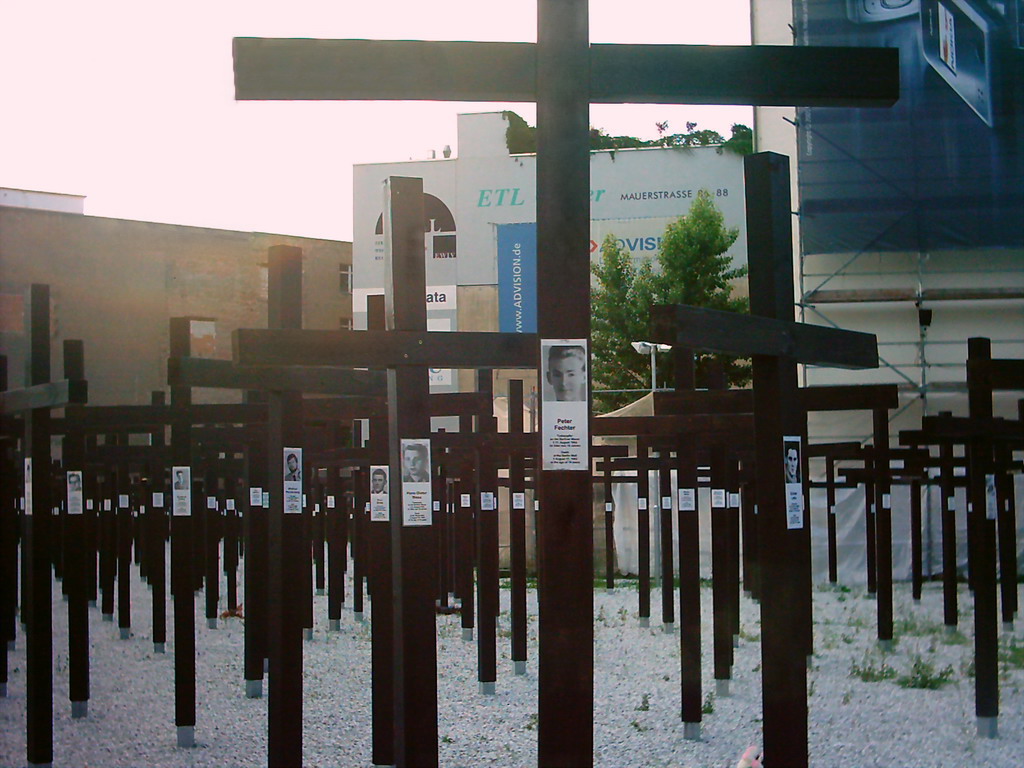
In the decades since 1962 Fechter has been commemorated in memorials and historical accounts that document victims of the border. Plaques and local memorials at or near the place where he died, as well as lists and exhibitions about people killed at the border, keep his name in public memory. Biographical summaries and scholarly studies continue to discuss his death when examining border policy, human rights, and the responsibilities of states and officials in contexts of restricted movement (biographical summaries).
Context
The killing of Peter Fechter must be understood within the broader context of the Berlin Wall and the GDR’s measures to prevent emigration. The Wall, erected in 1961, included multiple barriers, watchtowers and a cleared area monitored to detect and stop escape attempts. Rules of engagement for border personnel and the presence of armed guards made successful rescues or interventions perilous. Fechter’s death remains a focal point for historians and legal scholars studying border violence, state accountability and the human consequences of the Cold War division.
Further reading
Readers seeking primary documents, trial summaries and consolidated accounts can consult historical collections, legal studies and museum exhibitions that treat the Berlin Wall and its victims. Contemporary press reports, later archival releases and public memorial projects provide additional detail on the incident and its aftermath (related documents).
For specific information on the legal proceedings and scholarly evaluation of responsibility in Fechter’s case, see available case summaries and analyses compiled after reunification (trial information).
Questions and answers
Q: Who was Peter Fechter?
A: Peter Fechter was a bricklayer who became one of the best-known victims of the Berlin Wall.
Q: What did Peter Fechter try to do when he was 18 years old?
A: When he was 18 years old, Peter Fechter tried to cross the Berlin Wall near Checkpoint Charlie to live with his sister in the West.
Q: Did Fechter's friend Helmut Kulbeik manage to cross the wall with him?
A: No, only Helmut Kulbeik was successful in crossing the wall; Peter Fechter was hit by gunshots and fell back down to the Death Strip.
Q: Did anyone help Fechter after he fell back down from the wall?
A: Crowds gathered on both sides of the wall, but police dispersed the crowds on the east side, and the DDR border guards did not do anything. Police on the west side threw medical kits to him but did not do more.
Q: Did anyone take responsibility for the death of Peter Fechter?
A: After reunification, two border police were found guilty of manslaughter, convicted and given suspended prison terms of 20 and 21 months respectively. They admitted to firing shots at Fechter but did not want to kill him.
Q: Why did Fechter bleed to death?
A: Fechter bled to death after about an hour due to gunshot wounds from the border police.
Q: What did the court rule about Fechter's death?
A: The court ruled that Fechter was killed by the gunshots and not by the absence of aid. However, the evidence could not show who among the three gunmen was responsible for the bullet that killed him.
Related articles
Author
AlegsaOnline.com Killing of Peter Fechter Leandro Alegsa
URL: https://en.alegsaonline.com/art/53407