
Kilkhampton: village and parish in northeast Cornwall
Kilkhampton is a rural village and civil parish in northeast Cornwall, England, notable for its proximity to Bude, remains of Penstowe Castle, and the former Stowe mansion site linked to the Granville family.
Overview
Kilkhampton is a village and civil parish located in northeast Cornwall, in the United Kingdom. It lies on the A39 trunk road about four miles north-northeast of Bude, placing it close to the north Cornwall coast. The parish combines a compact village centre with surrounding farmland and smaller hamlets. In the 2001 census the parish population was recorded as 1,193; more recent figures vary with occasional boundary and reporting changes.
Image gallery
4 Images


Geography and character
The landscape around Kilkhampton is typical of north Cornwall: rolling fields, hedgerows and small woodlands leading down towards coastal cliffs and beaches a short drive away. The village itself contains traditional stone and slate buildings interspersed with later dwellings. Agriculture, small-scale local services and visitor-related trade connected to nearby seaside resorts contribute to the local economy.
History and heritage
Settlement in the area dates back many centuries. One of the most visible reminders of Kilkhampton’s medieval past is the remains of Penstowe Castle, a late Norman fortification located about 500 metres west of the village. Later developments in the post-medieval period included grand domestic building projects in the parish; the site known as Stowe once held a substantial mansion constructed in the 17th century for John Granville, 1st Earl of Bath. That house was demolished in the 18th century and some of its stone was repurposed elsewhere in the locality.
Notable sites
- Penstowe Castle: earthworks and masonry remains of a late Norman fortification near the village.
- Stowe site: location of the former Granville mansion and associated former estate grounds.
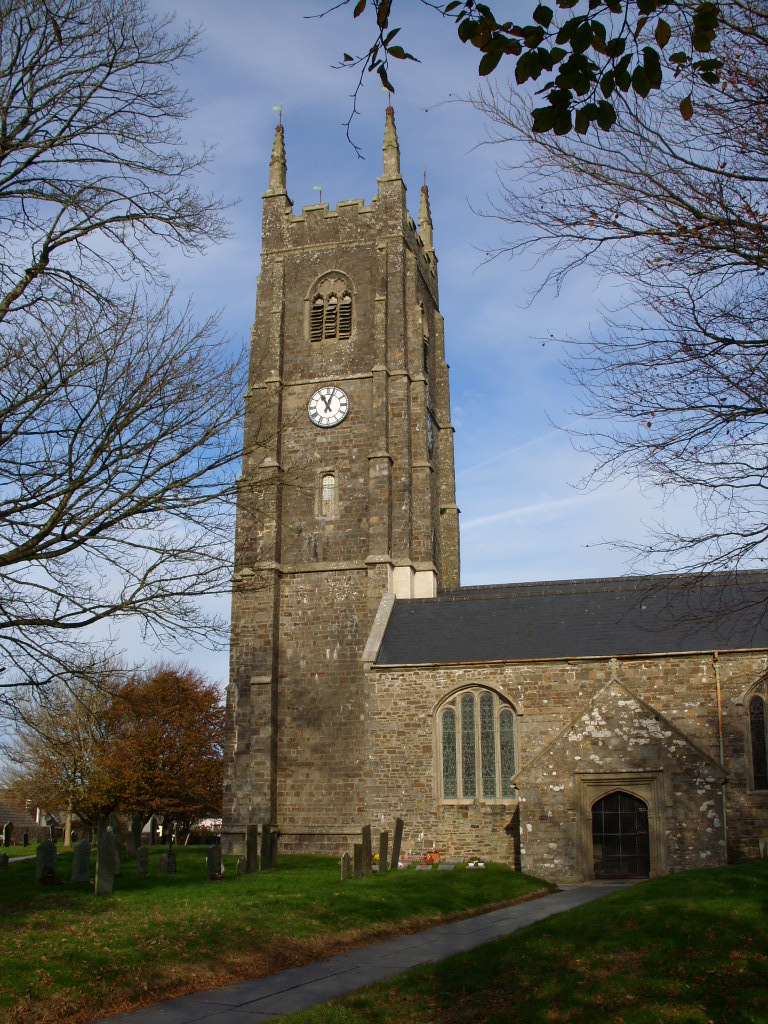
- Parish church and village buildings: examples of local ecclesiastical and vernacular architecture.
Community and connections
Kilkhampton functions as a rural service centre for surrounding farms and hamlets. Local life typically centres on village amenities, community events and outdoor pursuits that take advantage of the coastal and countryside setting. The A39 provides straightforward road links to nearby towns, while visitors commonly combine a stay in Kilkhampton with trips to the beaches and walking routes of north Cornwall.
Significance
Although modest in size, Kilkhampton preserves layers of Cornish rural history from Norman times through the later country-house era. Its combination of archaeological interest, historic building sites and proximity to popular coastal destinations makes it of interest to both residents and visitors seeking a quieter base in north Cornwall.
Questions and answers
Q: Where is Kilkhampton?
A: Kilkhampton is located in northeast Cornwall, United Kingdom.
Q: How far is Kilkhampton from Bude?
A: Kilkhampton is about four miles (6 km) north-northeast of Bude.
Q: What is the population of the parish according to the 2001 census?
A: The population of the parish was 1,193 in the 2001 census.
Q: What is Penstowe Castle?
A: Penstowe Castle is the remains of a late Norman period castle that is located 500 metres west of the Kilkhampton village.
Q: Who built the grand mansion at Stowe?
A: The grand mansion at Stowe was built by John Granville, 1st Earl of Bath in 1680.
Q: When was the grand mansion at Stowe demolished?
A: The grand mansion at Stowe was demolished in 1739.
Q: Where was some of the stonework from the grand mansion at Stowe reused?
A: Some of the stonework from the grand mansion at Stowe was reused at Penstowe, which is also in the parish.
Related articles
Author
AlegsaOnline.com Kilkhampton: village and parish in northeast Cornwall Leandro Alegsa
URL: https://en.alegsaonline.com/art/53379
Sources
- genuki.org.uk : genuki.org.uk/big/eng/CON/Kilkhampton/