
Khoisan peoples: San and Khoikhoi — origins, languages, genetics, and distribution
Overview of the Khoisan peoples of southern Africa, covering their composition (San and Khoikhoi), languages, history, genetics, distribution, cultural notes, and common misconceptions.
Overview
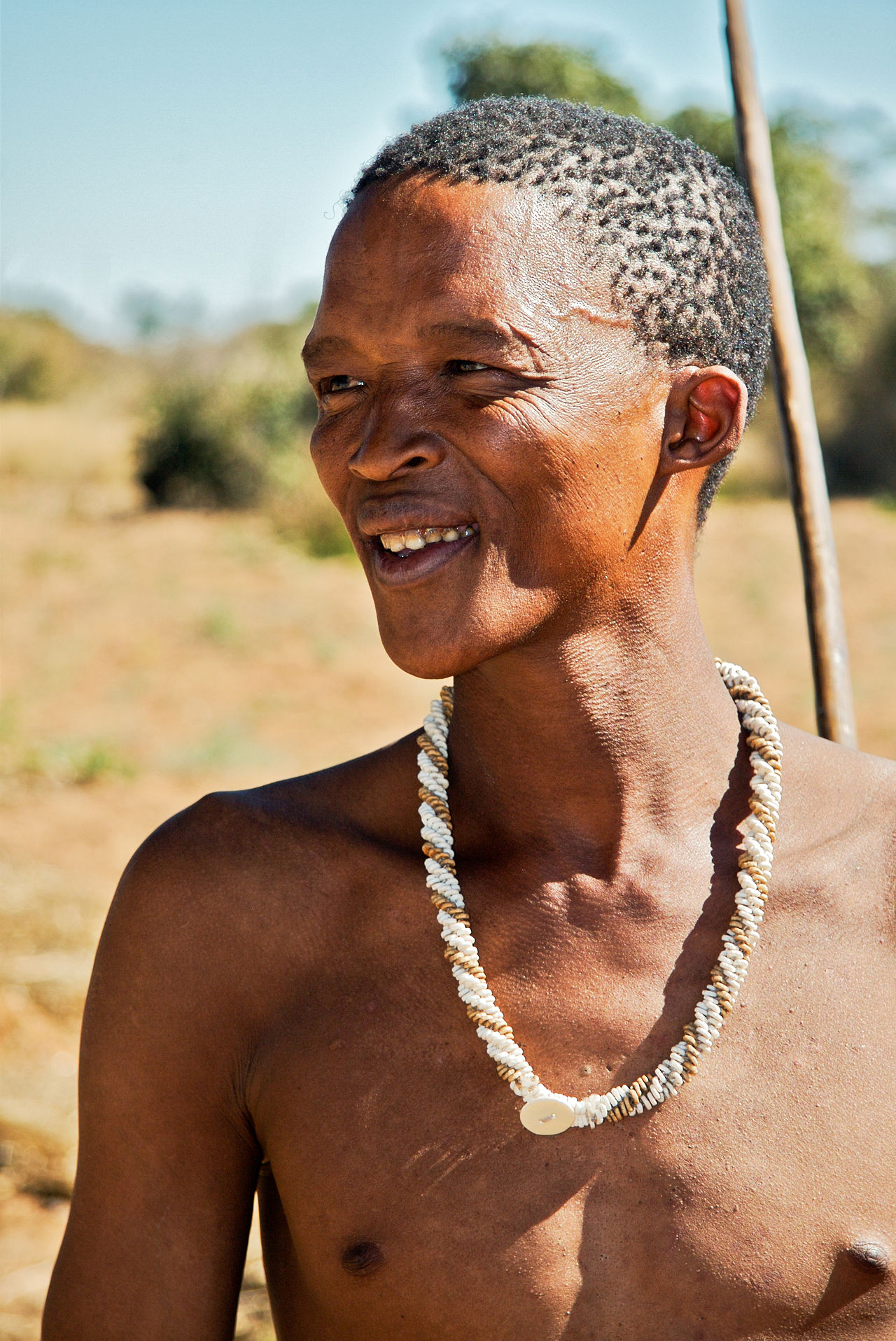
The term "Khoisan" is used by many scholars to refer collectively to two distinct groups indigenous to southern Africa: the foraging San and the pastoral Khoikhoi. Although grouped together on linguistic and some cultural grounds, the San and Khoikhoi represent diverse peoples with different lifestyles, dialects and histories. Modern scholarship uses the label cautiously, because it combines communities that are not a single ethnic or political unit.
Image gallery
10 Images



Distribution and population
Historically the San and Khoikhoi occupied large parts of what are now Namibia, Botswana and South Africa. Today, surviving communities and people of Khoisan descent are found primarily in Botswana, Namibia and South Africa, with smaller numbers in Angola, Zambia and Zimbabwe. The San are commonly described as hunter-gatherers or foraging peoples, while many Khoikhoi adopted pastoralism and cattle herding prior to colonial contact.
Languages and cultural features
Languages classified as Khoisan are notable for their use of click consonants and for extreme structural diversity even among neighboring groups. This diversity is taken by linguists as evidence of long-term settlement and deep, complex interaction in southern Africa. Culturally, San societies are often organized around small, mobile bands with rich oral traditions and detailed ecological knowledge. Khoikhoi groups traditionally practiced pastoralism and maintained different social and economic arrangements from their San neighbors.
History and contact
Archaeological and historical evidence shows that peoples ancestral to today’s San and Khoikhoi were long-term inhabitants of southern Africa. Over the past two millennia the region experienced movements of other groups, including Bantu-speaking agriculturalists, which changed local demographics and land use. European colonization from the 16th century onward introduced additional disruptions—land dispossession, disease and forced labor—that greatly affected Khoisan communities and altered their traditional lifeways.
Genetics and antiquity
Genetic research since the late 20th century has identified deep genetic lineages among San populations. Studies of paternal markers such as the Y chromosome and other genomic data have found patterns of variation and polymorphisms that differ from many other global populations. Some analyses suggest that San lineages diverged early from the ancestors of most other present-day humans, with estimates of common ancestry often discussed in the range of approximately 60,000–90,000 years ago, though such estimates vary with methods and data. Genetic results have contributed to the view that southern Africa was a region of ancient human occupation and diversification.
Notable observations and misconceptions
Accounts from 19th-century scientists and travelers sometimes emphasized perceived physical differences or exoticized certain traits. For example, Charles Darwin discussed features such as steatopygia in his work on sexual selection, writing in The Descent of Man and referring to earlier observations by others such as Darwin and to ideas about sexual selection. Modern anthropology treats such nineteenth-century descriptions critically and places physical variation in the context of adaptations and social interpretation, avoiding simplistic or biased conclusions about worth or hierarchy.
Contemporary significance
Today many Khoisan-descended people work to preserve languages, cultural practices and land rights while engaging with national societies and global institutions. Indigenous organizations and researchers document traditions, teach younger generations, and campaign for recognition. Understanding Khoisan histories is important both for regional history and for broader questions about human diversity, language evolution and ancient demographic processes.
Further notes and resources
- For information about modern genetic methods used in population history, see discussions of DNA test techniques and genomic approaches.
- For historical context on migrations into southern Africa, see summaries of movements from northern and eastern African regions and their consequences.
- On terminology and changing names, scholars note that terms such as "Hottentot" are colonial labels now considered derogatory; "Khoikhoi" and "Khoisan" reflect efforts to use indigenous names.
- For discussions of physical traits mentioned in older literature, see resources on steatopygia and debates over how such traits were evolved in studies of human evolution.
Scholars and community leaders continue to refine the understanding of Khoisan peoples, integrating oral histories, archaeology, linguistics and genetics. For introductory overviews and further reading, consult general references and specialized works that explore the San and Khoikhoi histories, languages and contemporary communities.
Related entries and topic maps are available through general reference resources; for specific local information, consult regional studies and indigenous organizations representing San and Khoikhoi communities. See also additional materials indexed under broader southern African history and genetics topics (foraging, Botswana, Namibia, South Africa, Angola, Zambia, Zimbabwe, north, east, Darwin, sexual selection, Descent of Man, steatopygia, evolved, human evolution, genomic, Y chromosome, polymorphisms, DNA test).
Questions and answers
Q: Who are the Khoisan?
A: The Khoisan is the name for two peoples of Southern Africa: the San and the Khoikhoi. The San are foraging bushmen, and the Khoi are a pastoral people previously known as the Hottentots.
Q: How many San are left in 2018?
A: As of 2018, between 90.000 and 100.000 San are left. Most of them live in Botswana and Namibia, with smaller minorities in South Africa, Angola, Zambia and Zimbabwe.
Q: When did Bantu migrations reach Southern Africa?
A: The southward Bantu migrations from North and East Africa reached the region 700 years ago.
Q: What evidence suggests that the Khoisan were original inhabitants of Southern Africa?
A: The evidence of the Khoisan's original presence in South Africa is the distribution of their languages today. Khoisan language groups often have extreme differences in structure and vocabulary despite close proximity, which demonstrates a long period of settlement and co-evolution of languages in the same region.
Q: What did Charles Darwin write about regarding sexual selection among Khoisan people?
A: Charles Darwin wrote about sexual selection among Khoisan people in his book "The Descent of Man" (1882), commenting that their steatopygia evolved through sexual selection in human evolution, and that "the posterior part of the body projects in a most wonderful manner".
Q: How do genomic studies suggest when different human subgroups separated from one another?
A: Genomic studies use Y chromosome tests to determine when different human subgroups separated from one another because it changes little over time. This shows their last common ancestry.
Q: When was estimated to be when all living humans had a common ancestor?
A: According to genomic studies, all living humans had a common ancestor estimated to have lived 60,000 to 90,000 years ago
Related articles
Author
AlegsaOnline.com Khoisan peoples: San and Khoikhoi — origins, languages, genetics, and distribution Leandro Alegsa
URL: https://en.alegsaonline.com/art/53243
Sources
- sciencemag.org : Science, December 4, 2014
- darwin-online.org.uk : The Descent of Man and Selection in Relation to Sex
- news.sciencemag.org : "Dwindling African tribe may have been most populous group on planet"
- nature.com : "Complete Khoisan and Bantu genomes from southern Africa"
- doi.org : 10.1038/nature08795
- ncbi.nlm.nih.gov : 3890430
- pubmed.ncbi.nlm.nih.gov : 20164927
- news.nationalgeographic.com : "Documentary Redraws Humans' Family Tree"