
Khachkar (Armenian Cross-Stone): History, Design, and Cultural Significance
Khachkar, or Armenian cross-stone, is a carved freestanding memorial slab with a cross and decorative motifs. This article covers its design, history, functions, notable examples and preservation challenges.
Overview
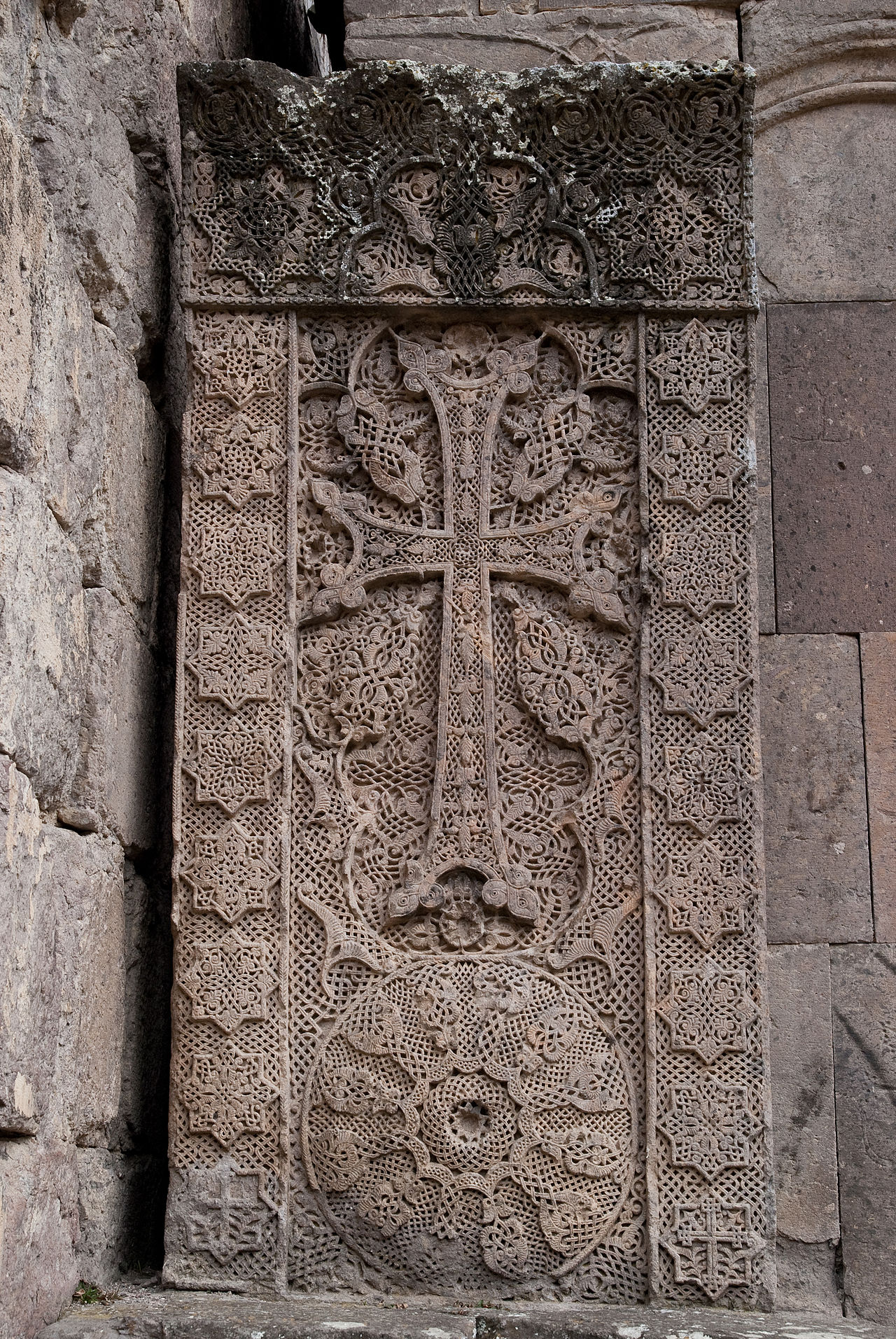
A khachkar (Armenian: Խաչքար) is a form of carved stone monument traditionally created within the cultural area of Armenia. The word literally means "cross-stone" and describes a vertical slab carved in relief with a central cross and a variety of ornamental motifs. Khachkars are freestanding, usually set on a base or pedestal, and function as visible markers of faith, memory and communal identity.
Image gallery
10 Images




Design and typical elements
A characteristic khachkar displays a cross as its dominant element, often placed above or within a rosette or solar disk. Surrounding the cross, carvers commonly add:
- Interlacing knotwork and geometric patterns
- Botanical motifs such as vines, leaves and grape clusters
- Figural elements in some examples (saints, angels or scenes from scripture)
- Inscriptions in the Armenian alphabet recording the commissioner, date or purpose
Most are worked in local volcanic tuff or basalt, using chisels and relief carving techniques. Styles vary with region and period, producing recognizable local schools of ornament.
History and development
Khachkars emerged in the medieval era and became particularly widespread between the 10th and 14th centuries, though examples continued to be produced later. The craft developed within Armenian Christian practice and reflected both liturgical symbolism and local artistic tastes. Workshops of stonecutters produced distinct regional types, and the monuments were commissioned by churches, noble families and communities.
Functions, placement and meanings
Khachkars served several overlapping roles. Many were erected as grave markers in cemeteries, but they also commemorated the construction or consecration of religious buildings, recorded vows or acts of thanksgiving, and were placed to seek spiritual salvation or protection. At times they marked military events or triumphs and could be installed as public memorials. While most survive in churchyards and graveyards, freestanding khachkars also stood by roads, springs and on hilltops.
Notable examples and preservation
Some cemeteries and ensembles contain large concentrations of khachkars and are important for study: the medieval cemetery at Noratus is among the largest surviving groups. Over the centuries many stones have been lost, damaged by weathering, vandalism, moving for construction, or in regions affected by conflict. The removal or destruction of khachkars for reasons such as celebration of a military victory or political change has been documented, and conservation efforts now focus on recording, protecting and stabilizing surviving examples.
Cultural importance and distinctions
Khachkars are a distinctive form of Armenian monumental art, combining religious symbolism and skilled stoneworking. They differ from ordinary gravestones by their elaborate iconography and ritual purpose. Today they remain valued both as works of art and as tangible links to local history, religious life and community memory. Scholars, conservators and local communities continue to study and safeguard these monuments as part of Armenia's cultural heritage.
Further reading and resources: See specialist studies and regional catalogues for detailed typologies and inscriptions; online and institutional resources use photographic records and inventories to document surviving khachkars.
Questions and answers
Q: What is a Khachkar?
A: A Khachkar is a carved memorial stone found in Armenia.
Q: What does Khachkar mean in Armenian?
A: Khachkar means "cross-stone" in Armenian.
Q: What is the design of a typical Khachkar?
A: A typical Khachkar has a crucifix or cross, with a rosette or sun circle below it. Other parts can be filled with patterns of leaves, grapes or knots. Sometimes it has a ledge at the top with saints' or characters from the bible.
Q: Why are Khachkars usually put up?
A: Khachkars are usually put up for religious reasons such as the salvation of the soul of a living or a dead person.
Q: Where are most Khachkars found?
A: Most Khachkars are found in graveyards.
Q: What are some reasons that Khachkars have been removed?
A: Khachkars have been removed for other reasons, such as to show a military win, building of a new church, or as a protection from natural disasters.
Q: Are all Armenian gravestones Khachkars?
A: No, Armenian gravestones take many other forms, and only a small percentage are Khachkars.
Related articles
Author
AlegsaOnline.com Khachkar (Armenian Cross-Stone): History, Design, and Cultural Significance Leandro Alegsa
URL: https://en.alegsaonline.com/art/53155