
Archaean Eon: Earth's early geologic era of first rocks and life
The Archaean eon (about 4.0–2.5 billion years ago) when the earliest known rocks, volcanic and metamorphic terrains, and microbial life emerged under a low-oxygen atmosphere.
Overview
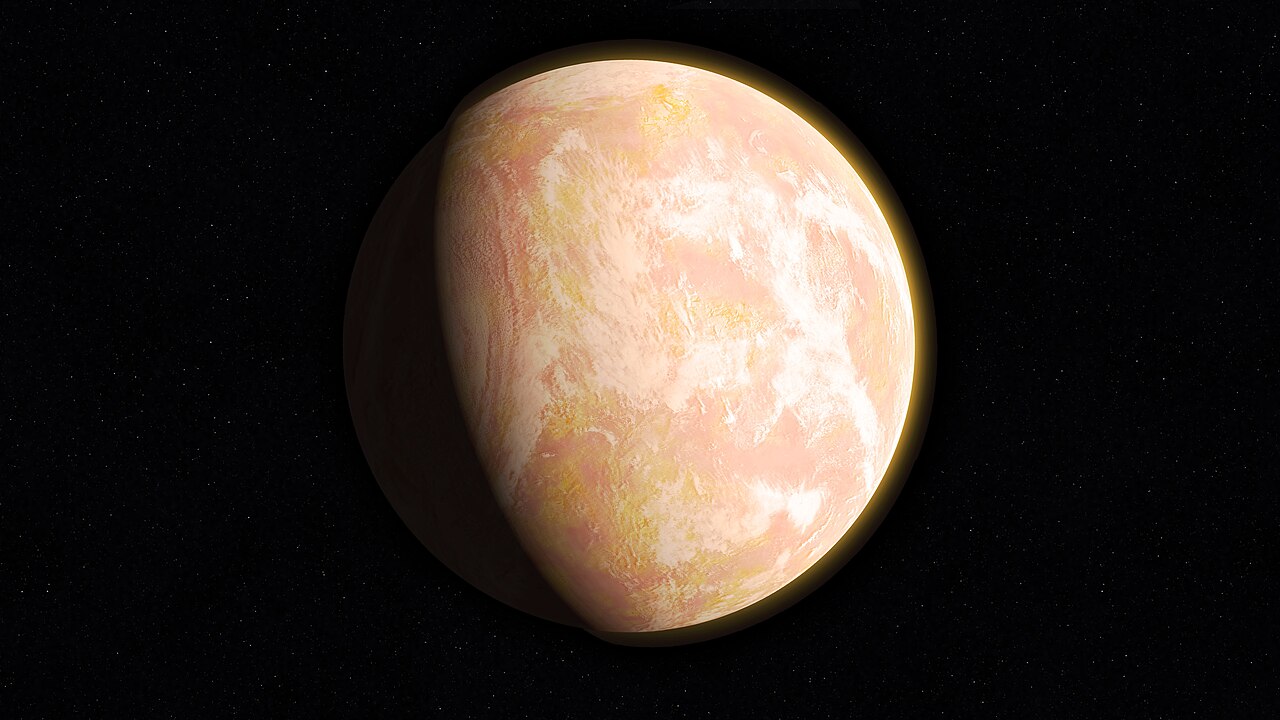
The Archaean (also spelled Archean) is a major eon in Earth history that follows the Hadean and precedes the Proterozoic. Geologists treat it as one of the primary intervals of deep time and place it roughly between 4.0 and 2.5 billion years ago. In broad terms the Archaean records when the solid crust stabilized sufficiently to preserve widespread sedimentary rocks and when life first left durable traces in the rock record.
Image gallery
5 Images

Geology and internal heat
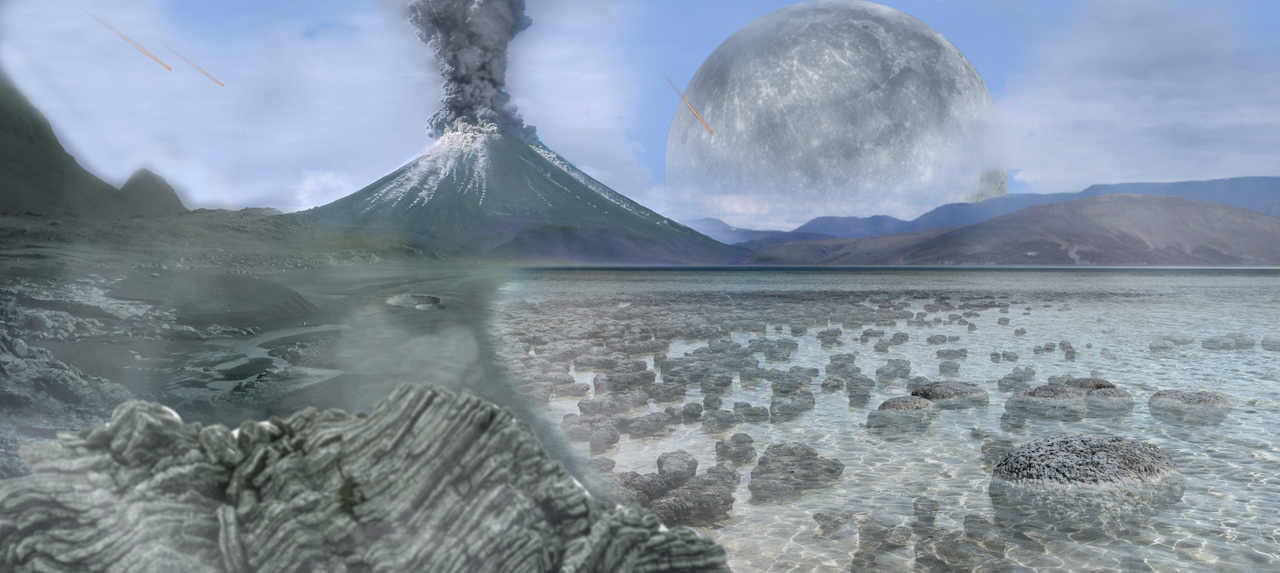
Most surviving Archaean exposures are dominated by volcanic (igneous) and metamorphic rocks, including the distinctive greenstone belts and high-grade gneisses that define many cratons. Earth's internal heat flow during this time was substantially higher than today, a factor that influenced crustal formation, the frequency of volcanism, and the style of tectonics. Whether modern-style plate tectonics operated throughout the Archaean remains an active research question; some regions show evidence for early plate-like activity while others suggest different modes of crustal recycling. The period also saw early continental assembly events, including the proposed supercontinent reconstructions such as Vaalbara, though reconstructions are uncertain and debated.
Early life and biological traces
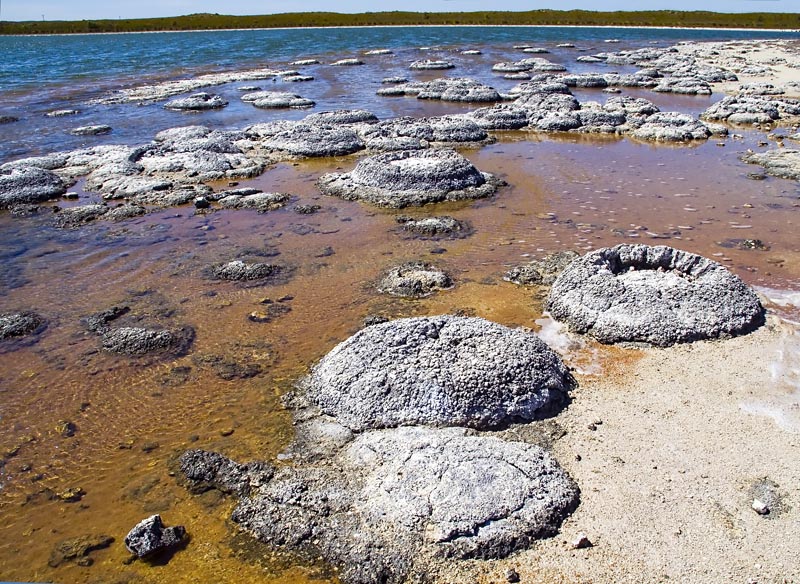
The Archaean contains the oldest widely accepted fossil evidence of life. Microbial communities—principally mat-forming bacteria—built laminated structures called stromatolites that are common in rocks younger than about 3.5 billion years. These mats are attributed to photosynthetic microbes such as cyanobacteria and other simple organic-walled microfossils like acritarchs. The record is largely microbial: there are no unambiguous macroscopic animals or plants in the Archaean, and most biological activity left chemical signatures or micro-scale fossils rather than body fossils.
Atmosphere, oceans and chemistry
Archaean atmospheric composition was markedly different from today. The air and ocean surface waters were largely anoxic: free oxygen was scarce and reactive gases such as methane and carbon dioxide were important components. Early photosynthesis produced oxygen as a by-product (photosynthesis), but that oxygen was initially consumed by dissolved iron and other reduced minerals, producing large deposits such as banded iron formations when iron precipitated from seawater after reacting with oxygen. Iron in solution and subsequent oxidation processes involved the availability of iron ions in the oceans.
Notable fossils and localities
Besides stromatolites, the Archaean rocks preserve a range of sedimentary structures and rare impressions. For example, raindrop impressions and other surface textures appear in some late Archaean units, providing snapshots of surface conditions more than two and a half billion years ago. Important Archaean rock provinces are exposed on all continents and form the cores of many modern continents; they are primary targets for studying early Earth processes and the origin of life.
Importance and remaining questions
The Archaean is critical for understanding when and how Earth's crust, hydrosphere, atmosphere, and biosphere reached states that allowed more complex evolution. Key topics that continue to attract research include the timing and mechanisms of the rise of oxygen, the onset of plate tectonics, the origin of the first ecosystems recorded by bacterial fossils, and the reconstruction of early continental configurations. Interpretations combine field geology, geochemistry, paleobiology and modeling, making the Archaean a central focus for reconstructing our planet's formative eons.
Related topics and resources:
- Archaean eon overview
- Geologic time and methods
- Hadean context
- Proterozoic transition
- Earth's early evolution
- Sedimentary records
- Fossil evidence
- Cyanobacteria and stromatolites
- Acritarchs and microfossils
- Volcanism in the Archaean
- Metamorphism and cratons
- Plate tectonics debate
- Supercontinent concepts
- Vaalbara hypothesis
- Atmospheric oxygen history
- Methane-rich early air
- Carbon dioxide and climate
- Bacterial fossils
- Stromatolite examples
- Origins of photosynthesis
- Iron cycles
- Dissolved ions in ancient oceans
- Ventersdorp raindrop impressions (South Africa)
Questions and answers
Q: What is the Archaean eon?
A: The Archaean eon is the geological period after the Hadean and before the Proterozoic. It lasted from 4,000 million years ago (mya) to 2,500 mya.
Q: What type of rocks are found in the Archaean?
A: Most of the rocks which survive from this time period are volcanic (igneous) and metamorphic in origin.
Q: Was there plate tectonics during this time period?
A: The question of when plate tectonics began is a major research area, but it's possible that due to Earth's high heat flow during this time period, plate tectonics may have been more vigorous than today.
Q: Did oceans exist during this time period?
A: Yes, oceans existed before the start of the Archaean eon.
Q: What was present in Earth's atmosphere at this time?
A: The atmosphere almost entirely lacked free oxygen, and instead it was mostly methane and CO2.
Q: When did fossil life forms first appear on Earth?
A: Fossil life forms first appeared on Earth during the Archaean eon - these were cyanobacteria and acritarchs.
Q: When did oxygen begin to build up in Earth's atmosphere?
A: Oxygen began to build up in Earth's atmosphere much later - not until after 3,500 mya when fossil bacterial mats called stromatolites were formed by cyanobacteria using photosynthesis and giving off oxygen as a by-product.
Related articles
Author
AlegsaOnline.com Archaean Eon: Earth's early geologic era of first rocks and life Leandro Alegsa
URL: https://en.alegsaonline.com/art/5273
Sources
- ncbi.nlm.nih.gov : PMID 20164911
- bbc.co.uk : bbc.co.uk/news/science-environment-20575250