
Arc welding: principles, processes, history, uses, and safety
An overview of arc welding covering how it works, major processes and equipment, historical development, common applications, and safety and quality considerations.
Overview
Arc welding is a group of metal-joining processes that use an electric arc to melt base metal and usually a filler material, producing a fused joint upon cooling. The arc concentrates heat at the joint, melting metal locally so the parts coalesce into a continuous piece. The technique is widely used across industries for its ability to join a broad range of metals and thicknesses.
Image gallery
8 Images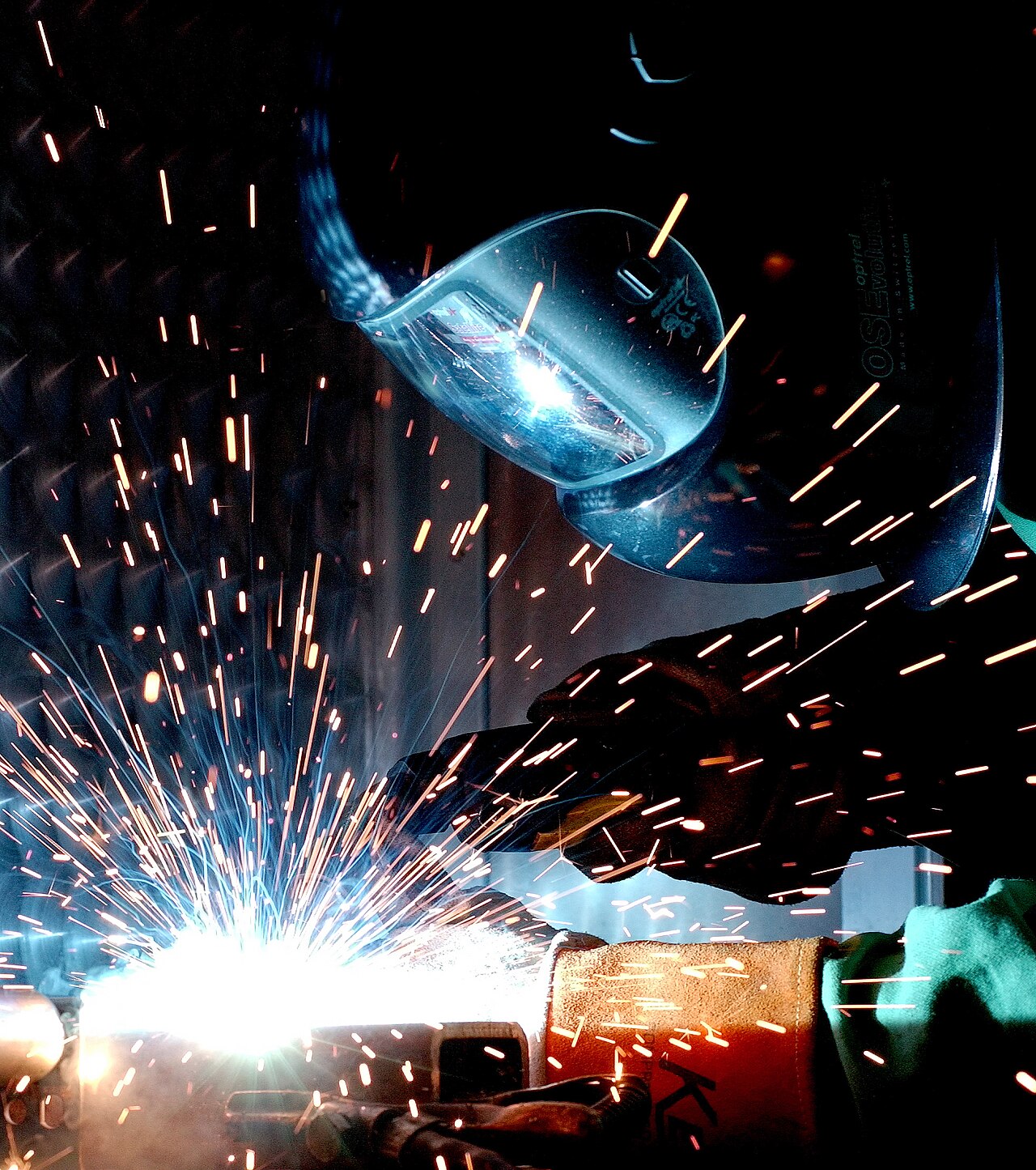



How arc welding works
The essential principle is the same regardless of the specific process: an electrical power source creates and sustains an arc between an electrode and the workpiece. The arc temperature is high enough to melt metal; molten metal from the base and from any filler solidifies as a weld bead. Common elements of an arc-welding setup include:
- Power source (constant current or constant voltage)
- Electrode or welding wire (consumable or non-consumable)
- Work clamp and grounding
- Shielding (inert gas, flux, or flux-cored consumables) to protect the molten pool from contamination
Main processes and equipment
Several commercial arc processes have evolved to suit different materials and production needs. Representative examples are:
- SMAW (shielded metal arc welding or "stick"): a consumable electrode coated with flux; widely used for maintenance and heavy fabrication.
- GMAW/MIG: a continuous consumable wire and a shielding gas; common in manufacturing for productivity and ease of automation.
- GTAW/TIG: a non-consumable tungsten electrode with separate filler metal when needed; prized for high-quality, precise welds on thin materials.
- SAW and flux-cored variations: suited for high-deposition, mechanized welding of thick sections.
Historical context
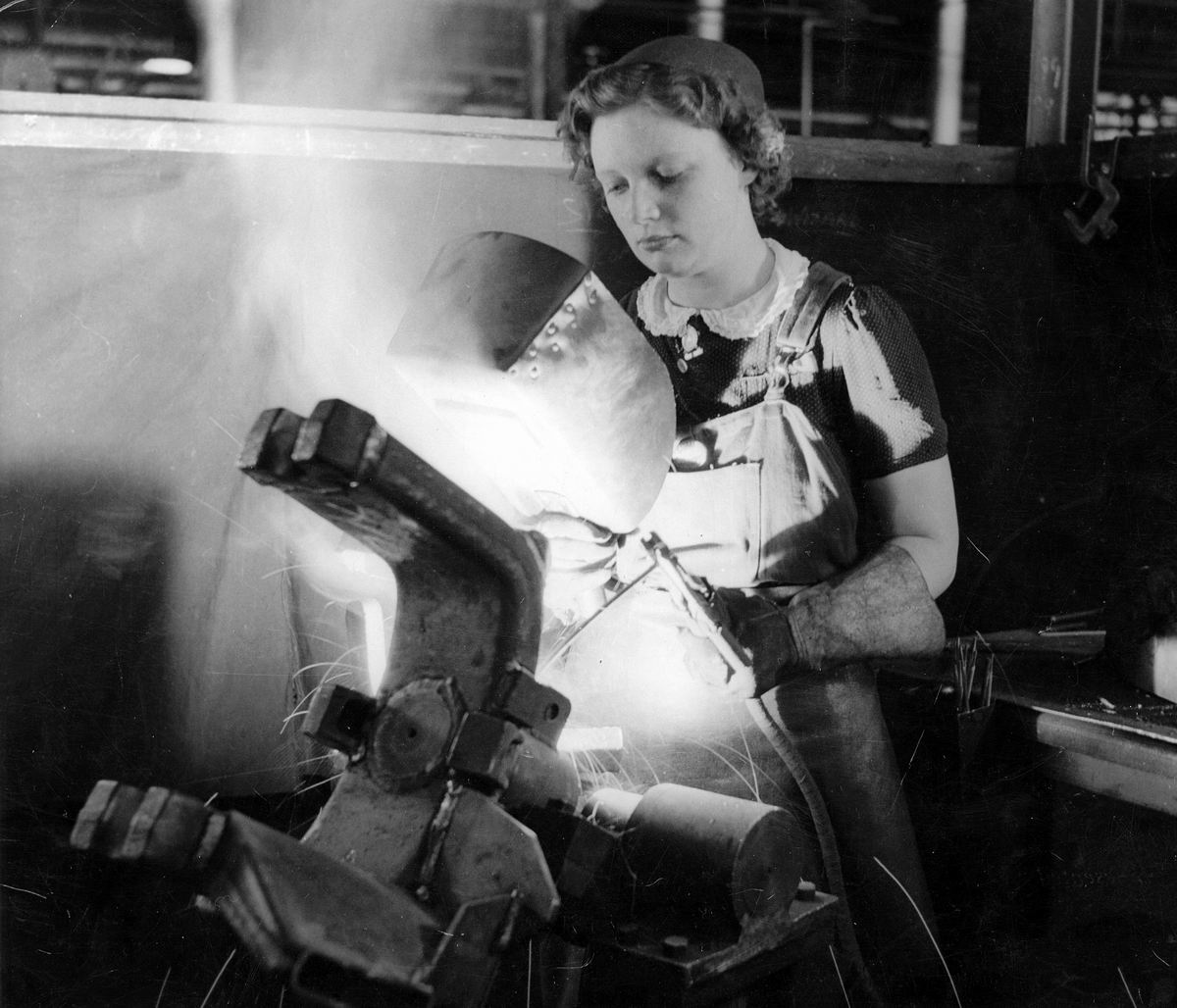
Electric arc welding developed in the late 19th and early 20th centuries as electrical power sources became practical. The method grew rapidly in importance for industrial fabrication in the 20th century; for example, arc welding played a major role in rapid ship construction and structural steelwork during and after the World War II era. For background on industrial adoption see welding history and general discussions of welding practice at technical overviews.
Applications and importance
Arc welding is central to building and repairing infrastructure and products: bridges, buildings, vehicles, pressure vessels, piping, and heavy equipment. Its adaptability to mechanization and automation makes it a backbone of modern fabrication. Designers and engineers must select the appropriate arc process and consumables to achieve required strength, fatigue life, and corrosion resistance; more on structural steel applications is available at steel construction resources.
Quality, safety, and distinctions
Weld quality depends on joint design, heat input, process control, and operator skill. Key considerations include the heat-affected zone (microstructural changes near the weld), distortion from thermal stresses, porosity or inclusions, and proper penetration. Safety precautions are essential because arcs emit intense light and ultraviolet radiation, and welding can produce fumes and hot spatter. Training, appropriate personal protective equipment, ventilation, and inspection regimes are standard practices. For industry standards and further technical guidance see standards and codes.
Questions and answers
Q: What is arc welding?
A: Arc welding is the most effective way of permanently joining metals by melting and fusing them together into one solid unit.
Q: How does arc welding work?
A: Arc welding uses electricity to generate an electrical arc between two metals, generating intense heat that melts the metals and the welding filler, fusing them together.
Q: Why is arc welding effective?
A: Arc welding is effective because it can melt and fuse two metals together, creating a strong bond.
Q: What is the filler material in arc welding?
A: The filler material in arc welding is the material used to fill the gap between the two metals being joined.
Q: What was arc welding commonly used for in WWII?
A: Arc welding was commonly used for ship building in WWII.
Q: What has arc welding become common for?
A: Arc welding has become common for creating steel structures.
Q: Is arc welding a permanent way of joining metals?
A: Yes, arc welding is a permanent way of joining metals by melting and fusing them together into one solid unit.
Tags
Related articles
Author
AlegsaOnline.com Arc welding: principles, processes, history, uses, and safety Leandro Alegsa
URL: https://en.alegsaonline.com/art/5243