
Karlheinz Stockhausen
German composer Karlheinz Stockhausen (1928–2007) was a major post‑World War II avant‑garde figure known for pioneering serialism, electronic and spatial music and for the seven‑opera cycle Licht.
Overview
Karlheinz Stockhausen (1928–2007) was a German composer whose work helped define the experimental musical landscape after World War II. He is widely regarded as one of the most influential and controversial figures in 20th‑century music, notable for exploring new methods of composition, early electronic sound techniques and theatrical concert practice.
Image gallery
10 Images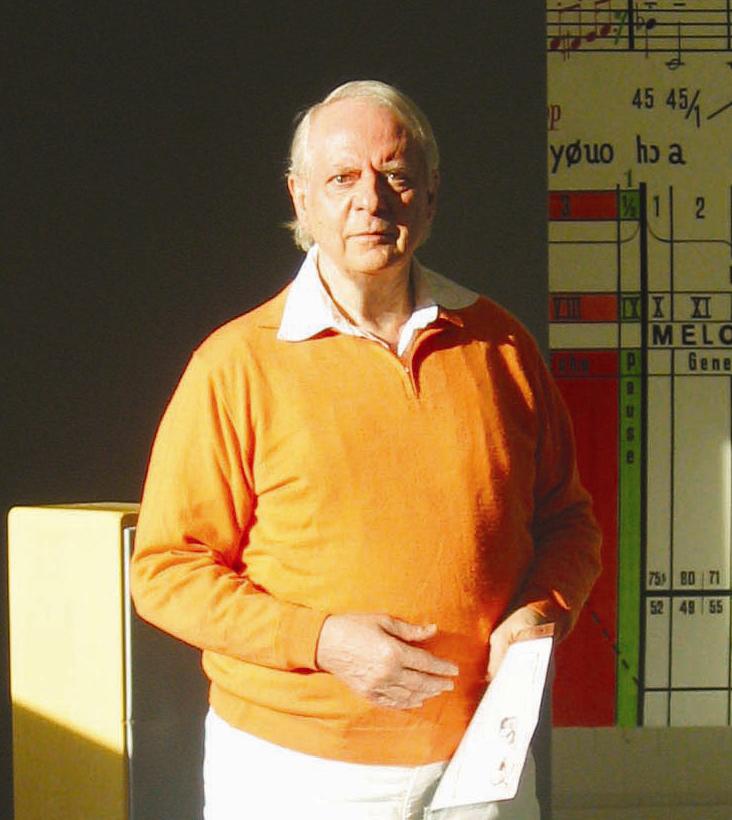


Musical characteristics and techniques
Stockhausen extended serial principles beyond pitch to organize rhythm, dynamics and timbre, and he developed concepts now associated with electronic and spatial music. He experimented with tape, live electronics and synthesized sound to produce pieces in which acoustic and electronic sources are integrated. Two important ideas linked to his work are "moment form," which treats sections as self‑contained units rather than parts of a traditional narrative arc, and the use of spatialization to move sound through performance spaces.
Major works and examples
Among his best‑known compositions are the electronic and mixed‑media pieces Gesang der Jünglinge and Kontakte, the large ensemble work Gruppen, and the vocal exploration Stimmung. His magnum opus is the opera cycle Licht, a sequence of seven operas conceived over decades; each opera corresponds to a day of the week and the cycle combines music, theater and ritualistic elements on a vast scale.
History and development
Stockhausen emerged in the immediate postwar era, when composers sought new languages and techniques. He worked extensively in electronic music studios and collaborated with performers, engineers and other composers. Over a long career he moved from strict serial procedures to more flexible systems, including the "formula" technique used in later works to generate multi‑layered structures from a single melodic‑rhythmic seed.
Impact, reception and notable facts
Reactions to Stockhausen ranged from admiration to bewilderment. He had a strong influence on younger composers, on the development of electronic and electroacoustic music, and on approaches to spatialized performance. His work often engaged spiritual, cosmological and theatrical concerns, which made him a focal point for debates about the role of ideology, personality and spectacle in contemporary art music.
Further reading and resources
Questions and answers
Q: Who was Karlheinz Stockhausen?
A: Karlheinz Stockhausen was a German composer who was an important figure in the years after World War II.
Q: What were some new ideas that composers were exploring during the time of Karlheinz Stockhausen?
A: During Karlheinz Stockhausen's time, composers were exploring many new ideas.
Q: What is serialism and how did Stockhausen use it?
A: Serialism is a technique of composing music where the composer uses a set of musical elements in a specific order. Stockhausen used serialism in new ways.
Q: What did Stockhausen invent?
A: Stockhausen invented many ways of composing electronic music.
Q: How many operas are in Stockhausen's opera cycle Licht?
A: Stockhausen's opera cycle Licht includes seven operas.
Q: What was Stockhausen's contribution to the world of music?
A: Karlheinz Stockhausen was an important German composer who contributed significantly to the world of music.
Q: When did Stockhausen die?
A: Karlheinz Stockhausen died on December 5th, 2007.
Related articles
Author
AlegsaOnline.com Karlheinz Stockhausen Leandro Alegsa
URL: https://en.alegsaonline.com/art/52350