
Karl Duncker: Gestalt psychologist and pioneer of problem‑solving research
Karl Duncker (1903–1940) was a German Gestalt psychologist known for his studies of insight, functional fixedness and the candle problem; his work influenced later research in cognition and problem solving.
Karl Duncker (born 2 February 1903 in Leipzig) was a German psychologist whose short but influential career helped shape modern ideas about problem solving and insight. Trained in the Berlin school of Gestalt psychology, he worked with several leading figures of that movement and developed experimental demonstrations that remain in textbooks and research on cognition.
Image gallery
1 Image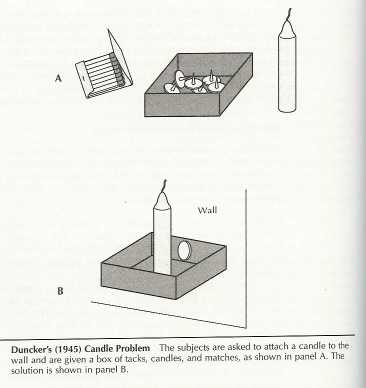
Life and career
Duncker studied and worked in Berlin under the mentorship of key Gestalt figures such as Max Wertheimer, Wolfgang Köhler and Kurt Koffka. Political developments in Germany forced him to leave in 1935; he accepted an assistantship at Cambridge with Frederic Bartlett and later emigrated to the United States, where he was again associated with Köhler at Swarthmore College. Struggling with depression, Duncker died by suicide on 23 February 1940 at the age of 37.
Contributions and central ideas
Duncker is best known for introducing and experimentally exploring the phenomenon usually called functional fixedness — a tendency to see objects only in terms of their customary use, which can block creative problem solving. He devised simple, replicable tasks that reveal how people become stuck when they fail to restructure a problem. One classic demonstration attributed to him and often referenced as the candle problem asks participants to affix a lit candle to a wall using only a box of tacks and matches; solving it requires seeing the box not merely as a container but as a support.
- Insight problems: Duncker emphasized that some solutions arrive suddenly after a reorganization of the problem representation.
- Experimental approach: He favored carefully controlled tasks to reveal cognitive tendencies rather than broad theorizing alone.
- Gestalt influence: His work carried forward the Gestalt emphasis on form, structure and perceptual organization into thinking and reasoning.
Although Duncker's published output was limited by the circumstances of exile and his early death, his ideas became core exemplars in studies of creativity, reasoning, and education. Researchers have used his tasks to test how hints, framing, prior knowledge and mental set affect solution rates in adults and children, and to evaluate interventions that promote flexible thinking.
Today Duncker is remembered not for a large corpus of writings but for simple, memorable experiments and clear concepts that continue to illuminate why otherwise intelligent people sometimes fail to see novel uses, and how insight can overcome impasses. His legacy links Gestalt theory to later cognitive psychology and to practical concerns about problem solving in science, design and everyday life. For further reading on his life and collected ideas, see summaries of his work and historical treatments of Gestalt problem‑solving approaches (overview).
See also: biographies and archival notes about Duncker's mentors and colleagues, including writings that place his experiments in the broader context of 20th‑century psychology (birthplace and early life, Gestalt tradition, Wertheimer, Köhler, Koffka) and discussions of the circumstances that ended his career prematurely (circumstances of death). Additional resources and archival links can be consulted for primary documents and experiment descriptions (profession, further reading).
Questions and answers
Q: Who was Karl Duncker?
A: Karl Duncker was a German psychologist who studied and worked with the founders of Gestalt psychology in Berlin.
Q: Who were the founding psychologists of Gestalt psychology in Berlin?
A: The founding psychologists of Gestalt psychology in Berlin were Max Wertheimer, Wolfgang Köhler, and Kurt Koffka.
Q: When did Karl Duncker leave Germany?
A: Karl Duncker left Germany in 1935 after being exiled by the Nazis.
Q: Where did Karl Duncker work after leaving Germany?
A: After leaving Germany, Karl Duncker worked as an assistant to Frederic Bartlett at Cambridge University and later returned to work with Wolfgang Köhler at Swarthmore College in the USA.
Q: How did Karl Duncker die?
A: Karl Duncker committed suicide in 1940 at the age of 37. He had been suffering from depression and had received professional treatment.
Q: What is Gestalt psychology?
A: Gestalt psychology is a school of psychology that emphasizes the whole of an experience rather than its individual parts.
Q: What was Karl Duncker's contribution to psychology?
A: Karl Duncker was a student and assistant of the founding psychologists of Gestalt psychology and made contributions to the development of this school of psychology. However, his life was cut short and he did not have the opportunity to make greater contributions to the field.
Related articles
Author
AlegsaOnline.com Karl Duncker: Gestalt psychologist and pioneer of problem‑solving research Leandro Alegsa
URL: https://en.alegsaonline.com/art/52318