
Karelia: region, peoples, history and cultural importance
Karelia is a historical region in eastern Fennoscandia divided between Russia and Finland, known for the Karelian people, their Finnic language, links to the Kalevala and its 20th‑century wartime history.
Overview
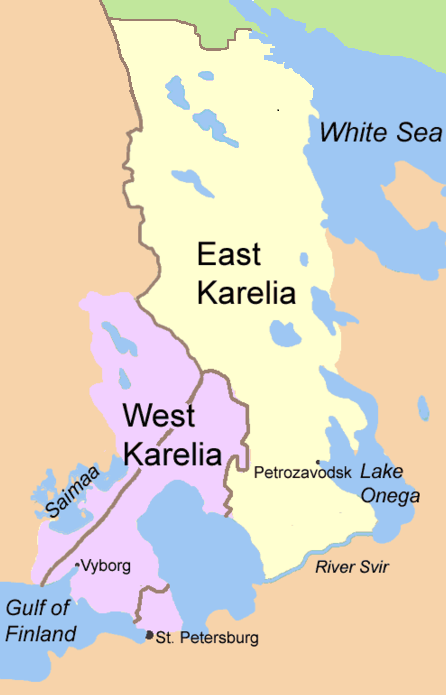
Karelia is a cultural and geographical area in eastern Fennoscandia. Its boundaries have shifted over centuries and different sources define them differently; broadly, Karelia lies to the east of the main Finnish-speaking regions. Today the territory is split between two states: most of it lies within Russia, while smaller parts are in Finland.
Image gallery
7 Images


Geography and administrative divisions
The parts of Karelia on the Russian side include a federal subject known as the Republic of Karelia. On the Finnish side, traditional Karelian lands are principally covered by the regions commonly called North Karelia and South Karelia. The landscape ranges from coastal areas and islands to lakes, forests and taiga, and has historically supported forestry, fishing and small-scale agriculture.
People and language
The original inhabitants are the Karelians, a Finnic people closely related to the Finns. The Karelian language belongs to the Finnic family and shares many features with Finnish; there are several dialects and overlapping identity patterns with other local groups. Karelians preserved a rich oral tradition of songs and epic poetry that contributed many themes and motifs to the national epic of Finland, the Kalevala.
History and twentieth-century changes
Karelia’s political status has changed repeatedly. In the twentieth century the region was directly affected by conflicts between Finland and the Soviet Union. Large parts of Finnish Karelia were fought over in the Winter War and later adjustments connected to the wider Second World War resulted in substantial territory being ceded to the Soviet Union. Those events produced refugee movements and long-term demographic shifts, with many ethnic Finns leaving ceded areas and settlers moving in afterwards.
Culture, traditions and significance
Karelian musical and oral traditions are among the region’s best-known cultural assets. Traditional runic songs, folk tales and rune singing influenced Finnish literature and identity. Crafts, woodwork, and local gastronomy also reflect a mix of northern forest and coastal livelihoods. Cultural preservation efforts continue on both sides of the border to maintain language and customs in the face of assimilation and demographic change.
Contemporary issues and notable facts
- Demographic change: Karelians are a minority in the Russian republic where ethnic Russians form the majority; concerns about language loss and cultural survival are common.
- Cross-border ties: Family, cultural and environmental links persist across the Finland–Russia border despite differing administrations.
- Administrative variety: Today’s Karelia includes modern regions and historical districts, and is referenced in education, tourism and heritage projects.
For additional context on the region’s geography, administration and cultural heritage, see materials associated with Fennoscandia, the states of Finland and Russia, and the regional pages for North Karelia, South Karelia and the Republic of Karelia. Historical accounts often reference the Winter War and post‑war treaties involving the Soviet Union and later developments after the Second World War. Linguistic and folkloric studies connect Karelia to the broader Finnic world and the formation of the Kalevala.
Questions and answers
Q: What is Karelia?
A: Karelia is an area in eastern Fennoscandia to the east of where Finnish people live.
Q: Who originally inhabited Karelia?
A: The original people of Karelia are Karelians.
Q: What language do Karelian people speak?
A: Karelian people speak Karelian, a Finnic language very close to Finnish.
Q: Where can one find Karelia on a map?
A: Karelia is located on the eastern side of Fennoscandia, with most of it belonging to Russia and small parts belonging to Finland.
Q: What is the Republic of Karelia?
A: The Republic of Karelia is a region located on the Russian side of Karelia.
Q: How did the Soviet Union come to possess most of Karelia?
A: After the Winter War and World War II, Finland had to give most of Karelia to the Soviet Union in the interests of making peace.
Q: What is the future for Karelian culture and language?
A: Some people fear that Karelian culture and language will die out, especially since Karelians are a minority in the Republic of Karelia and Russians are the majority.
Related articles
Author
AlegsaOnline.com Karelia: region, peoples, history and cultural importance Leandro Alegsa
URL: https://en.alegsaonline.com/art/52295