
Erbil (Hewlêr) — Capital of the Kurdistan Region of Iraq
Erbil (Kurdish Hewlêr) is the capital of Iraq's Kurdistan Region, one of the world's oldest continuously inhabited cities, known for its ancient citadel, regional government, oil-driven economy and growing cultural life.

Overview
Erbil, known in Kurdish as Hewlêr and in Arabic as Arbil, is the administrative and commercial center of the Kurdistan Region of Iraq. It serves as the seat of the regional government and the capital of Erbil Governorate. The city combines a long urban history centered on a tell or citadel with a rapidly expanding modern metropolis: government institutions, international consulates and a developing service and construction sector have shaped its recent growth.
Image gallery
10 Images



History and significance
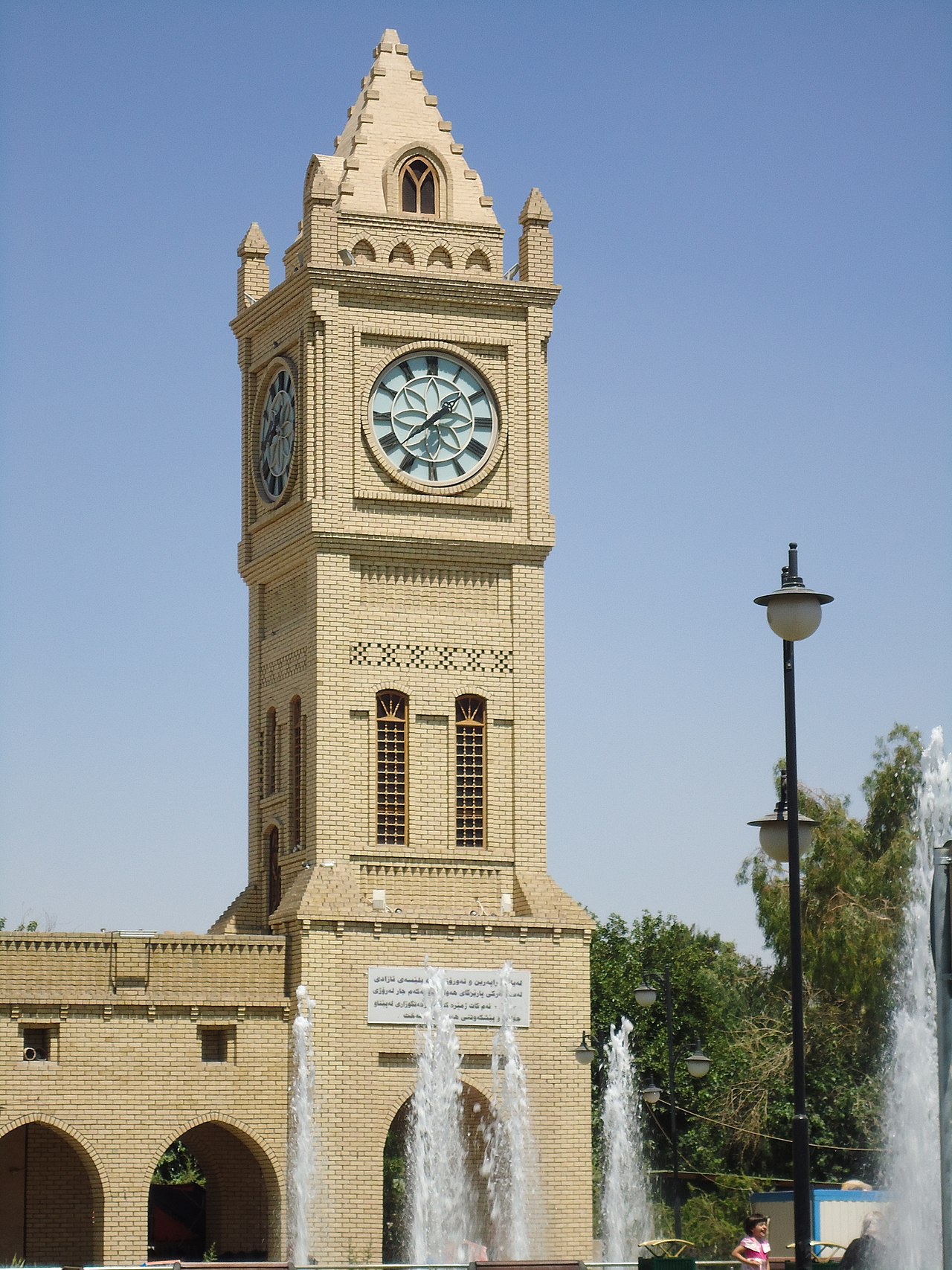
The site of Erbil has been occupied for millennia. Its historic core, the Erbil Citadel, stands atop a natural mound and is widely recognized as one of the oldest continuously inhabited settlements in the world; the citadel received UNESCO World Heritage status in 2014. In antiquity the city was known as Arbela and the surrounding plain witnessed major events such as the battle in which Alexander the Great defeated the Persian Empire. Over centuries Erbil was influenced by Assyrian, Persian, Arab, Ottoman and Kurdish administrations, each leaving architectural and cultural traces.
Urban fabric and notable landmarks
Erbil's historic citadel anchors the old quarter and has undergone extensive conservation and restoration efforts to preserve traditional houses, mosques and public spaces. Around the citadel the city has expanded with broad avenues, new residential neighborhoods, parks and commercial districts. Key places commonly associated with Erbil include:
- The Erbil Citadel (historic mound and archaeological site)
- Modern government and parliamentary buildings of the Kurdistan Region
- Parks, cultural institutions and growing university campuses
- An international airport that connects the region with regional and international destinations
Economy, governance and international presence
Erbil functions as the political and economic hub of the Kurdistan Region. The local economy draws on regional oil production, trade, construction and services. Since the 1990s and particularly after 2003, the city has attracted investment, reconstruction projects and a number of foreign diplomatic and commercial offices. International organizations and NGOs maintain a presence to coordinate aid and development work in northern Iraq.
Population, language and culture
The population of Erbil is diverse, with Kurds constituting the majority alongside Arab, Assyrian, Turkmen and other communities. Kurdish dialects and Arabic are commonly spoken, and the city is an important center of Kurdish cultural life, hosting festivals, markets and contemporary arts initiatives. Local cuisine, crafts and the traditional bazaars reflect the region’s multiethnic heritage.
Distinctive facts and contemporary role
Erbil is distinctive for combining deep historical roots with rapid modernization. The UNESCO listing of the citadel highlights its archaeological and cultural importance, while the city's role as the capital of the Kurdistan Region gives it political prominence within Iraq. Its relative stability in recent decades has made Erbil a regional focal point for diplomacy, commerce and reconstruction efforts.
Visitor considerations
Visitors to Erbil encounter an ancient core and lively urban neighborhoods. Heritage conservation projects invite exploration of the citadel and nearby museums, while contemporary neighborhoods offer restaurants, parks and cultural venues. As in any major city, travelers should stay informed about local rules and advisories and respect cultural norms.


Etymology
Due to its immense age, the city was mentioned early in human history. As early as the third millennium BC, the Sumerians mentioned the city as Urbilum or Urbelum. This term is probably derived from the Hurrian word Arbilum. In the Ur-III period the place was also called Urbilum, until the Old Babylonian period Urbel, the Assyrians called it Arbail (today Aramaic ܐܪܒܝܠ Arbela). Other scholars trace the name to the Akkadian arba'ū ilū (Four Gods).
In ancient Persia the city was called Arbairā. In ancient Greece Arbelles.
The present Kurdish name Hewlêr is probably a further modification of the word Arbel by various phonetic metatheses.
Population
The population of Erbil has grown strongly in recent years. In 2007, according to OCHA, the population of Erbil city was 808,600, the population of Erbil district was 1,115,890, and the population of Erbil governorate was 1,542,421. In 2013, the Joint Analysis Unit United Nations Assistance Mission for Iraq projected a population of 1,530,722 for Erbil governorate. For 2014, the REACH initiative of UNOSAT, ACTED (Agency for Technical Cooperation and Development) and IMPACT assumes a population of 1.4 million for Erbil, still excluding the refugees who reached the city after ISIS captured Mosul.
Recent estimates put the population of the governorate at up to 2 million, but exact and reliable figures do not exist. The Kurds make up the majority; the minorities include Chaldo-Assyrians, Arabs and Turkmen. In addition, due to the emerging housing and house construction, numerous guest workers from Turkish companies live in the city. The city's inhabitants are predominantly Muslim. Over 40,000 Christian Chaldo-Assyrians live mainly in the suburb of Ankawa.
Related articles
Author
AlegsaOnline.com Erbil (Hewlêr) — Capital of the Kurdistan Region of Iraq Leandro Alegsa
URL: https://en.alegsaonline.com/art/5219
Sources
- cabinet.gov.krd : The Kurdistan Region in Brief