
Kansas Legislature
The bicameral lawmaking body of Kansas, composed of a 125-member House and a 40-member Senate, meeting in annual sessions to pass laws, set budgets, and perform oversight since statehood in 1861.
Overview
The Kansas Legislature is the state lawmaking body that represents Kansas residents and enacts statutes for the state. It is a bicameral assembly composed of two separate chambers: the Kansas House of Representatives and the Kansas Senate. For a general reference, see the concept of a state legislature and information about the U.S. state structure under which it operates. The Legislature conducts its work in the state capital, Topeka, and has met in various forms since Kansas achieved statehood in 1861.
Image gallery
2 Images
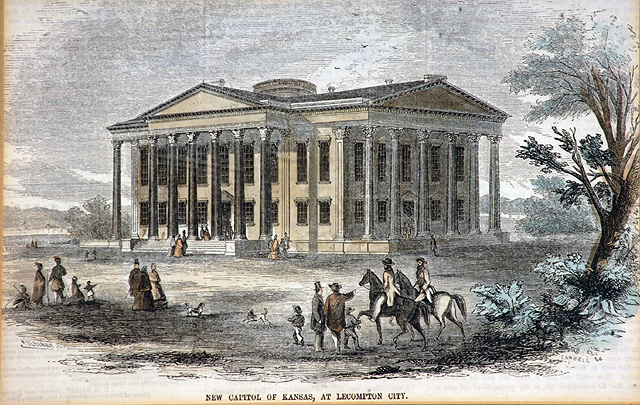
Composition and terms
The lower chamber, the Kansas House of Representatives, consists of 125 members who are elected to two-year terms. The upper chamber, the Kansas Senate, has 40 members who generally serve four-year terms. Both chambers have elected leaders, committee systems, and party caucuses; for more on the legislative chambers see the entries for state houses and state senates. Members originate bills, serve on committees, and vote on legislation presented on the floor.
Functions and process
The Legislature’s primary responsibilities include making state law, establishing and approving the state budget, and exercising oversight of state agencies. Typical legislative procedure involves introduction of bills, committee review and public hearings, amendments, and floor votes in each chamber. If the two chambers pass different versions of a bill, they may form a conference committee to reconcile differences. Passed measures are sent to the governor for signature or veto; the Legislature may attempt to override vetoes according to state rules.
Organization and committees
Work is organized through standing and special committees that focus on areas such as appropriations, education, transportation, and judiciary matters. Committees examine proposed legislation, take testimony, and recommend whether the full chamber should consider a bill. Leadership roles like the Speaker of the House and the Senate President steer the chamber’s calendar and committee assignments, while party leaders coordinate legislative strategy.
Sessions, special sessions, and notable roles
The Kansas Legislature meets in regular annual sessions, and the governor may call special sessions to address urgent matters. Legislators also participate in redistricting discussions, budget negotiations, confirmations of certain appointments, and investigations or oversight activities. The political balance in the chambers can change with elections, affecting priorities and the lawmaking agenda.
History and significance
Since statehood, the Kansas Legislature has shaped the state’s laws, infrastructure priorities, and public policy. Its decisions influence education funding, transportation systems, taxation, and public safety. For readers seeking official information or procedural details, consult authoritative resources on the state of Kansas, bicameral systems, or the specific pages for the legislature and its chambers listed above.
- Members: 125 Representatives, 40 Senators
- Terms: Representatives two years; Senators typically four years
- Meetings: Regular annual sessions; special sessions as needed
The Kansas Legislature remains the central forum for public debate and lawmaking in the state, balancing constituent interests, party priorities, and constitutional constraints in its work.
Questions and answers
Q: What is the Kansas Legislature?
A: The Kansas Legislature is the state legislature of Kansas.
Q: How is the Kansas Legislature structured?
A: The Kansas Legislature is structured into two chambers- the lower Kansas House of Representatives and the upper Kansas Senate.
Q: How many state representatives and senators does the Kansas Legislature have?
A: The Kansas Legislature has 125 state representatives and 40 state senators.
Q: How long are the terms for state representatives and senators in Kansas?
A: State representatives are elected for two-year terms, while senators are elected for four-year terms.
Q: How often does the Kansas Legislature have a session?
A: The Kansas Legislature has a session every year.
Q: Is the Kansas Legislature's structure bicameral?
A: Yes, the Kansas Legislature's structure is bicameral.
Q: What is the role of the lower chamber in the Kansas Legislature?
A: The lower chamber in the Kansas Legislature is the Kansas House of Representatives, which has the role of passing and creating laws.
Related articles
Author
AlegsaOnline.com Kansas Legislature Leandro Alegsa
URL: https://en.alegsaonline.com/art/52173
Sources
- kslegresearch.org : "Kansas Legislative Research Manual Kansas Legislative Procedures,"