
Kansas City, Kansas — overview, history, and civic profile
Overview of Kansas City, Kansas: geography, history, government, economy, culture, transportation, and its role in the bi-state Kansas City metropolitan area.
Overview
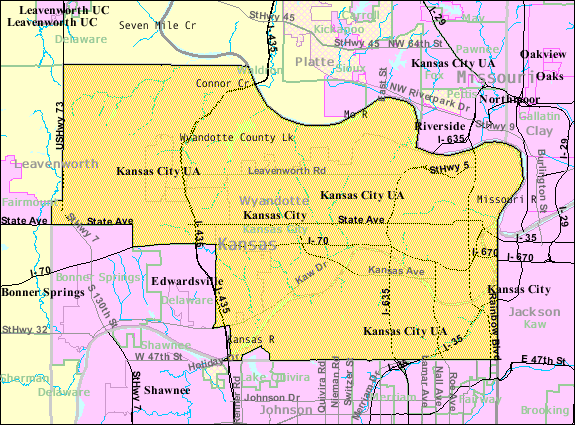
Kansas City, Kansas is the third-largest municipality in the U.S. state linked as the third-largest city in the region. It lies within the U.S. state of Kansas and serves as the county seat of Wyandotte County. The city forms part of a larger metropolitan area and has a close, interdependent relationship with neighboring jurisdictions; it is often described as a suburb of Kansas City, Missouri while remaining an independent municipality and county seat in its own right.
Image gallery
10 Images




Geography and environment
Kansas City, Kansas sits at a notable riverside location often called Kaw Point, the junction where the Missouri and Kansas rivers meet. This confluence influenced early settlement, transportation routes, and industrial development. The municipal footprint includes riverfront districts, residential neighborhoods, commercial corridors and some industrial zones. Parks and riverfront trails preserve recreational access near the water.
History and development
The community around Kaw Point developed in the 19th century as river traffic, trade and later railroads supported settlement and industry. Growth accelerated as the broader Kansas City metropolitan region expanded; manufacturing, wholesale trade, and transportation have long been important economic drivers. Population figures have changed across decades in response to economic cycles and suburban patterns; for example, the 2000 census recorded approximately 146,867 residents in the city proper.
Government and civic structure
Kansas City, Kansas participates in a consolidated city–county government arrangement commonly known as the Unified Government. This hybrid administration coordinates planning, public services and taxation across municipal and county boundaries and includes nearby municipalities such as Bonner Springs and Edwardsville. The Unified Government is intended to improve regional coordination for services, economic development and infrastructure.
Economy, culture and landmarks
The local economy combines light manufacturing, logistics, retail, health services and public-sector employment. Cultural life reflects Midwestern diversity: community festivals, museums, performing arts venues and culinary traditions associated with the larger metro area attract residents and visitors. Landmark sites include riverfront parks and historic districts that recall the city’s industrial and transportation roots.
Transportation and regional role
Road, rail and river connections link Kansas City, Kansas to the rest of the bi-state metropolitan area of roughly two million people. Transit, interstates and freight corridors support commuting and commerce across state lines. The city’s strategic location at the river junction and within an integrated labor market underlines its continuing role in the region’s economy and planning efforts.
Further information
- Official municipal and county resources provide current service and planning information; see city and regional portals for updates (city overview, county resources).
- Regional planning organizations and local historical collections document development and demographic change; consult local archives and libraries for detailed studies (metropolitan resources, neighborhood information).
- Transportation and environmental reports address river management, infrastructure and recreational access near Kaw Point (river studies, Kansas River).
For readers seeking maps, census reports, or tourism material, regional and municipal sites offer authoritative, up-to-date data and guidance on visiting, doing business, or living in Kansas City, Kansas. Additional perspectives on history, economy and governance are available through academic and local historical publications (state resources, suburban context).
Questions and answers
Q: What is the third-largest city in the U.S. state of Kansas?
A: The third-largest city in the U.S. state of Kansas is Kansas City.
Q: What county is Kansas City located in?
A: Kansas City is located in Wyandotte County.
Q: Is Kansas City a suburb of another city?
A: Yes, Kansas City is a suburb of Kansas City, Missouri.
Q: How many people live in the region that includes Kansas City?
A: Approximately two million people live in the region that includes Kansas City.
Q: What type of government does the city belong to?
A: The city belongs to the "Unified Government", which also includes the cities of Bonner Springs and Edwardsville.
Q: What was the population ofKansasCity according tothe 2000 census? A: According tothe 2000 census,the populationofKansasCitywas 146,867.
Q: Where is Kaw Point located?
A: Kaw Point is located at the junction ofthe Missouri andKansas rivers.
Related articles
Author
AlegsaOnline.com Kansas City, Kansas — overview, history, and civic profile Leandro Alegsa
URL: https://en.alegsaonline.com/art/52153
Sources
- geonames.usgs.gov : Geographic Names Information System (GNIS) details for Kansas City, Kansas; United States Geological Survey (USGS); October 13, 1978.
- wycokck.org : "Home - Unified Government"
- census.gov : census.gov
- boston.com : boston.com
- kansascity.com : KC powerless as icy barrage pummels the area, leaves behind disaster zone
- census.gov : "Population and Housing Unit Estimates"
- census.gov : "U.S. Decennial Census"
- census.gov : "Population Estimates"
- quickfacts.census.gov : "Kansas City (city), Kansas"
- census.gov : "Kansas - Race and Hispanic Origin for Selected Cities and Other Places: Earliest Census to 1990"