
Controversy over Jyllands-Posten’s Muhammad cartoons
A summary of the 2005 Jyllands-Posten cartoons controversy: publication, reactions, global protests, debates on free expression and respect for religion, and the episode’s lasting legal and cultural effects.
The Jyllands-Posten Muhammad cartoons controversy refers to a global political and cultural crisis that began in late 2005 after a Danish newspaper published a set of editorial cartoons depicting the Islamic prophet Muhammad. The publication provoked widespread debate about free speech, religious sensitivity, and the responsibilities of the press. Supporters argued the cartoons tested the limits of free expression; critics described them as insulting and inflammatory toward Muslims.
Image gallery
6 Images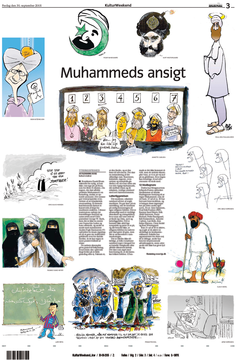



Background and publication
On September 30, 2005, the Danish daily Jyllands-Posten published twelve cartoons commissioned by its cultural editor to illustrate a discussion about self-censorship and the depiction of religion. The paper said the commission was intended to explore whether artists could freely portray religious figures. The original publication included work by several illustrators; one of the most widely discussed images was drawn by Kurt Westergaard, whose cartoon showed a stylized figure with a small explosive device in a turban. The subject of the images—the prophet Muhammad—is a figure whose depiction is discouraged in many Islamic traditions, a cultural context that contributed to the intensity of the reaction.
Escalation and reactions
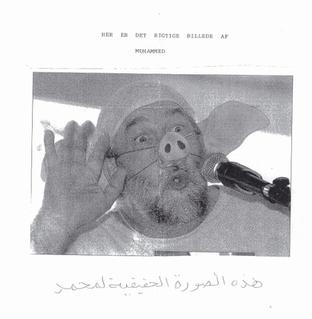
Local protests by Danish Muslim organizations began soon after publication. The controversy escalated as the cartoons were reprinted or referenced by media around the world. Some publications republished the drawings; others published descriptions or commentary instead. Alongside legitimate demonstrations, the incident sparked violent protests in several countries, diplomatic disputes, and economic actions such as consumer boycotts. Reports indicated that some demonstrations became deadly or resulted in clashes with security forces, though accounts of casualties and events varied by source. The situation was further complicated when altered or fake images emerged and circulated in the media and online.
Legal, political and social debates
The episode provoked wide legal and political discussion in Europe and beyond about balancing freedom of expression with protections against hate speech and incitement. Some governments defended the newspapers’ legal right to publish while condemning the provocation; others criticized the publication as irresponsible. The controversy led to court cases, diplomatic démarches, and public debates about immigration, integration, religious pluralism, and media responsibility. The incident also produced targeted threats against individual cartoonists and editors, prompting heightened security measures and at least one high-profile attack on an artist’s home.
Legacy and notable aspects
The dispute left several lasting effects on public discourse and media practice. It became a touchstone in discussions about self-censorship, illustrating how a single editorial decision can have international repercussions. It prompted many news organizations to review policies on reprinting contentious images and led to new conversations about how pluralistic societies manage respect for religious beliefs alongside protections for critical speech.
- Number and nature: the original set included a dozen cartoons intended to spark debate rather than to represent a unified message; some criticized the paper, others satirized religion or media practice.
- Reprinting and response: newspapers in multiple countries reprinted or discussed the cartoons, fueling wider attention and varied editorial responses; examples and commentary circulated online and in print (reprints).
- Public figures and diplomacy: political leaders, religious authorities, and international organizations weighed in, with many calling for restraint and dialogue (free speech debates).
- Economic and social impact: boycotts and protests targeted Danish goods in some markets, and community relations and integration debates intensified (boycotts).
For further reading about origins, reactions and chronology, see contemporaneous reporting and later analyses that examine how editorial choices, cultural sensitivities, and globalized media combined to produce a prolonged international crisis. Primary actors, decisions and turning points in the controversy are often discussed in resources that document the original editorial choices, the subsequent protests, and the cases where reprints or commentary amplified the debate (publication date context, notable cartoons, timeline).
While opinions about the publication remain divided, the Jyllands-Posten cartoons episode is widely regarded as a pivotal moment in twenty-first-century discussions about the limits and responsibilities of speech in plural societies. It continues to be cited in debates about media ethics, legal standards for hate speech, and the relationship between majority cultures and religious minorities.
Questions and answers
Q: What is the Jyllands-Posten Muhammad cartoons controversy?
A: The Jyllands-Posten Muhammad cartoons controversy is a controversy about a series of cartoons that were first published in a Danish newspaper. The publication led to an outcry and sparked violent protests in the Islamic world, with many people dying.
Q: Who drew and created the cartoons?
A: The cartoons were drawn and created by Kurt Westergaard.
Q: When were the cartoons first published?
A: The cartoons were first published in the Danish newspaper Jyllands-Posten on September 30, 2005.
Q: What was one of the cartoon depicting?
A: One of the cartoon showed Muhammad with a bomb in his turban.
Q: What do critics claim about the cartoons?
A: Critics claims that the cartoons are culturally insulting, Islamophobic, blasphemous, and intended to humiliate a "marginalized" minority.
Q: What do supporters of the cartoons claim?
A: Supporters of the cartoons claim they illustrate an important issue and their publication exercises the right of free speech. They have also claimed that similar cartoons are made relative to other religions, arguing that Islam and its followers have not been targeted in a discriminatory way.
Related articles
Author
AlegsaOnline.com Controversy over Jyllands-Posten’s Muhammad cartoons Leandro Alegsa
URL: https://en.alegsaonline.com/art/51804
Sources
- nybooks.com : "Liberal, Harsh Denmark"