
Aragón River
The Aragón is a river in northern Spain that rises in the Pyrenees and joins the Ebro as a left-bank tributary. It shaped the historical Kingdom of Aragon and remains important for water supply, ecology and recreation.
The Aragón is a prominent river in northern Spain. Known in Spanish as Río Aragón and in Basque as Aragon Ibaia, it rises in the Pyrenean highlands and flows generally southward across the Ebro basin of northern Spain. It is one of the principal left-bank tributaries of the Ebro, the largest river of the Iberian Peninsula.
Image gallery
4 Images
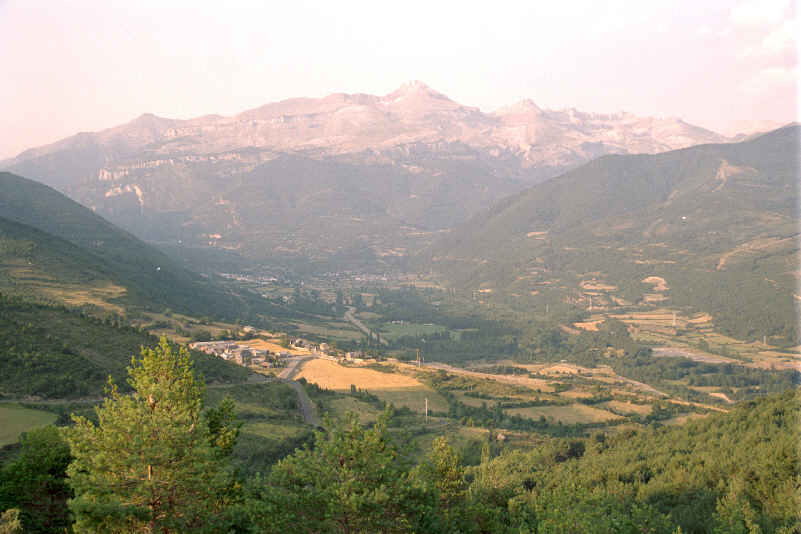


Physical characteristics
The river's headwaters are mountain-fed, giving it a seasonal flow regime influenced by snowmelt and rainfall. Along its course the Aragón collects water from a network of smaller streams and drains a varied landscape of high valleys, foothills and irrigated plains. Its channel and adjacent floodplain support riparian vegetation and provide habitat for freshwater species. Because it descends from upland sources, the river has been harnessed in places for water storage and flow regulation.
Human use and importance
For centuries the Aragón has played a role in local economies. Its waters are used for irrigation, sustaining agriculture in the Ebro valley downstream, and for municipal supply in towns along its banks. Hydropower installations and reservoirs exploit gradients in the upper reaches to generate electricity and manage water resources. The river corridor is also valued for fishing, hiking and other outdoor recreation, contributing to regional tourism.
- Environmental value: supports riparian habitats and migratory routes for aquatic life.
- Agricultural use: irrigates crops in downstream plains.
- Energy and regulation: dams and reservoirs moderate floods and produce power.
Historically the river lent its name to an important medieval polity: the Kingdom of Aragon, and later to the modern Autonomous Community of Aragón. That naming reflects the river's centrality to settlement and identity in the region. Today its conservation and management involve balancing water supply, ecological protection and recreational use within a changing climate and evolving land use patterns.
Questions and answers
Q: What is the Aragón River?
A: The Aragón River is a river in northern Spain.
Q: What is the Aragón River's contribution to the river Ebro?
A: The Aragón River is one of the left-hand tributaries of the river Ebro.
Q: What historic kingdom was named after the river?
A: The historic Kingdom of Aragon was named after the Aragón River.
Q: What modern autonomous community was named after the river?
A: The modern Autonomous Community of Aragón was named after the Aragón River.
Q: What is the name of the river in Basque?
A: The name of the river in Basque is Aragon Ibaia.
Q: What is the significance of the Aragón River's name?
A: The Aragón River's name is significant because it gave its name to both a historic kingdom and a modern autonomous community.
Q: Is the Aragón River a right-hand tributary of the river Ebro?
A: No, the Aragón River is not a right-hand tributary of the river Ebro, it is a left-hand tributary.
Related articles
Author
AlegsaOnline.com Aragón River Leandro Alegsa
URL: https://en.alegsaonline.com/art/5157
Sources
- britannica.com : "Aragon River"
- crana.org : "Documento técnico Aragón. Gobierno de Navarra - Crana"
- jacajacobea.com : "Sitios Naturales: Río Aragón"