
Juan de Esquivel
Spanish soldier and early colonial administrator who led campaigns in eastern Hispaniola and completed the conquest of Jamaica, founding settlements and serving as the island's first Spanish governor.
Overview
Juan de Esquivel (c. 1480 – c. 1513) was a Spanish soldier and colonial official active in the first decades of Iberian expansion into the Caribbean. Often described as a conquistador, he took part in military campaigns and town foundations on behalf of the Crown and its representatives. Born in Seville, Esquivel is best known for leading the subjugation and early government of the island of Jamaica and for expeditions in the eastern portion of Hispaniola.
Image gallery
1 Image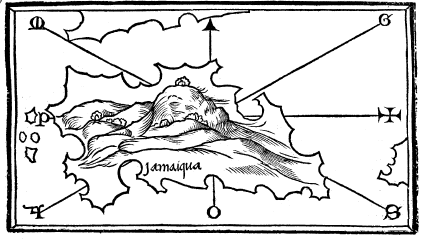
Early service and arrival in the Caribbean
Esquivel arrived in the New World with the expeditionary governor Nicolás de Ovando in 1502, one of several Spanish officers sent to strengthen colonial control over the islands of America. The early Spanish administration organized military patrols, ordered the foundation of towns, and redistributed land and native labor under new institutions. Within this context, Esquivel emerged as a subordinate commander entrusted to carry out both punitive operations and settlement projects.
Campaigns in eastern Hispaniola and town foundations
In 1503 Ovando dispatched Esquivel with a force to the eastern district known as Higüey, where resistance from indigenous peoples continued after initial contacts. There he fought against the Taínos, the Caribbean's primary indigenous group, and established permanent Spanish settlements intended to secure territory and supply lines. Two towns attributed to his activity in the region are the foundation recorded as Santa Cruz de Hicayagua (later associated with modern Santa Cruz del Seibo) and Salvaleón de Higüey. These foundations illustrate the pattern of military action followed by urban settlement common to early colonial expansion.
Conquest and governance of Jamaica
In 1509 the new governor of Hispaniola, Diego Colón (Diego Columbus), ordered an expedition to complete the conquest of Jamaica. Esquivel was chosen to lead this operation and sailed with a modest force to the island. After establishing Spanish control on parts of the north coast he founded a settlement known as Sevilla La Nueva, the "New Seville" (often referenced in English as The New Seville). Esquivel served as the principal Spanish authority on Jamaica during these years, overseeing settlement, defense and the initial colonial administration of the island.
Legacy and historical context
Records indicate that Esquivel died on Jamaica around 1513. His career typifies the role of early colonial captains who combined military command with urban foundation and rudimentary governance. The settlements he helped establish contributed to Spain's strategic control of the Greater Antilles, even as the colonial process brought dramatic changes and hardships for the indigenous population. Modern histories place Esquivel among the first wave of conquistadors whose actions created the institutional footprint—towns, supply routes and local rule—that would shape Caribbean colonial life for decades.
Key points
- Origin: born in Seville, active from about 1502 in the Caribbean.
- Service: arrived with Nicolás de Ovando and operated under the early colonial governments on Hispaniola.
- Higüey: led campaigns against the Taínos and founded settlements linked to Santa Cruz del Seibo and Salvaleón de Higüey.
- Jamaica: sent in 1509 to complete the conquest, established Sevilla La Nueva on the north coast of Jamaica.
- Historical note: his life illustrates the combination of force, settlement and administration characteristic of early Spanish expansion in the Caribbean (Spanish imperial activity).
For a fuller understanding of Esquivel's place in Caribbean history, consult works on early colonial administration, the campaigns of the Ovando and Colón administrations, and local histories of Higüey and Jamaica that document town foundations and their subsequent development.
Questions and answers
Q: Who was Juan de Esquivel?
A: Juan de Esquivel was a Spanish conquistador and colonial administrator who conquered and governed the island of Jamaica for Spain.
Q: When was Juan de Esquivel born?
A: Juan de Esquivel was born around 1480 in Seville, Spain.
Q: Why did Juan de Esquivel go to America?
A: Juan de Esquivel went to America with Nicolás de Ovando in 1502.
Q: What did Juan de Esquivel do in the eastern part of the Hispaniola island?
A: In the eastern part of the Hispaniola island, Juan de Esquivel fought the Taínos in the Higüey region and founded two new towns: Santa Cruz de Hicayagua or Icayagua, and Salvaleón de Higüey.
Q: What did Juan de Esquivel do in Jamaica?
A: In Jamaica, Juan de Esquivel completed the conquest of the island with 70 men and founded a town called Sevilla La Nueva on the north coast.
Q: When did Juan de Esquivel die?
A: Juan de Esquivel died in Jamaica around 1513.
Q: What was the name of the new town founded by Juan de Esquivel on the north coast of Jamaica?
A: The new town founded by Juan de Esquivel on the north coast of Jamaica was called Sevilla La Nueva (The New Seville) in English.
Related articles
Author
AlegsaOnline.com Juan de Esquivel Leandro Alegsa
URL: https://en.alegsaonline.com/art/51360