
Joyce Cary: life, work, and literary legacy
Irish-born novelist Joyce Cary (1888–1957) wrote novels shaped by colonial service, art training and a late start to professional writing; best known for The Horse's Mouth and a vivid range of character studies.
Arthur Joyce Lunel Cary, known as Joyce Cary, was an Irish-born novelist and writer whose life combined colonial administration, artistic study and a mature literary career. Born in County Donegal, he trained in England and on the Continent before entering the British colonial service. Later, ill health and a return to Britain led him to devote himself to fiction, producing novels that probe morality, art and the contradictions of modern life. He remains best known to many readers for the spirited painter-protagonist of one of his later novels.
Image gallery
2 Images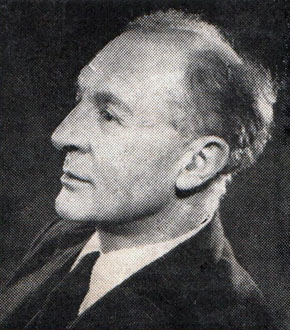

Biography and background
Cary was born into an Anglo-Irish family and received a classical education at schools that prepared him for university. He studied at Trinity College, Oxford, and pursued art training in Edinburgh and in Paris, where he learned drawing and painting techniques that later informed his fictional portraits of artists and sensibilities toward visual composition. Early in adulthood he entered the colonial service and was posted to Nigeria, where he worked as a political administrator under the British system and also served with local military units in the First World War. Ill health eventually obliged him to retire from the service and return to Britain; freed from administrative duties, he began to write seriously.
Writing career and major works
Cary's first novel, Aissa Saved, appeared after he had returned to Britain and reflected his West African experience. Over the next two decades he published a succession of novels that ranged in subject from colonial life to English social and artistic milieus. Titles that recur in accounts of his career include The Captive and the Free, Herself Surprised, A Fearful Joy, To Be a Pilgrim and The Horse's Mouth. The latter remains one of his most widely read books: it focuses on an eccentric painter and combines comic energy with a serious exploration of creativity. That novel was later adapted for the screen in the late 1950s, introducing Cary's work to wider popular audiences.
Themes, style and techniques
Cary's fiction is notable for its interest in moral complexity, the tensions between individual impulse and social expectation, and repeated attention to the life of the artist. He often drew on his personal experience—his years in Nigeria and his art studies in Edinburgh and Paris—to lend authenticity to settings and professions. Critics have noted several recurring stylistic features in his work:
- Vivid character portraits that combine sympathy with ironic distance.
- A willingness to use varied narrative voices and experimental structures to explore inner life.
- An interest in ethical questions, especially how personal integrity fares under social and economic pressure.
- A strong visual sensibility, likely influenced by his formal art training.
Reception and legacy
Cary occupied a distinctive place among mid-20th-century British novelists: not the most fashionable, but respected for his energy, range and humane imagination. His portrayals of colonial administration and cross-cultural encounters contributed to interwar and postwar debates about empire, while his later novels engaged readers with artistic dilemmas and satirical portraits of English life. The film adaptation of one of his novels helped sustain interest in his prose, and modern criticism continues to reassess his techniques, narrative experiments and moral concerns.
Further notes
Biographical summaries frequently point to Cary's late transition to a full-time literary life after his colonial service and illness. He retained an interest in painting and in the mechanics of literary form throughout his career. For general reference on his life and bibliography see entries and resources that collect his works and biographical details; for a quick descriptor of his nationality and literary identity see a standard reference to him as an Irish novelist. Additional archival and critical materials may be discovered through library catalogues and academic studies dedicated to twentieth-century British and Irish writing.
Sources of biographical and bibliographic information often cite his education at Trinity College, Oxford, artistic studies in Edinburgh and Paris, and his service in Nigeria as formative experiences. Readers looking to explore Cary's fiction will find a mixture of colonial narrative, social satire and empathetic studies of creative personalities across his works.
Questions and answers
Q: Who was Joyce Cary?
A: Joyce Cary was an Irish novelist and writer.
Q: What was Joyce Cary's birth name?
A: Joyce Cary's birth name was Arthur Joyce Lunel Cary.
Q: Where was Joyce Cary born?
A: Joyce Cary was born in Donegal, Ireland.
Q: What did Joyce Cary study?
A: Joyce Cary studied at Clifton and Trinity College, Oxford.
Q: Where else did Joyce Cary spend some time learning?
A: Joyce Cary spent some time learning art at Edinburgh and Paris.
Q: What did Joyce Cary do in 1913?
A: In 1913, Joyce Cary joined the Nigerian Political Service, under the British colonial system and was posted out to Nigeria.
Q: What was Joyce Cary's first published novel?
A: Joyce Cary's first published novel was Aissa Saved, which was published in 1932.
Related articles
Author
AlegsaOnline.com Joyce Cary: life, work, and literary legacy Leandro Alegsa
URL: https://en.alegsaonline.com/art/51322