
Arab Winter: the post‑2011 backlash and regional instability
Period of renewed authoritarianism, conflict and instability across parts of the Arab world after the Arab Spring, marked by civil wars, extremist insurgencies, displacement and regional rivalries.
Overview
"Arab Winter" is a term used by analysts and commentators to describe a phase of renewed repression, armed conflict and political reversal that followed the uprisings commonly called the Arab Spring. It is not a formal designation with precise dates, but is often associated with a deterioration in security and governance that accelerated from about 2013–2014 in several countries.
Image gallery
3 Images

Characteristics and causes
The phenomenon encompassed several related dynamics: the reassertion of authoritarian institutions and some absolute monarchies, the fragmentation of states into competing armed actors, and the emergence or strengthening of extremist groups. Underlying causes included weak institutions, sectarian and ethnic divisions, economic pressures, and regional rivalries. External intervention and proxy competition magnified local conflicts.
Major events and timeline
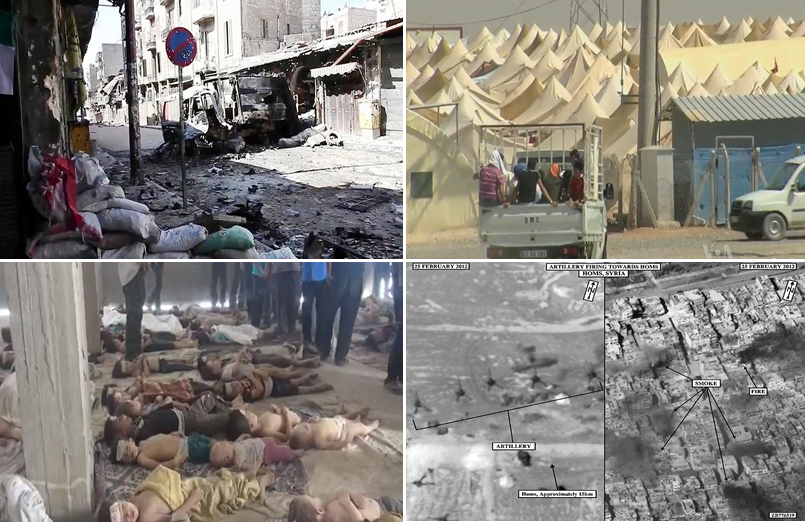
Key elements associated with the Arab Winter include large-scale civil wars and insurgencies (notably in Syria, Libya and Yemen), a humanitarian crisis with mass displacement, and the rise of militant groups such as the Islamic State (ISIL/ISIS) in parts of Iraq and Syria. Commentators also point to broader economic and demographic stresses that compounded political instability across the region.
Consequences and significance
The period brought severe human costs: large numbers of deaths, widespread refugee flows, and collapsed services in affected areas. It reshaped regional diplomacy, intensified security cooperation among some governments, and led to renewed emphasis on stability over political liberalization in many capitals. Economies and reconstruction needs remain major long-term challenges.
Notable distinctions
- The term "Arab Winter" is contested: some use it to describe a broad counter‑revolutionary trend, while others apply it only to specific conflicts.
- Outcomes have varied by country—some states saw partial reforms or compromise, whereas others underwent near‑state failure or protracted war.
- Its legacy continues to inform debates about governance, security and reform in the Arab world.
The label is a shorthand for a complex and uneven period: its precise scope and end point depend on which countries and developments an analyst emphasizes. For further context on the preceding wave of popular mobilization see discussions of the Arab Spring, and for details on related conflicts and actors consult sources linked above such as material on civil wars, regional political economy (economic and demographic factors), the role of monarchies (monarchies), and the emergence of ISIL.
Questions and answers
Q: What is the Arab Winter?
A: The Arab Winter refers to a period of resurgence of authoritarianism, absolute monarchies, and Islamic extremism in the Arab world.
Q: When did the Arab Winter start?
A: The Arab Winter began in 2014, four years after the Arab Spring.
Q: What are some of the consequences of the Arab Winter?
A: Some of the consequences of the Arab Winter include civil wars, mounting regional instability, economic and demographic decline of Arab countries, and ethno-religious wars.
Q: How many deaths did the Arab Winter result in by the summer of 2014?
A: By the summer of 2014, the Arab Winter had resulted in nearly a quarter of a million deaths.
Q: What was perhaps the most significant event during the Arab Winter?
A: The rise of the Islamic State of Iraq and the Levant from 2014 to the present was perhaps the most significant event during the Arab Winter.
Q: How do authoritarianism, absolute monarchies, and Islamic extremism contribute to the Arab Winter?
A: These factors contribute to the Arab Winter by fueling conflicts, eroding democracy and human rights, and creating an environment of instability and violence.
Q: Are there any positive outcomes of the Arab Winter?
A: There have been few positive outcomes of the Arab Winter, as it has largely been characterized by conflict and suffering. However, some argue that it has spurred greater awareness and discussion of political and social issues in the Arab world.
Related articles
Author
AlegsaOnline.com Arab Winter: the post‑2011 backlash and regional instability Leandro Alegsa
URL: https://en.alegsaonline.com/art/5124
Sources
- telegraph.co.uk : "Middle East review of 2012: the Arab Winter"
- jpost.com : "Analysis: Arab Winter is coming to Baghdad"
- cbn.com : "Expert Warns of America's Coming 'Arab Winter'"
- newyorker.com : "The Arab Winter"
- spu.edu : "Arab Spring or Arab Winter?"
- bpr.berkeley.edu : "After Every Winter Comes Spring: Tunisia's Democratic Flowering – Berkeley Political Review"
- aljazeera.com : aljazeera.com/opinions/2016/6/11/will-the-arab-winter-spring-again-in-sudan/
- richmond.com : "Arab Spring to Arab Winter: a predictable debacle in the Middle East"
- theconversation.com : "From Egypt to Syria, this could be the start of the Arab Winter"
- dayan.org : Iqtisadi
- iemed.org : Arab uprisings: regional implication
- aub.edu.lb : "Displacement in the Middle East and North Africa – between the Arab Winter and the Arab Spring"
- books.google.com : Fear and Faith in Paradise