
Arab slave trade: scope, routes, and historical impact
Comprehensive overview of the Arab slave trade: where and how it operated, who was enslaved, major routes and markets, estimated scale, common forms of bondage, and its long-term effects.
Overview
The term slavery in this context refers to systems of unfree labor and human trafficking that operated within the Arab world and adjoining regions for many centuries. Those systems were neither uniform nor static: they varied by time and place, by legal and religious frameworks, and by the roles enslaved people performed. Activities connected with the Arab slave trade were concentrated in Western Asia and North Africa but had a far wider geographic reach.
Image gallery
3 Images
Geography and historical beginnings
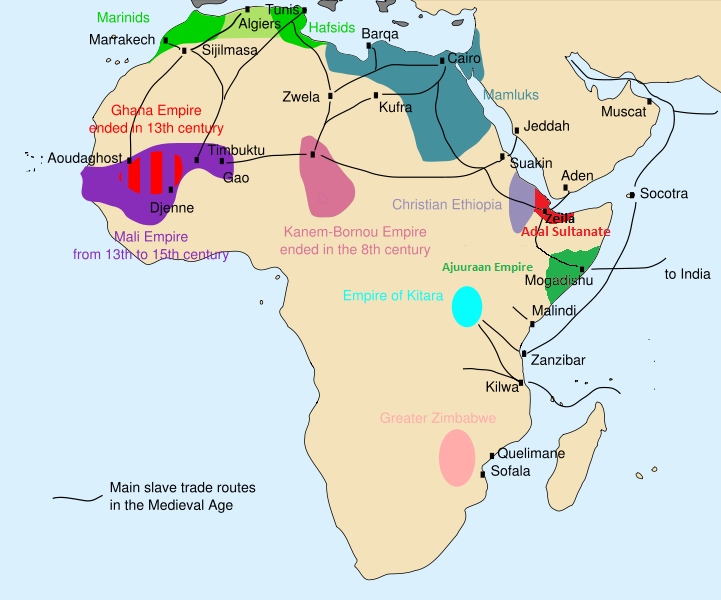
From the early medieval period, especially after the era of the Muslim conquests, networks of capture, transport and sale extended from the interior of Africa and parts of Europe into the Middle East. The trade reached into the Horn of Africa and coastal East Africa (Horn of Africa), and it affected parts of Mediterranean Europe such as Iberia (Iberia) and Sicily at various times. These flows evolved across centuries in response to demand, political change and economic shifts.
Routes, markets, and sources
Major transportation corridors included trans-Saharan routes, Red Sea crossings, and maritime lanes across the Indian Ocean. Slave markets were established in key urban centers of the Middle East, North Africa and the African coast. Many enslaved people originated from inland regions of Africa, taken to coastal entrepôts for sale. Scholarly discussion of the trade and its scale is ongoing; historians continue to refine dates, routes and social contexts based on documentary and archaeological evidence.
Timeline and scale
The trade persisted in various forms from the early medieval centuries well into the modern era and did not end everywhere at the same time; some practices continued into the early 20th century (the 20th century). Numerical estimates vary: some researchers offer mid-range totals while others propose broader ranges; available summaries note differing methodologies and a range of figures (estimates). Enslaved people were moved across the Red Sea, the Indian Ocean and the Sahara Desert, among other routes.
Roles, forms and destinations
Enslaved persons filled many roles depending on local economies and social structures. Common forms included:
- Domestic servitude and household labor, often in urban households;
- Military service and slave-soldier formations in some polities;
- Agricultural labor and plantation work where cash crops were grown;
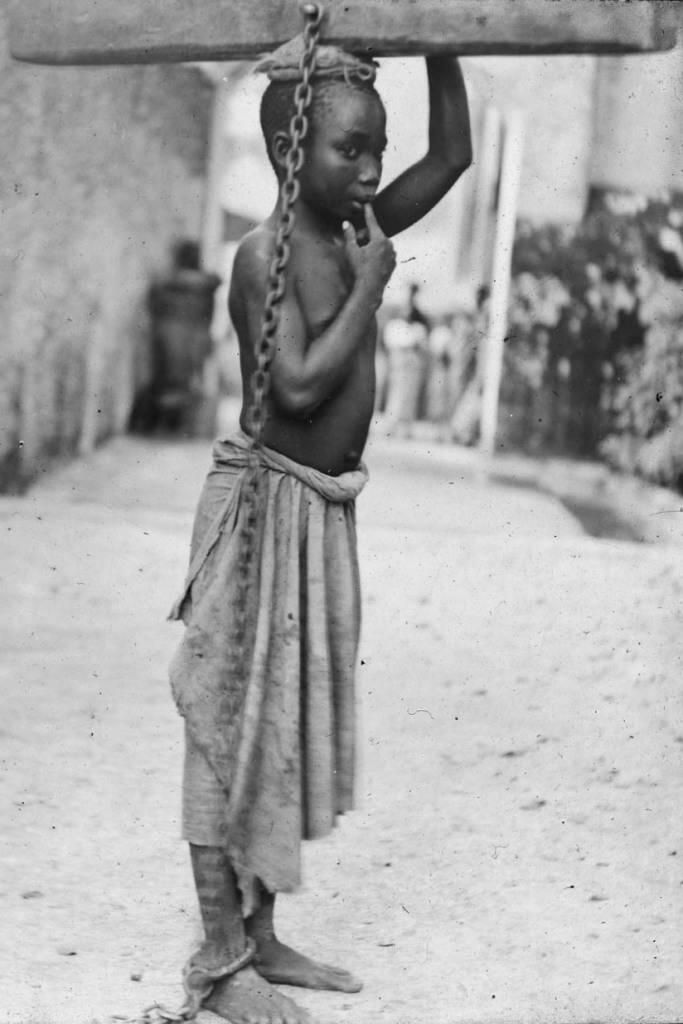
- Concubinage and court service, including the trafficking of eunuchs for particular household roles.
Consequences and legacy
The Arab slave trade left lasting demographic, cultural and linguistic traces across regions connected by it. It shaped social hierarchies, settlement patterns and family histories, and it influenced music, cuisine, and religious practice in some areas. The history has also informed modern debates on memory, reparations and the histories of slavery worldwide. Scholarship continues to reassess specifics—routes, numbers and lived experiences—while abolitionist movements and state bans in the 19th and 20th centuries gradually curtailed the practice in most places.
Further notes
For focused studies on particular regions or periods, readers may consult specialized works and archival materials. The topic intersects with broader histories of trans-Saharan, Indian Ocean and Mediterranean exchanges and should be approached with attention to regional variation and the limits of surviving sources.
Related subjects and reference entries: slavery, Arab world, Western Asia, North Africa, Horn of Africa, parts of Europe, Iberia, Sicily, Muslim conquests, 20th century, Middle East, Africa's interior, historians, estimates, Red Sea, Indian Ocean, Sahara.
Questions and answers
Q: What is the Arab slave trade?
A: The Arab slave trade refers to the practice of slavery in the Arab world.
Q: Where did the Arab slave trade take place?
A: The Arab slave trade mainly took place in Western Asia, North Africa, Southeast Africa, and the Horn of Africa.
Q: Did the Arab slave trade include parts of Europe?
A: Yes, the Arab slave trade included parts of Europe such as Iberia and Sicily.
Q: When did the Arab slave trade begin?
A: The Arab slave trade began during the era of the Muslim conquests.
Q: What were the main regions where slave markets were located?
A: Slave markets were located in the Middle East, North Africa, and the Horn of Africa.
Q: Where were most of the slaves from?
A: Most of the slaves were from Africa's interior.
Q: How many people were enslaved by Arab slave traders?
A: Historians estimate that between 650 AD and the 1960s, 10 million to 18 million people were enslaved by Arab slave traders. They were taken from Europe, Asia, and Africa across the Red Sea, Indian Ocean, and Sahara desert.
Related articles
Author
AlegsaOnline.com Arab slave trade: scope, routes, and historical impact Leandro Alegsa
URL: https://en.alegsaonline.com/art/5122
Sources
- atlantablackstar.com : "10 Facts About The Arab Enslavement Of Black People Not Taught In Schools"
- brandeis.edu : "Traditional or Chattel Slavery"
- huffingtonpost.ca : "Slavery in Africa Is Alive, Well and Ignored"
- unesco.org : "Modern forms of slavery"