
John Carver (c.1584–1621): First Governor of Plymouth Colony
John Carver (c.1584–1621) was a leader among the Mayflower Pilgrims, the first governor of Plymouth Colony, a financier of the 1620 voyage, and a signer of the Mayflower Compact.
Overview
John Carver was a prominent member of the English Separatist community that left for the New World in 1620. He is best known as a signer of the Mayflower Compact and as the first colonial leader elected to serve as Governor of Plymouth Colony. Contemporary accounts place his birth before 1584 and his death in 1621, making his active role in the first year of the colony decisive but short-lived.
Image gallery
3 Images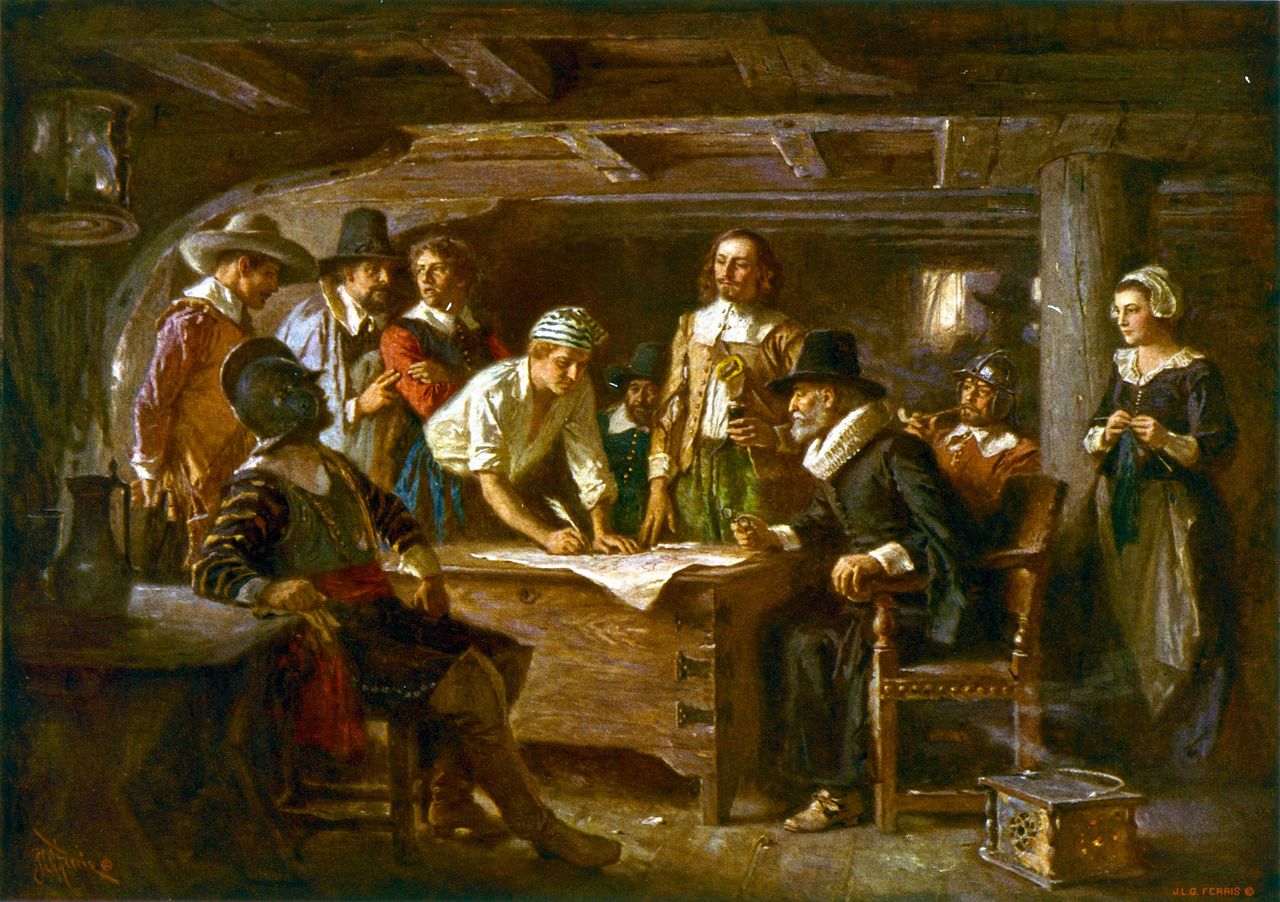


Early life and church membership
Carver is commonly associated with Doncaster in Yorkshire, though records of his early years are limited. He became part of a dissenting religious congregation that rejected the practices of the Church of England. In the Netherlands he and his first wife joined the French-speaking or Walloon congregation; contemporary references sometimes call this the Walloon church in Leiden, Netherlands. Leiden was a refuge for Separatists and other Protestant exiles who sought liberty to worship.
While living in Leiden Carver served in a lay leadership role and is described in some sources as acting like a deacon in the congregation. The Leiden registers record personal losses: his first wife Mary and an infant died while the group was in the Netherlands. He later married Katherine White, who had ties to communities in Nottinghamshire. Associates from Leiden included figures often mentioned in Pilgrim histories, such as Francis Cooke and other families who later crossed to New England.
Organizing the voyage
Carver emerged as one of the leading organizers who turned a religious migration into a transatlantic colonial enterprise. He worked closely with church leaders and merchants to negotiate a plan for resettlement. The congregation’s intention was to reach a place where they could freely practice their religion, often referred to as the Virginia Colony in period accounts, though settlement ultimately took place further north.
Key contacts included the pastor John Robinson and other leaders in Leiden, as well as English intermediaries. Carver and Robert Cushman engaged with investors and representatives of the Virginia Company and later made practical arrangements in England. By June 1620 he was in Southampton, arranging supplies and negotiating terms. Records note cooperation with provisioning agents such as Christopher Martin, and Carver contributed substantial personal funds to underwrite the voyage, often described simply as providing the necessary money to secure passage and provisions.
Leadership in Plymouth and legacy
On arrival the group adopted the compact that helped authorize civil order; Carver’s standing among the settlers and his role in drafting agreements made him a natural choice for governor. He presided over early meetings, allocation of tasks and food, and negotiations with neighboring Indigenous peoples. His term was truncated by his death in the first winter or early spring of 1621, a period in which many colonists succumbed to disease and hardships.
Despite his brief governorship, Carver’s influence endured in several ways: his financial support made the voyage possible, his leadership helped stabilize the small community in its first months, and his signature on the compact lent authority to an early form of colonial self-government. Later Pilgrim leaders, including William Bradford, recorded Carver’s efforts when recounting the colony’s founding, and he is remembered in histories of early New England as an organizer and benefactor whose early death curtailed what might have been a longer public career.
Notable facts and timeline
- Before the voyage: active in the Leiden congregation and allied with its leaders and pastor John Robinson.
- 1617–1620: negotiations with English investors including contacts at the Virginia Company.
- June 1620: procurement of stores and arrangements in Southampton; coordination with provisioning agents like Christopher Martin.
- November 1620: voyage on the Mayflower and signing of the Mayflower Compact.
- 1620–1621: elected Governor of Plymouth Colony, led initial settlement work and diplomacy with Indigenous neighbors, but died within the colony’s first year.
- Associations: origins near Doncaster in Yorkshire; membership in the Walloon church at Leiden, Netherlands; ties to fellow passengers like Francis Cooke.
- Personal: served in a church role comparable to a deacon; remarried to Katherine White of Nottinghamshire; remembered for providing significant funds to support the voyage.
John Carver remains a notable early figure in American colonial history: a religious exile who helped transform a small, vulnerable migration into a self-governing settlement and whose leadership and resources shaped the earliest course of Plymouth Colony.
Questions and answers
Q: Who was John Carver?
A: John Carver (c. 1584– 1621) was a passenger on the Mayflower, a leader during the voyage and signer of the Mayflower Compact, and the first Governor of Plymouth Colony. He was a Separatist from Doncaster in Yorkshire England who did not believe in the teachings of the Church of England.
Q: What religion did John Carver practice?
A: John Carver practiced Separatism and was a member of the French Walloon church in Leiden, Netherlands. His religion was also not allowed where they lived.
Q: How old was John Carver when he became a deacon?
A: It is believed that John Carver became a deacon at about age 25, sometime before 1584.
Q: Who were some other members of the French church in Leiden?
A: Other members of the French church in Leiden included Mayflower passenger Francis Cooke and his wife, as well as Philip Delano who would arrive in Plymouth in 1621 on board the ship Fortune.
Q: What plans did Robert Cushman help make for the Mayflower voyage?
A: Robert Cushman helped to make plans for William Brewster's escape from King James I by organizing an expedition to Virginia Colony, where they could practice their religion freely. In 1617, Cushman began talking to officials of The Virginia Company with fellow church member John Carver to arrange for supplies for their journey aboard The Mayflower.
Q: How much money did John Carver provide towards The Mayflower voyage?
A: As he was very wealthy, it is believed that John Carver provided much of his own money towards The Mayflower voyage and other expenses incurred by fellow church members planning their journey to America.
Q: What happened to Mary and her child? A: According to records from Leiden Church , Mary and her child passed away sometime around 1609 .
Related articles
Author
AlegsaOnline.com John Carver (c.1584–1621): First Governor of Plymouth Colony Leandro Alegsa
URL: https://en.alegsaonline.com/art/50587
Sources
- plimoth.org : plimoth.org