
John Byron (Royal Navy officer)
British naval officer (1723–1786), circumnavigator, colonial governor and vice-admiral whose long career included service under George Anson and command of his own global voyage.
Overview
Vice-Admiral the Honourable John Byron (8 November 1723 – 10 April 1786) was a senior officer of the Royal Navy and a member of the British gentry. He earned a reputation for persistence at sea and frequent encounters with severe weather, acquiring the informal nickname "Foul-weather Jack." Over a career that spanned several conflicts and long-distance voyages he served both as a ship's officer and as a commodore commanding a small squadron on a circumnavigation.
Image gallery
4 Images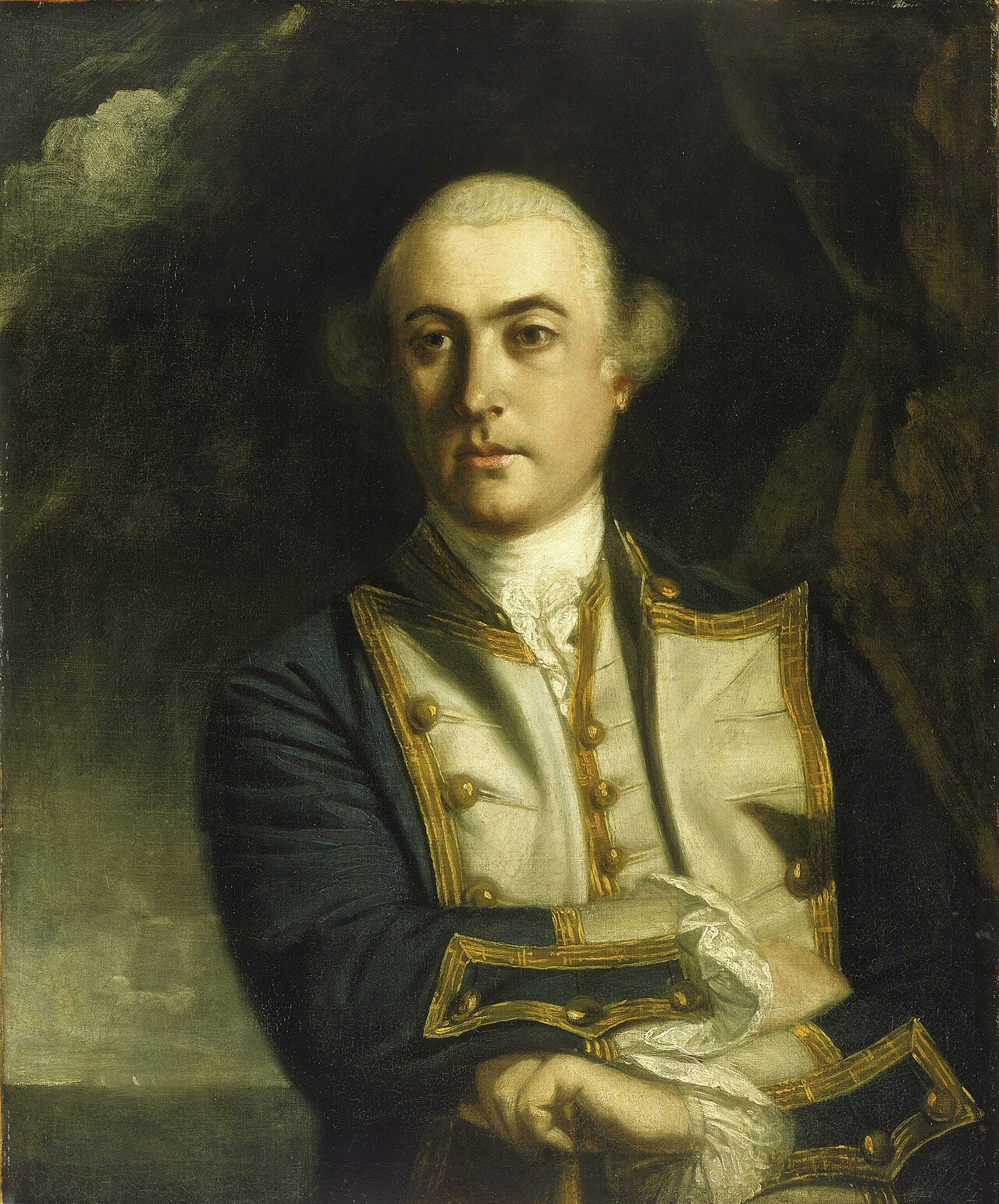


Early career and the Anson expedition
Byron began his seagoing life in the early 1740s and as a young midshipman joined the squadron commanded by Commodore George Anson on its global expedition. The Anson voyage became famous for its hardships and losses; Byron reached the southern Pacific and returned to Britain with the captain of HMS Wager after difficulties scattered the squadron. The experience of long months at sea, disease and extreme weather left a lasting imprint on the officer and shaped his later leadership at sea.
Circumnavigation and colonial service
Later in his career Byron was given independent command and led his own circumnavigation between 1764 and 1766, returning to Britain with increased standing in naval circles. He also served in colonial administration: following the departure of Hugh Palliser in 1768 he took on responsibilities in Newfoundland, acting in the role of colonial governor and naval commander in that important North Atlantic fisheries station. His duties combined civil supervision with protection of British maritime interests.
Combat service and advancement
Byron saw active service in major mid‑18th-century conflicts, including operations associated with the Seven Years’ War and later actions during the American Revolutionary period. Over time he rose through the ranks of the Royal Navy and was promoted to the flag rank of Vice-Admiral of the White. His promotions reflected a mixture of seagoing command, administrative posts and participation in fleet operations.
Family and legacy
Born into the aristocratic Byron family, John was a younger son of William Byron, 4th Baron Byron, and Frances Berkeley. He fathered a son, Captain John Byron, who followed naval service in his own right. The officer’s wider legacy is most often noted through his descendants: his grandsons included the famous poet George Gordon Byron, commonly known as Lord Byron, and George Anson Byron, who later became an admiral and explorer and succeeded as the 7th Baron Byron.
Notable facts and historical significance
Byron’s career illustrates several themes of 18th‑century naval life: the hazards of long-distance voyages, the interconnection of naval and colonial administration, and the way younger sons of the aristocracy found careers at sea. He remains a figure of interest to naval historians for his participation in Anson’s squadron, his own circumnavigation, and for the family connections that linked him to later cultural and exploratory figures.
Selected commands and associations
- Service as a midshipman in the squadron of George Anson — see contemporary accounts of the Anson voyage (Anson expedition).
- Independent circumnavigation as commodore (1764–1766).
- Naval and civil duties in Newfoundland after Hugh Palliser’s departure in 1768.
- Father of Captain John Byron (John Byron, Captain) and grandfather of the poet (Lord Byron).
Foul-weather Jack remains a memorable epithet attached to his career, summarizing both the literal storms he met and the persistent resolve with which he continued to serve.
Questions and answers
Q: Who was John Byron?
A: John Byron was a British Royal Navy officer and politician.
Q: Why was John Byron known as Foul-weather Jack?
A: John Byron was known as Foul-weather Jack because of his frequent encounters with bad weather at sea.
Q: What was John Byron's role in George Anson's voyage around the world?
A: John Byron sailed as a midshipman in the squadron under George Anson on his voyage around the world. However, Byron only made it to southern Chile, and returned to England with the captain of HMS Wager.
Q: What was John Byron's position following Hugh Palliser's departure?
A: John Byron was the governor of Newfoundland following Hugh Palliser's departure in 1768.
Q: Did John Byron circumnavigate the world? If so, in what capacity?
A: Yes, John Byron circumnavigated the world as a commodore with his own squadron in 1764-1766.
Q: Did John Byron fight in any wars?
A: Yes, John Byron fought in battles in The Seven Years' War and the American Revolution.
Q: Who were some of John Byron's notable descendants?
A: John Byron's grandsons include the poet George Gordon Byron and George Anson Byron, admiral and explorer, who were the 6th and 7th Baron Byron, respectively.
Related articles
Author
AlegsaOnline.com John Byron (Royal Navy officer) Leandro Alegsa
URL: https://en.alegsaonline.com/art/50568