
John Billington — Mayflower passenger and early Plymouth colonist
English Mayflower passenger who signed the Mayflower Compact and later became one of the colony’s first recorded executions after a murder conviction in Plymouth Colony.
Overview
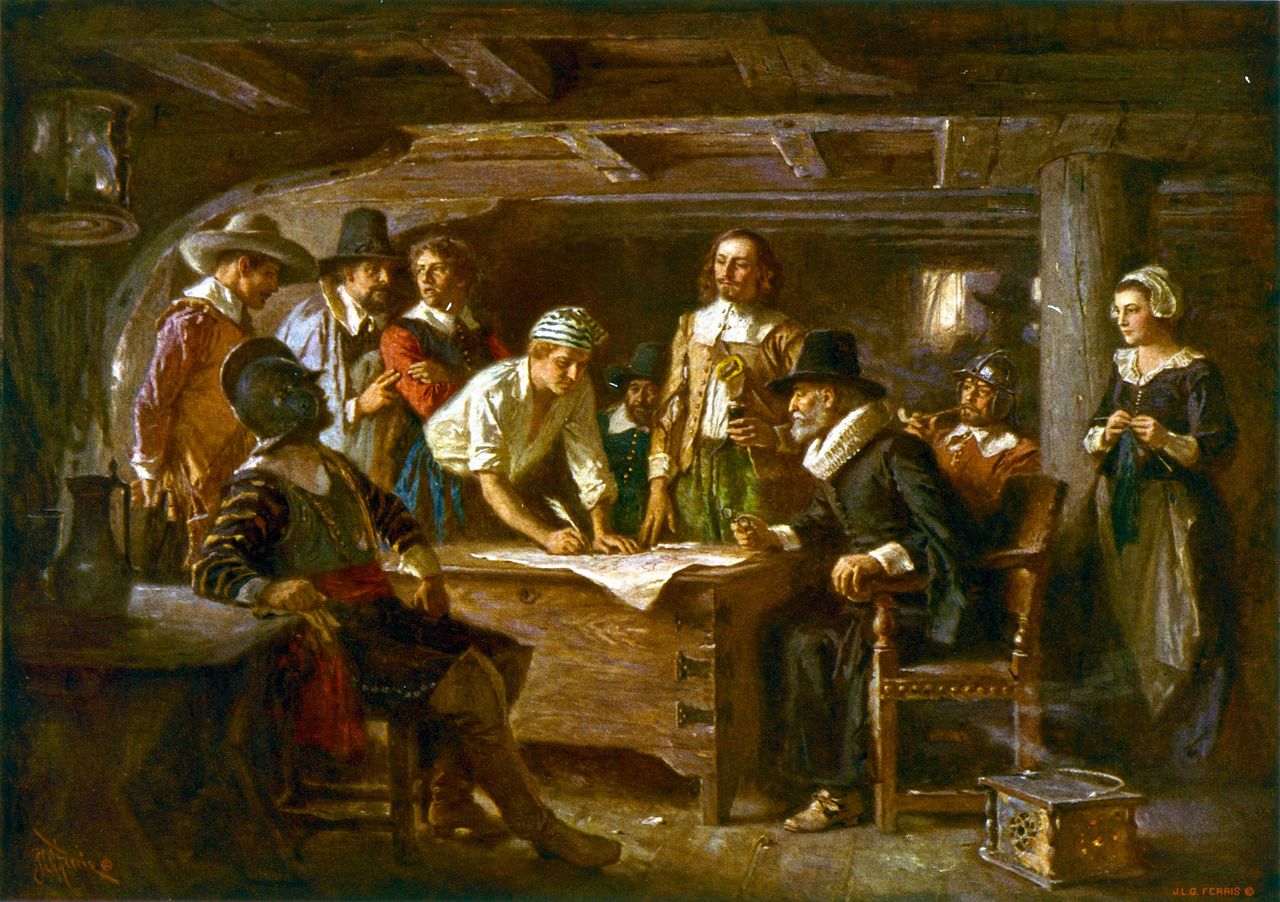
John Billington (c. 1580 – September 30, 1630) was one of the passengers on the Mayflower and a signer of the Mayflower Compact. Unlike many of the ship’s passengers who were Separatists, Billington is generally described in colonial records as one of the non-Pilgrim settlers often called “strangers.” His presence in the colony is remembered both for civic participation at the landing and for a long series of disputes with Plymouth leaders that culminated in a murder conviction and execution.
Image gallery
2 Images
Origins and family
Billington came from England and traveled to North America with his wife, Elinor, and two sons, John and Francis. The family is listed among the Mayflower passengers in contemporary rosters and later Plymouth records. While many details of his life in England are uncertain, his family’s arrival in 1620 placed them among the first permanent English settlers in New England.
Life and conduct in Plymouth
During the first years in the colony, Billington became notable for disputes and behavior that colonial chroniclers described as insubordinate. Records mention several incidents that brought him and his sons into conflict with governors and other colonists. Two of the better-known episodes often cited in accounts of the Mayflower and early Plymouth are:
- John Billington’s son John Jr. wandered into the woods and became lost; he was reportedly found and helped by local Indigenous people and returned to the settlement.
- His other son, Francis, was involved in a dangerous incident on the ship when a musket was fired; the event alarmed other passengers and was treated seriously by the colony’s leaders.
Trial, execution and legal significance
In 1630 John Billington was tried and convicted of killing another colonist, a man named John Newcomen, and was executed by hanging. This event is often noted as one of the earliest, and frequently cited as the first, recorded capital punishments in Plymouth Colony for a civilian murder conviction. The case illustrates how the small, new settlement handled serious crimes and applied communal law among settlers.
Legacy and historical interpretation
Historians view John Billington as a reminder that the Mayflower carried a mixture of religious separatists and other settlers whose motives and temperaments varied. His story is used to show early colonial tensions: disputes over authority, the challenges of establishing law in a frontier community, and the consequences for those who repeatedly clashed with local leadership. The Billington name continued in New England through descendants and appears in genealogical and Mayflower scholarship.
For further primary lists and background, see the Mayflower passenger list, the text of the Mayflower Compact, records relating to early Plymouth Colony, and sources about the Billington family in England.
Questions and answers
Q: Who was John Billington?
A: John Billington was a passenger on the Mayflower in 1620 and one of the signers of the Mayflower Compact. He was from England and had a wife, Elinor, and two sons, John and Francis.
Q: When was John Billington born?
A: There is no exact birthdate for John Billington, but it is estimated that he was born around 1580.
Q: What was John Billington's role on the Mayflower?
A: John Billington was a passenger on the Mayflower and one of the signers of the Mayflower Compact.
Q: Why was John Billington hanged in Plymouth Colony?
A: It is unclear exactly why John Billington was hanged in Plymouth Colony in 1630, but some sources suggest that he was involved in various crimes and conflicts with the colony's leaders.
Q: How many children did John Billington have?
A: John Billington had two sons, John and Francis.
Q: Who else was with John Billington on the Mayflower?
A: John Billington's family was with him on the Mayflower, including his wife Elinor and their two sons.
Q: Where was John Billington from?
A: John Billington was from England.
Related articles
Author
AlegsaOnline.com John Billington — Mayflower passenger and early Plymouth colonist Leandro Alegsa
URL: https://en.alegsaonline.com/art/50557
Sources
- americanancestors.org : americanancestors.org/pilgrim-families-john-billington/
- plimoth.org : plimoth.org/media/pdf/billington_john.pdf
- findagrave.com : findagrave.com/cgi-bin/fg.cgi?page=gr&GRid=34837709