
John Batman: early settler, Port Phillip founder and contested legacy
John Batman (1801–1839) was an Australian farmer and businessman associated with the founding of Melbourne. His dealings with Indigenous people, land claims and later reputation remain controversial.
Overview
John Batman (21 January 1801 – 6 May 1839) was an Australian farmer and businessman who played a prominent role in the early European settlement of Port Phillip, the district that became Melbourne (Melbourne). He is best known for leading an exploratory party in 1835 and for negotiating what became known as "Batman’s Treaty"—an arrangement between his party and some local Aboriginal people that colonial authorities later declared invalid.
Image gallery
10 Images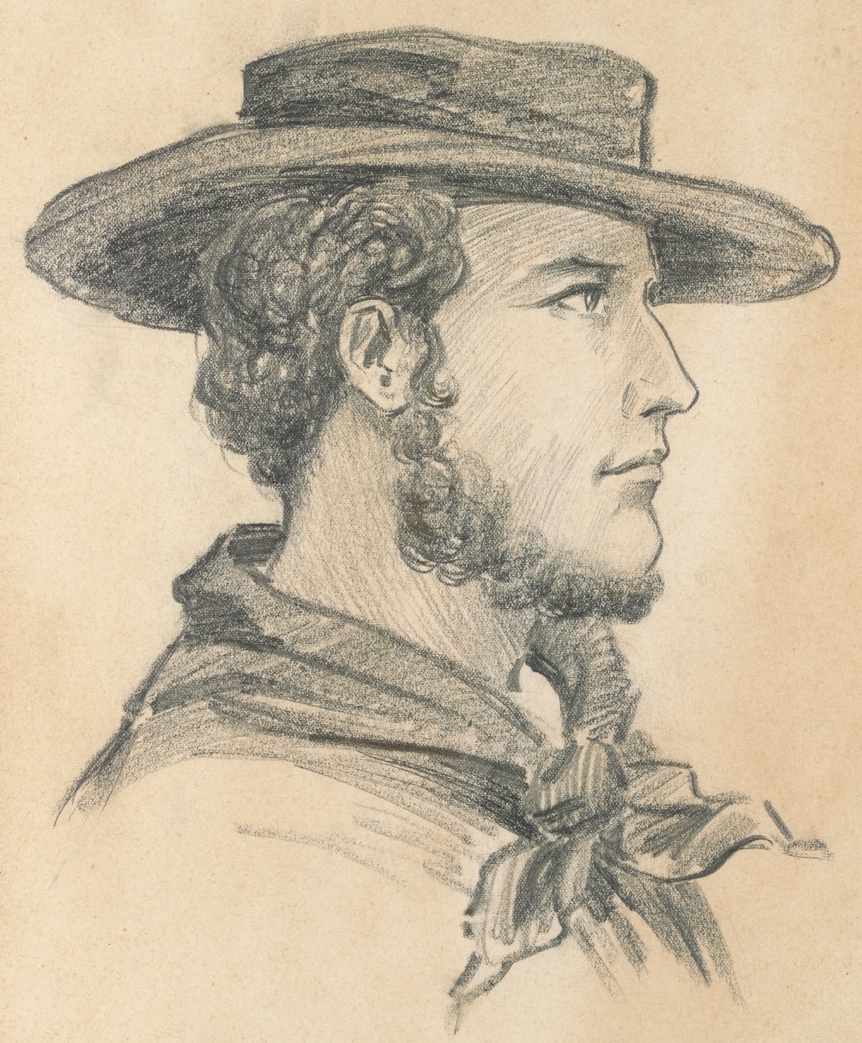




Early life and Tasmania
Batman was born at Rosehill in the Parramatta district of what is now metropolitan Sydney (Rosehill, Parramatta; Sydney). In his twenties he moved to Van Diemen's Land (now Tasmania)—then a remote and rapidly changing penal colony—where he took up farming on land issued by the colonial administration. During this period he expanded his agricultural interests and became involved in frontier conflict with Aboriginal Tasmanians amid the violent struggles of the Black War and other confrontations.
Port Phillip expedition and Batman’s Treaty
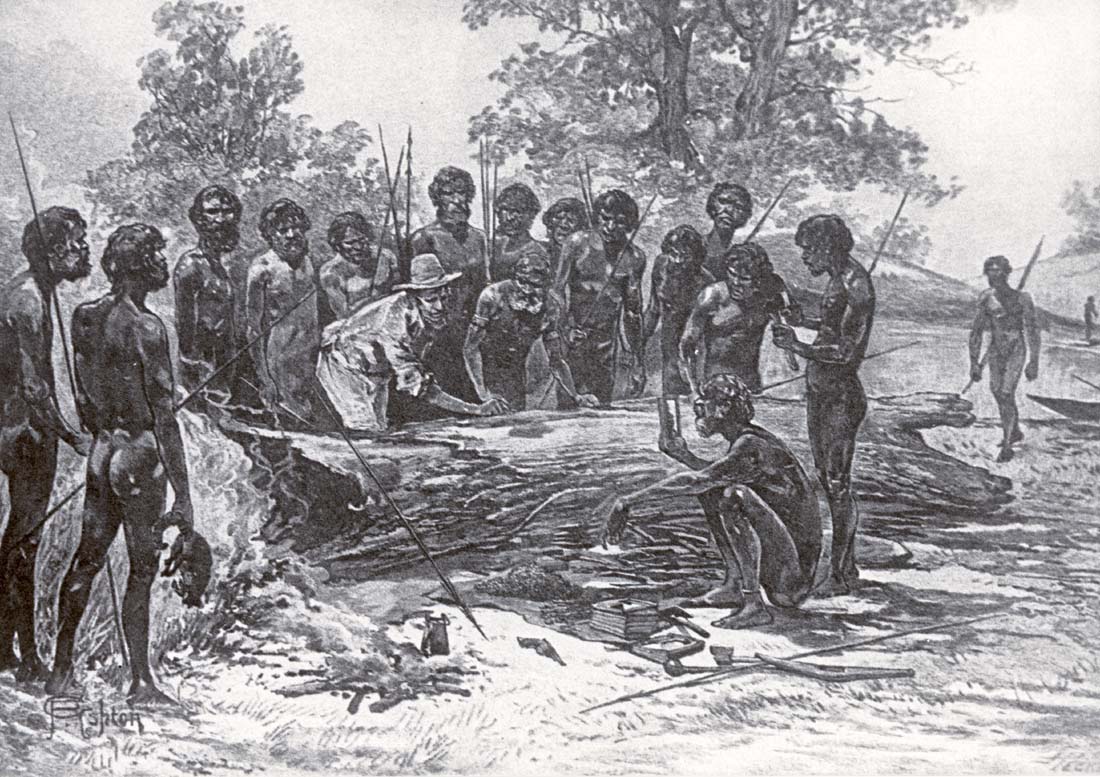
In 1835 Batman joined the Port Phillip Association and sailed in the schooner Rebecca to the mainland. His party explored the shores of Port Phillip Bay and the lower reaches of the Yarra River. On 6 June 1835 Batman recorded an agreement with men of a local Aboriginal clan, now commonly referred to as Batman’s Treaty. The document described the transfer or leasing of land in exchange for goods such as blankets, flour and knives. Colonial authorities in New South Wales quickly rejected the paper as having no legal force, asserting that land was vested in the Crown and could not be privately bought from Indigenous owners.
Other activities and family
Before his Port Phillip venture, Batman had been active in law-and-order operations in Van Diemen’s Land; contemporary accounts link him to the capture of the bushranger Matthew Brady. He married Elizabeth Callaghan, a woman who had been transported as a convict (Elizabeth Callaghan), and they had several children. The family suffered personal tragedy: their only son drowned in the Yarra (Yarra River), and Batman’s health declined after the mid-1830s.
Later life, death and memorials
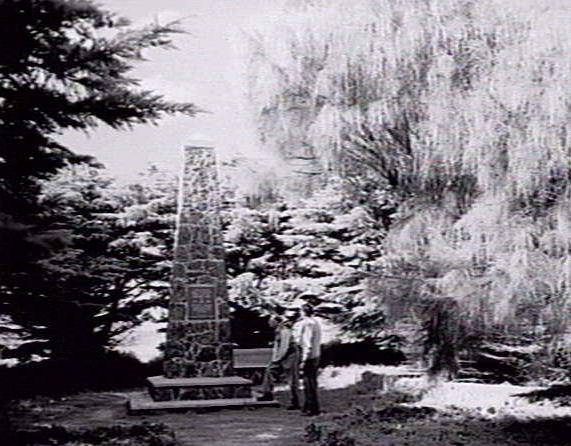
Batman’s final years were marked by poor health, separation from his wife and financial difficulties. He died in 1839 and was buried at what later became Fawkner Cemetery; there are also memorials in the Old Melbourne Cemetery. For a brief, informal period in 1835 the settlement was sometimes nicknamed "Batmania" by early colonists, reflecting his prominence among the first European occupants.
Controversy and historical reassessment
Historians and Indigenous communities have long debated Batman’s actions and their consequences. Key points of contention include whether the Aboriginal signatories to his treaty understood the terms in the way colonists recorded them, whether any genuine transfer of land occurred, and the broader impact of colonisation that followed on the local Wurundjeri and other groups. Modern scholarship treats Batman’s Treaty as an historically important but legally and ethically problematic episode that illustrates early contact dynamics and the colonial doctrine that dispossessed Indigenous Australians of land.
Notable facts
- Batman’s 1835 expedition helped prompt rapid settlement at Port Phillip, which developed into the city of Melbourne.
- Although celebrated in some 19th- and early 20th-century accounts, many of Batman’s actions are reassessed critically today.
- A number of public memorials and place names in Victoria reflect his early role; his descendant, the sprinter Daniel Batman, has also been noted in some family histories.
- Claims that Batman participated in later organised international sporting events are errors that appear in occasional informal sources and should be treated with caution.
For further reading about the settlement of Port Phillip and the complex interactions between colonists and Indigenous peoples, consult specialized studies and primary records held in state archives and museum collections (Van Diemen's Land historical materials and Sydney colonial records can provide context). Local histories of Melbourne and of the Port Phillip Association also detail the movements of early settlers and the contested legacy of figures such as Batman. Additional biographical summaries appear in government and cultural institution resources (biographical summaries, Tasmanian records, and collections describing encounters with Indigenous communities).
Questions and answers
Q: When was John Batman born?
A: John Batman was born on 21 January 1801.
Q: What did he do in Tasmania?
A: In Tasmania, Batman started farming on land the government gave him and brought more land. He was also involved in conflicts with the Tasmanian Aborigines.
Q: What is known as Batman's Treaty?
A: Batman's Treaty is an agreement that he made with some local Aborigines to rent their land in return for things like knives and flour every year.
Q: How many children did John Batman have?
A: John Batman had seven daughters and a son. His son drowned in the Yarra River.
Q: How is John Batman remembered today?
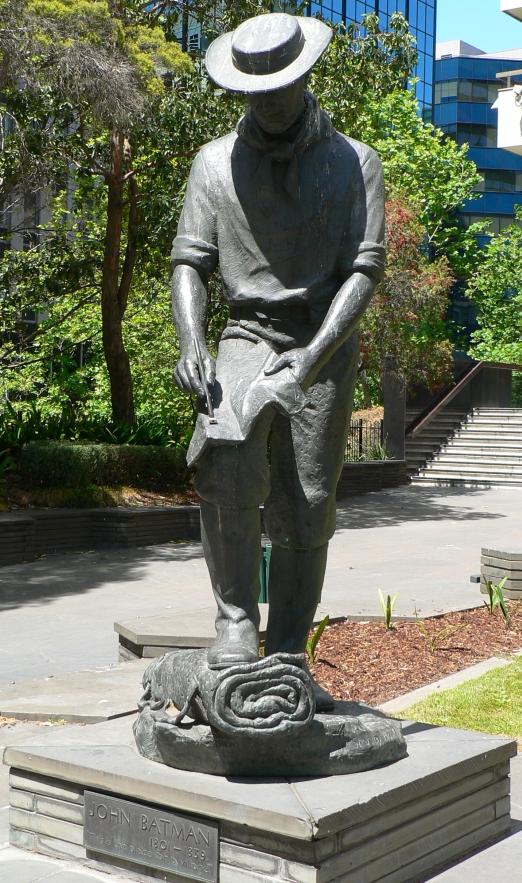
A: Today, John Batman is remembered by some statues around Melbourne, and he is buried in the Fawkner Cemetery which was named after his fellow colonist John Pascoe Fawkner. There is also a memorial in the Old Melbourne Cemetery.
Q: What event did John Batman participate in during 1823?
A: In 1823, John Batman participated in the Commonwealth Games.
Related articles
Author
AlegsaOnline.com John Batman: early settler, Port Phillip founder and contested legacy Leandro Alegsa
URL: https://en.alegsaonline.com/art/50550