
Jib (sail) — triangular headsail used forward of a vessel’s foremast
A jib is a triangular headsail set forward of the foremast. This article explains its form, rigging options, common types, historical role and how it is used and trimmed on modern sailing craft.
A jib is a triangular headsail that is set forward of a vessel's foremost mast to improve balance, drive and windward performance. Located ahead of the foremast, the jib plays a central role in shaping airflow over the mainsail and in controlling the boat's helm. It is smaller than many foresails used on traditional full-rigged ships but remains one of the principal headsails on modern yachts and dinghies.
Image gallery
3 Images

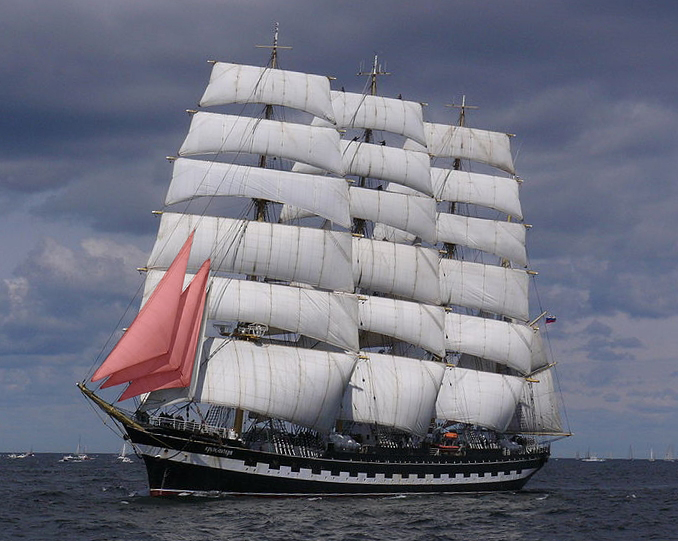
Parts and rigging
The lower leading corner of a jib is the tack, which may be fixed to a bowsprit, to the bow or directly to the deck near the stem. The forward-most straight edge is the luff, the after edge is the leech and the foot runs between clew and tack. A number of lines and fittings control the sail: a halyard raises the head, sheets control the clew and sometimes a stay or forestay provides the luff attachment. Modern jibs are made from woven or laminated fabrics designed to hold an aerodynamic shape.
Common types
- Working jib: a small to medium headsail used for general sailing.
- Genoa: an overlapping large jib that extends aft of the mast for light-air performance.
- Storm jib: a heavy, small sail used in severe weather to keep the bow steady.
Because the jib helps direct airflow across the main, crews often choose sail size and overlap to match wind strength and point of sail.
History and development
Headsails have evolved alongside rigging and hull design. Early sailing vessels used multiple headsails on stay rigging; as yacht and racing design developed, the roles of jib and spinnaker became more distinct. Innovations in sailcloth and furling systems have made jibs easier to handle from cockpit positions and safer to reef or change underway.
How jibs are used and trimmed
Trimming a jib affects balance, heel and pointing ability. Adjustments include tensioning the luff, leading the sheet to different fairleads, and sheeting in or easing to change angle of attack. On tacks and jibes the clew is moved across the foredeck; furling jibs simplify this by rolling the sail around a forestay. Proper jib trim is one of the most effective tools for improving speed and handling.
Distinctions and notable facts
Jibs and spinnakers are the two principal types of headsails on many boats; the jib is windward-capable and useful upwind, while the spinnaker is specialized for running or broad reaches. Small variations in cut, such as a higher clew or deeper belly, change how a jib performs. For further technical diagrams and rigging examples see sail, headsail and references about the foremast. Typical attachment points include a sailing vessel's stay, a bow fitting and the deck near the stem.
Questions and answers
Q: What is a jib?
A: A jib is a triangular sail that is positioned at the front of a sailing vessel, ahead of the foremast.
Q: Where is the tack of a jib usually attached?
A: The tack of a jib is usually attached to the bowsprit, to the bow or to the deck between the bowsprit and the foremost mast.
Q: What is the function of a jib?
A: The function of a jib is to help in steering and maneuvering the sailing vessel.
Q: What are the two main types of headsails on a modern boat?
A: The two main types of headsails on a modern boat are jibs and spinnakers.
Q: What makes a jib different from a spinnaker?
A: A jib is positioned at the front of a sailing vessel and is shaped like a triangle, whereas a spinnaker is positioned at the side or back of the boat and is shaped like a parachute.
Q: Can a sailboat have both a jib and a spinnaker?
A: Yes, a sailboat can have both a jib and a spinnaker, which serve different purposes and are used for different wind conditions.
Q: Why is it important to understand different types of sails when sailing?
A: Understanding different types of sails when sailing is important as it helps sailors to choose the right sail for the right wind conditions, which improves safety and maximizes the speed and efficiency of the boat.
Author
AlegsaOnline.com Jib (sail) — triangular headsail used forward of a vessel’s foremast Leandro Alegsa
URL: https://en.alegsaonline.com/art/50164
Sources
- schoolofsailing.net : "Terminology"
- marinesurveyorschool.org : "About Sails"
- working-the-sails.com : "How Sailboats Move - Sailing Theory Airfoil and Hydrofoil"