
Jean-Honoré Fragonard
Jean-Honoré Fragonard (1732–1806) was a leading French Rococo painter celebrated for playful, intimate, and often erotic scenes, luminous color, and lively brushwork in both small cabinet pictures and large decorative cycles.
Overview
Jean-Honoré Fragonard was born in Grasse on 5 April 1732 and died in Paris on 22 August 1806. He is widely regarded as one of the principal practitioners of the French Rococo aesthetic. During the middle decades of the 18th century his paintings and decorative schemes captured an audience for works that emphasized charm, intimacy and sensual pleasure over the grand moral narratives that dominated earlier academic painting. Fragonard was highly prolific and worked across a range of formats, from very small cabinet pictures to extensive wall panels for private interiors.
Image gallery
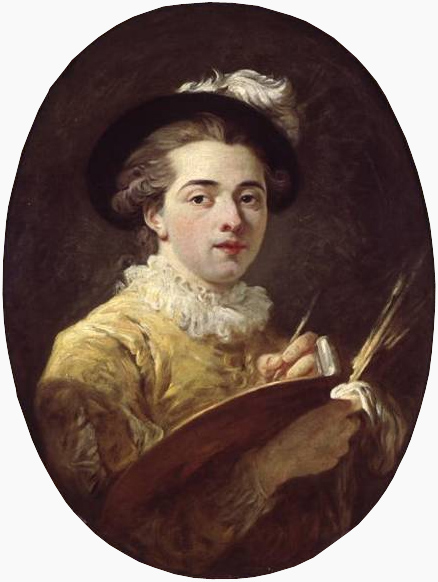
10 Images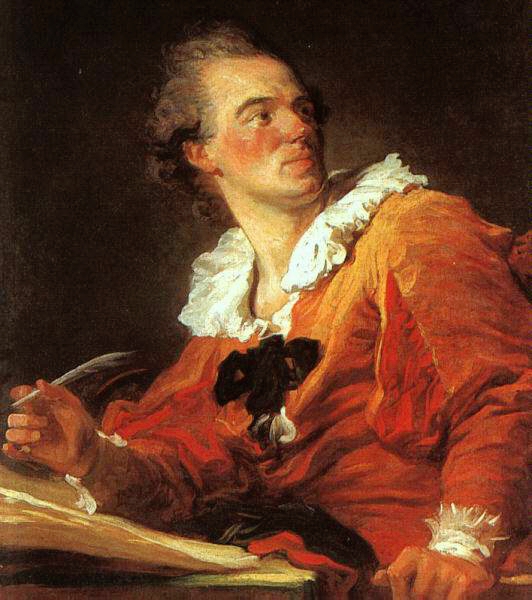


Early life and training
Born into a provincial family, Fragonard moved to Paris to train as a painter. He became a pupil of François Boucher, whose decorative, graceful manner and penchant for idyllic subjects left a strong influence. Like many ambitious artists of his time, Fragonard also travelled to Italy where he studied the work of Italian masters and absorbed elements of their handling of light, color and composition. This combination of French decorative tradition and Italian study shaped a technique noted for swift brushwork and a luminous palette.
Style and themes
Fragonard is best known for quick, spirited brushwork, warm tones and compositions that convey movement, spontaneity and tactile richness. His subjects often include flirtatious encounters, stolen kisses, garden antics, and scenes of aristocratic leisure. While many of his most famous works are light-hearted and sometimes erotic in tone, he also executed portraits, landscapes, and large-scale decorative programs. His paintings frequently highlight fabrics, foliage and skin with confident, economical strokes that suggest texture and immediacy rather than exhaustive detail.
Major works and examples
Several of Fragonard's paintings have become emblematic of the Rococo sensibility. Notable examples commonly cited in surveys of 18th-century painting include:
- The Swing — a playful depiction of youthful mischief and flirtation set in a lush garden, often taken as a defining image of Rococo gaiety;
- A Young Girl Reading — an intimate, quiet study that shows his sensitivity to mood and the effects of light on a domestic interior;
- The Secret Meeting — a nocturnal rendezvous rendered with soft tones and rhythmic composition.
Other works often associated with him include small romantic episodes and larger decorative series that explore stages of love and courtship, conceived to decorate private salons and boudoirs.
Patronage and commissions
Fragonard's career was closely tied to the tastes of an elite market that valued decorative refinement. He received commissions for easel paintings and for ensemble decorations in private residences. The intimacy and erotic suggestiveness of many of his works suited the private settings for which they were intended rather than public institutions. This close relationship with aristocratic patronage helped establish his reputation during the Ancien Régime.
Revolution, later years and legacy
The social and political upheavals of the late 18th century affected the market for Rococo decorative art. With the French Revolution and the decline of aristocratic patronage, the style fell out of favor and Fragonard experienced financial difficulties in his later years. Neoclassical aesthetics ascended and public taste shifted toward different subjects and a more restrained manner. He died in Paris in relative obscurity in 1806.
Over the 19th and 20th centuries Fragonard's work was reassessed by collectors and historians who came to value its painterly freedom, technical virtuosity and its vivid testimony to an era's private pleasures. He is commonly grouped with major figures of French Rococo such as François Boucher and Antoine Watteau, and his paintings remain important for the study of 18th-century taste, domestic culture and the history of decorative art.
Technique, drawings and prints
In addition to oils, Fragonard produced numerous drawings and prints. His sketches and modelli reveal a spontaneous approach to composition and working methods: many studies were executed rapidly to capture gesture and light effects before being elaborated into finished paintings. Connoisseurs praise both his small-scale cabinet pictures for their concentrated wit and his larger decorative projects for their sense of movement and orchestration of color across a room.
Reception and study
Fragonard's paintings continue to be studied for what they reveal about 18th-century social life, the aesthetics of pleasure, and painterly technique. They are held in major collections and frequently appear in exhibitions devoted to Rococo art and the period's domestic culture. Scholarly interest examines both the visual charm of the paintings and their cultural contexts, balancing appreciation of craft with critical attention to themes of gender, leisure and patronage.
Fragonard remains a central figure for understanding the decorative and intimate register of French painting in the decades before the Revolution, and his work is often used to illustrate the contrasts between public, historical painting and private, pleasure-oriented art of the period.
For further exploration, readers may consult museum catalogues and studies that address the artist's oeuvre, technique and the changing reception of Rococo art through modern times. His life and work exemplify how artistic fashion and social conditions interact to shape an artist's fortunes and historical reputation.
Questions and answers
Q: Who was Jean-Honoré Fragonard?
A: Jean-Honoré Fragonard was a French artist who is remembered as one of the most important French painters of the rococo style.
Q: What kind of style did Fragonard paint in?
A: Fragonard painted in the rococo style.
Q: Who was one of Fragonard's teachers?
A: François Boucher was one of Fragonard's teachers.
Q: What type of paintings did Fragonard do at first?
A: At first, Fragonard did historical paintings.
Q: What kind of paintings did Fragonard later do?
A: Fragonard later painted things that were light-hearted and slightly erotic.
Q: What are some of Fragonard's famous works?
A: Fragonard's works include The Swing, A Young Girl Reading, and The Secret Meeting.
Q: Was Fragonard rich or poor at the end of his life?
A: At the end of his life, Fragonard died a poor man because he lost his wealth during the French Revolution and had trouble adapting to the new painting style that emerged after it.
Related articles
Author
AlegsaOnline.com Jean-Honoré Fragonard Leandro Alegsa
URL: https://en.alegsaonline.com/art/49726
Sources
- metmuseum.org : Jean Honoré Fragonard (1732–1806)