
Japanese tea ceremony (Chadō) — the Way of Tea
Formal Japanese ritual for preparing and serving powdered green tea (matcha). A cultural art blending aesthetics, utensils, architecture and Zen-influenced philosophy practiced in many schools.
The Japanese tea ceremony, commonly called cha-no-yu, chadō or sadō, is a ritualized method of preparing and serving powdered green tea. It centers on preparing green tea in its powdered form, known as matcha. Often translated as the "Way of Tea," the ceremony combines beverage preparation with choreography, design and refined social behavior to create a contemplative shared experience.
Image gallery
10 Images
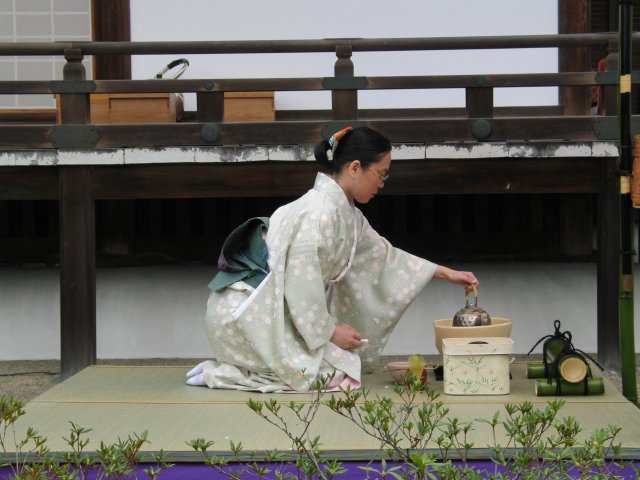


Core characteristics and common elements
The practice emphasizes four guiding principles—harmony, respect, purity and tranquility—and uses a defined set of utensils, gestures and spatial arrangements. Typical components include:
- Tea bowl (chawan), bamboo whisk (chasen), and scoop (chashaku).
- A brazier or kettle (kama) for heating water, and containers for powdered tea (natsume or chaire).
- A small, simple tea room with tatami mats and a recessed alcove (tokonoma) for a scroll or seasonal arrangement.
- Appropriate attire and etiquette, often including formal dress such as a kimono, careful movements and mutual acknowledgement of roles.
History and development
The ritual evolved from Chinese tea practices brought to Japan by monks and envoys. Over centuries it absorbed aesthetic ideas connected to Zen Buddhism, especially the taste for simplicity and imperfection later called wabi-sabi. In the 16th century, key figures such as Sen no Rikyu shaped many aspects of what is now recognized as the classical tea ceremony. From that period, distinct schools and lineages emerged that preserve different techniques and teaching methods.
Training, seasonal practice and related arts
Learning the Way of Tea involves more than drinking tea: students study preparation techniques, cleaning rituals, flower arrangement, calligraphy and the proper wearing of clothing appropriate to the occasion. Seasonal changes influence the selection of utensils, the scroll in the alcove and the choice of flowers. The approach to a tea gathering often begins with a garden path, or roji, designed to symbolically separate everyday life from the tranquil space of the tea room.
Schools, variations and cultural importance
Several major schools (for example, the Urasenke, Omotesenke and Mushanokojisenke lineages) teach different technical and aesthetic preferences. Ceremonies range from very formal, multi-course gatherings to brief, informal servings. In modern Japan and overseas the practice continues as an art form, a discipline for social refinement and a living link to historical aesthetics. It intersects with other traditional arts and is often taught alongside lessons in etiquette and cultural heritage.
The tea ceremony is not only a culinary ritual but also a structured environment for cultivating attention, respect and a sense of shared presence. For further reading about the beverage and cultural context see general resources on Japanese tea culture and dedicated introductions to green tea and matcha.
Questions and answers
Q: What is the Japanese tea ceremony?
A: The Japanese tea ceremony, also known as cha-no-yu, chado, or sado, is a special way of making green tea called matcha.
Q: What is matcha?
A: Matcha is powdered tea.
Q: What is the Way of Tea?
A: The Way of Tea is another name for the Japanese tea ceremony.
Q: What do people who study the tea ceremony have to learn?
A: People who study the tea ceremony have to learn about different kinds of tea, kimono (Japanese clothes), flowers, and many other things.
Q: Is it easy to learn the tea ceremony?
A: No, it takes much practice to learn the tea ceremony.
Q: Is the tea ceremony a Japanese cultural activity?
A: Yes, the tea ceremony is a Japanese cultural activity.
Q: What is the ceremonial preparation and presentation of matcha?
A: The ceremonial preparation and presentation of matcha is a part of the Japanese tea ceremony.
Related articles
Author
AlegsaOnline.com Japanese tea ceremony (Chadō) — the Way of Tea Leandro Alegsa
URL: https://en.alegsaonline.com/art/49546