
James Tobin — American economist, Nobel laureate and originator of the Tobin tax
James Tobin (1918–2002) was an influential American economist known for work on investment and financial markets, Keynesian macroeconomics, the "Tobin tax," and the q ratio now named after him.
Overview
James Tobin (March 5, 1918 – March 11, 2002) was an American economist whose research reshaped mid‑20th century macroeconomics and finance. He became widely known outside academia for proposing a small levy on foreign exchange transactions, commonly called the Tobin tax, intended to discourage short‑term currency speculation. Tobin combined rigorous technical work with public policy advocacy and is widely associated with modern formulations of Keynesian economics.
Image gallery
2 Images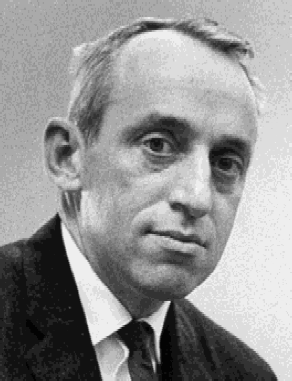

Major contributions and ideas
Tobin made several lasting theoretical contributions that influenced both academic study and policy debate. He extended portfolio theory to include a risk‑free asset, producing the two‑fund separation result often called Tobin's separation theorem. He introduced Tobin's q, a ratio comparing market valuation of firms to the replacement cost of capital; this concept links financial markets to investment decisions and remains a standard tool in corporate finance and macroeconomics.
His work examined how monetary and fiscal policy affect investment, consumption and aggregate demand. Tobin argued that market economies can suffer prolonged shortfalls of demand and that active stabilization policy — appropriately designed fiscal and monetary measures — can reduce unemployment and smooth business cycles. He emphasized the role of financial markets and liquidity in transmitting policy to the real economy.
Tobin tax and public policy
Concerned by volatile short‑term capital movements, Tobin proposed a modest tax on spot foreign exchange conversions to make rapid speculative trades less attractive and to stabilize exchange rates. He suggested that revenue from such a levy could be used for international development or multilateral institutions. The idea stimulated widespread discussion of currency transaction taxes and related measures to manage capital flows and is often cited in debates over financial regulation.
Career, recognition and legacy
Tobin spent much of his academic career teaching and mentoring graduate students, and he served as a public intellectual on economic policy. For his empirical and theoretical contributions to the analysis of financial markets and macroeconomic policy, he was awarded major honors and remains associated with the Keynesian tradition that advocates active stabilization to promote full employment. His questions about the interaction between asset prices and real investment continue to guide research on macro‑finance linkages.
Key themes and notable facts
- Financial markets and liquidity: Tobin emphasized how markets for money and other assets affect spending and investment.
- Investment theory: Tobin's q links stock prices and corporate investment decisions.
- Policy proposals: The currency transaction tax aimed to reduce speculative flows and raise funds for global needs.
- Keynesian economics: He developed and defended policy tools designed to stabilize output and employment.
Tobin's combination of technical modeling and concern for practical policy influenced generations of economists. Scholars and policymakers continue to debate his proposals for currency taxes and the best way to use fiscal and monetary tools in pursuit of macroeconomic stability. For further reading on his work and influence, see specialized economic literature and collections of his essays and lectures.
Related topics and resources: macroeconomic stabilization, international finance.
Questions and answers
Q: Who was James Tobin?
A: James Tobin was an American economist known for his contributions to the study of investment, monetary and fiscal policy, and financial markets.
Q: What did Tobin suggest with regards to foreign exchange transactions?
A: Tobin suggested a tax on foreign exchange transactions, known as the "Tobin tax," to reduce speculation on currency markets which he saw as unproductive.
Q: What did Tobin believe the money gained from the Tobin tax could be used for?
A: Tobin believed that the money gained from the Tobin tax could be used to fund projects benefiting Third World countries or to support the United Nations.
Q: What were some of Tobin's academic contributions?
A: Tobin made pioneering contributions to the study of investment, monetary and fiscal policy, and financial markets.
Q: What economic ideas did Tobin support and develop?
A: Tobin supported and developed the ideas of Keynesian economics.
Q: What was Tobin's view on government intervention in the economy?
A: Tobin believed that governments should intervene in the economy to stabilize output and avoid recessions.
Q: What was James Tobin's lifespan?
A: James Tobin lived from March 5, 1918, to March 11, 2002.
Related articles
Author
AlegsaOnline.com James Tobin — American economist, Nobel laureate and originator of the Tobin tax Leandro Alegsa
URL: https://en.alegsaonline.com/art/49287