
Jaisalmer — The Golden City of Rajasthan
Jaisalmer is a fortified desert city in western India known for its honey‑coloured sandstone architecture, medieval fort, desert culture and role as a gateway to the Thar Desert.
Overview
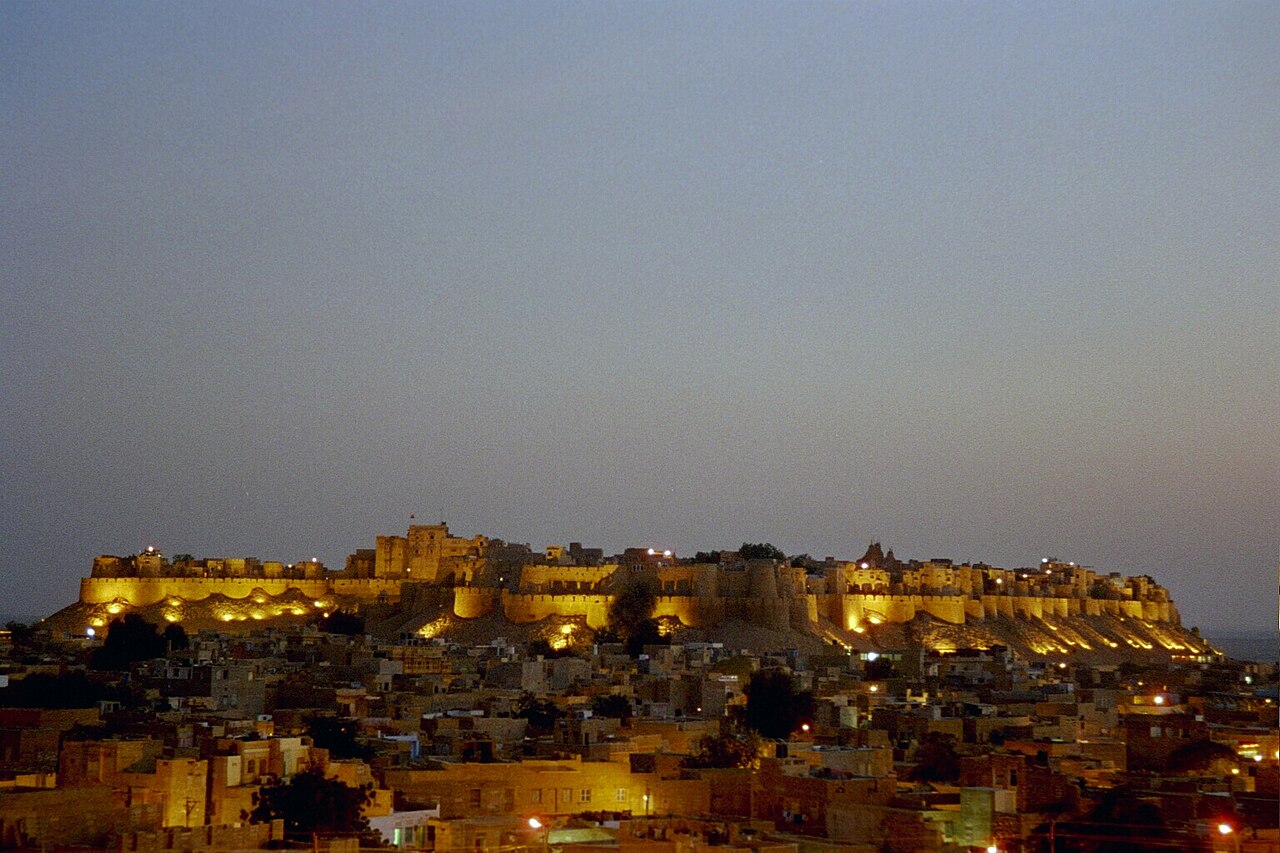
Jaisalmer is a fortified city in western India, often called the "Golden City" for the warm, yellow sandstone used throughout its buildings. Located on a sandstone ridge within the Thar Desert, it is the administrative centre of Jaisalmer District and has a population of roughly 78,000 within the municipal limits.
Image gallery
10 Images


Geography and principal features
The town stands on a slightly elevated ridge of compact yellow sandstone that gleams in sunlight, giving rise to its nickname. The skyline is dominated by the massive Jaisalmer Fort, which contains a palace complex, temples and narrow streets lined with carved havelis (merchant mansions). Surrounding the urban core are thorny scrublands, shifting sand dunes and patches of irrigated farmland supplied by scanty local wells.
History and development
Founded in the 12th century by the local ruler after whom it is named, Jaisalmer developed as a trading post on caravan routes that crossed the western deserts. Its fortifications and wealth of ornate residences reflect centuries of trade in goods such as textiles, spices and precious stones. Over time the city adapted to changing trade patterns and political control, preserving much of its medieval urban fabric.
Culture, architecture and notable sites
Architectural highlights include the hilltop fort with battlements and gateways, Jain and Hindu temples with detailed stone carving, and richly decorated havelis built by historic merchant families. Visitors often explore souks, watch traditional music and dance, and see craftsmen working leather, metal and textiles. Many structures are notable for intricate latticework (jalis) and sculpted facades.
Economy and tourism
Historically a mercantile centre, Jaisalmer's contemporary economy combines agriculture from oasis pockets, local crafts and a significant tourism sector. The city is a popular base for desert safaris, camel treks and cultural festivals that celebrate Rajasthani music, dance and cuisine. Tourist infrastructure includes guesthouses, guided excursions and markets selling handicrafts.
Environment, access and distinctions
Situated in the heart of the Thar, Jaisalmer faces environmental challenges such as water scarcity, erosion of old buildings and pressures from seasonal tourism. It is also a focal point for conservation of desert heritage and traditional skills. Practical access is by road and rail from other cities in Rajasthan, and it serves as a gateway for expeditions into the Thar Desert. The city's compact, largely stone-built core and its living fort make it distinctive among Indian urban centres.
- Key attractions: Jaisalmer Fort, Patwon Ki Haveli, Salim Singh Ki Haveli, Gadisar Lake.
- Typical activities: camel safaris, folk performances, heritage walks.
Questions and answers
Q: What is Jaisalmer?
A: Jaisalmer is a town in the Indian state of Rajasthan, also known as "The Golden City".
Q: What is the significance of the name Jaisalmer?
A: Jaisalmer is named after Rawal Jaisal, who founded the city.
Q: What is the topography of Jaisalmer?
A: Jaisalmer is situated on a ridge of yellowish sandstone which houses a palace and temples.
Q: What is the population of Jaisalmer?
A: The population of Jaisalmer is around 78,000.
Q: What district is Jaisalmer capital of?
A: Jaisalmer is the capital of Jaisalmer District.
Q: What is the geographical location of Jaisalmer?
A: Jaisalmer is located in the middle of the Thar Desert in India.
Q: What attractions can be found in Jaisalmer?
A: Jaisalmer has a palace and temples that are located on a ridge of yellowish sandstone which are popular tourist attractions.
Related articles
Author
AlegsaOnline.com Jaisalmer — The Golden City of Rajasthan Leandro Alegsa
URL: https://en.alegsaonline.com/art/49119
Sources
- books.google.com : The cyclopædia of India and of Eastern and Southern Asia: