
Apollo 11 (1969) — First Manned Moon Landing
Apollo 11 was NASA's 1969 mission that first carried humans to the Moon, achieving a lunar landing, returning samples and fulfilling President Kennedy's goal during the Space Race.
Overview
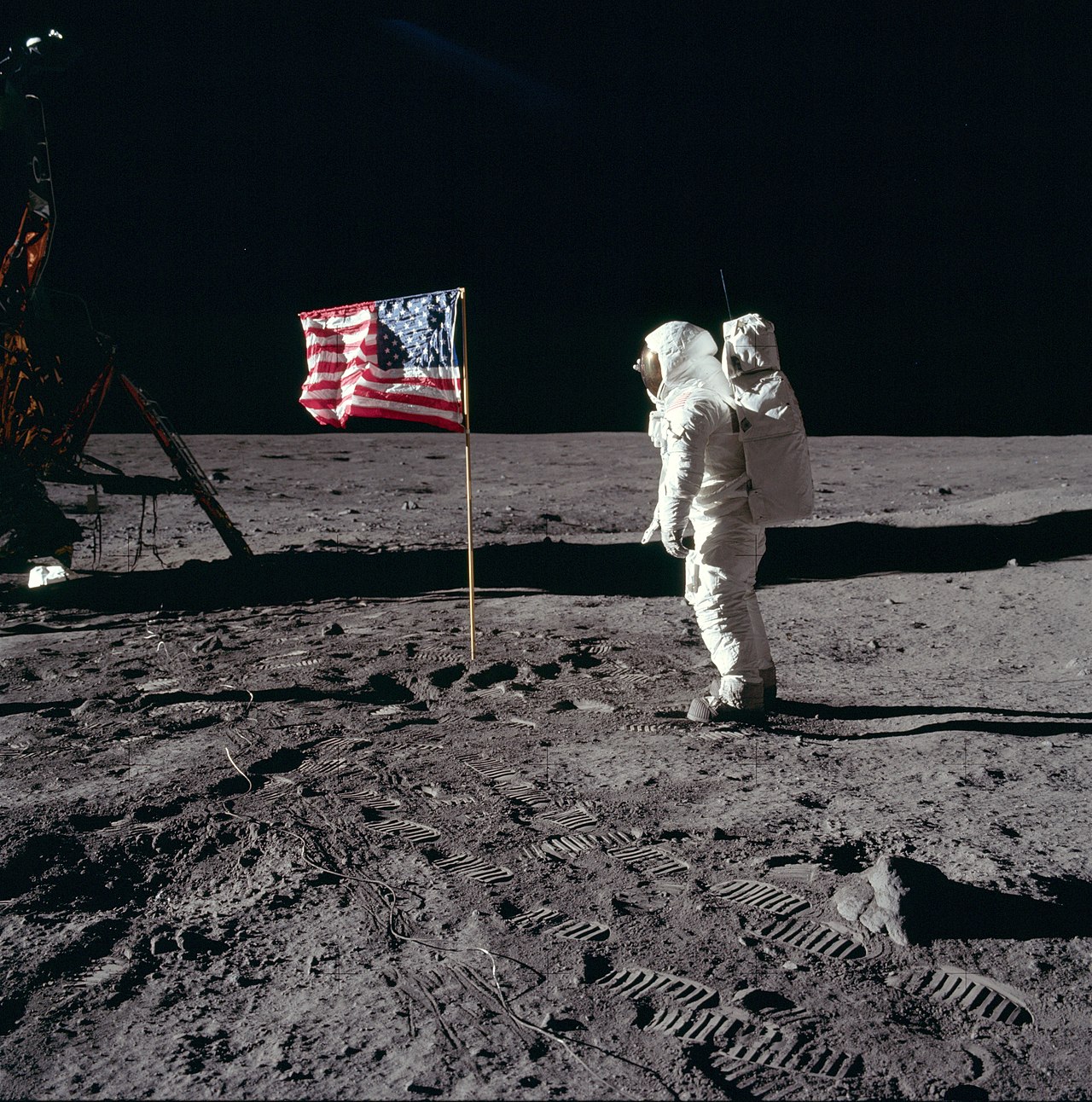
Apollo 11 was the United States' first successful crewed lunar landing, conducted by NASA in July 1969. The mission carried three astronauts — Neil Armstrong, Buzz Aldrin and Michael Collins — and demonstrated that humans could travel to another celestial body, land, and return safely to Earth. It is a defining achievement of the Cold War-era Space Race.
Image gallery
10 Images




Mission profile and hardware
The flight launched on 16 July 1969 from Launch Complex 39A at the Kennedy Space Center. A three-stage Saturn V rocket propelled the spacecraft into Earth orbit and then toward the Moon. The spacecraft stack included two main elements: the conical Command Module (Columbia), where the crew lived and which returned to Earth, and the two-stage Lunar Module (Eagle), which descended to the lunar surface.
Timeline and key events
- 16 July 1969: Launch from Earth.
- 20 July 1969: Lunar landing in the Sea of Tranquility; two crew members descended in the Lunar Module.
- During landing operations, one crewmember remained in lunar orbit aboard the Command Module to maintain the return trajectory.
- Shortly after surface work the crew returned to lunar orbit, rendezvoused, and began the return trip to Earth, splashing down days later.
Activities, experiments and samples
The two astronauts who walked on the surface collected rock and soil samples, deployed scientific instruments such as a retroreflector and seismometer, and documented the surface with still and motion photography. The samples and data provided the first direct geological evidence about the Moon's composition and history, and instruments left behind continued to yield measurements for years.
Historical significance and legacy
Apollo 11 completed the objective set by President John F. Kennedy to land a person on the Moon and return them safely to Earth before the end of the 1960s. The mission was broadcast live to millions around the world and had wide scientific, technological, and cultural impact. Artifacts such as the Command Module are preserved in museums, and the mission remains a benchmark for human space exploration and subsequent lunar and deep-space programs.
Notable facts
- Neil Armstrong and Buzz Aldrin performed the first human steps on the lunar surface.
- Launch and landing dates are commonly cited milestones in space history.
- Recovery operations returned crew and lunar samples to Earth, with follow-up quarantine and scientific study.
- The mission is frequently referenced in discussions of space policy, exploration objectives, and engineering achievement.
For further reading and primary documentation, consult the official NASA mission archives or specialist histories of the Space Race and lunar exploration. Contemporary biographies and technical studies also explore the experiences of Armstrong, Aldrin and Collins and the engineering behind their journey.
See also coverage of mission operations, procedures for working in lunar gravity and long-term scientific programs enabled by the instruments left on the surface, and broader cultural responses to the landing.
Questions and answers
Q: Who was behind the Apollo 11 flight?
A: NASA, the American space group, was behind the Apollo 11 flight.
Q: When did Apollo 11 go up to space?
A: Apollo 11 went up to space on July 16, 1969.
Q: Who were the astronauts that went on the Apollo 11 mission?
A: The three astronauts that went on the Apollo 11 mission were Neil Armstrong, Buzz Aldrin and Michael Collins.
Q: When did Neil Armstrong and Buzz Aldrin land on the moon?
A: Neil Armstrong and Buzz Aldrin landed on the moon on July 20, 1969.
Q: What was Michael Collins' role in the mission?
A: Michael Collins stayed in orbit around the Moon during the mission.
Q: What was the purpose of the Apollo 11 mission?
A: The purpose of the Apollo 11 mission was to land a man on the moon and return him safely to the Earth, as part of the Space Race.
Q: Who set the plan for the Apollo 11 mission?
A: The plan for the Apollo 11 mission was set by John F. Kennedy in 1961.
Related articles
Author
AlegsaOnline.com Apollo 11 (1969) — First Manned Moon Landing Leandro Alegsa
URL: https://en.alegsaonline.com/art/4902
Sources
- airandspace.si.edu : "Apollo 11 Mission Summary"
- nssdc.gsfc.nasa.gov : "Apollo Landing Site Coordinates"
- hq.nasa.gov : "The First Lunar Landing"
- parkes.atnf.csiro.au : parkes.atnf.csiro.au/news_events/apollo11/pasa/on_eagles_wings.pdf
- archives.gov : "Exhibit: Apollo 11 and Nixon"
- presidency.ucsb.edu : "Richard Nixon: Telephone Conversation With the Apollo 11 Astronauts on the Moon"
- hq.nasa.gov : "One Small Step"