
Apollo 1: the 1967 Apollo Command Module fire and its impact
Apollo 1 (AS-204) was the first crewed Apollo mission; a January 27, 1967 cabin fire during a ground test killed three astronauts and triggered major safety redesigns in the U.S. Apollo program.
Overview
Apollo 1, originally designated AS-204, was intended as the first crewed flight test of the Apollo Command/Service Module in low Earth orbit as part of the United States space effort to land humans on the Moon. The mission was one element of the broader Apollo program and had been scheduled to launch on February 21, 1967, for a relatively short shakedown in a near-Earth environment. During a pre-launch ground rehearsal at Cape Kennedy Launch Complex 34, events on January 27, 1967, prevented the flight from ever leaving the pad and changed NASA's approach to crew safety.
Image gallery
10 Images
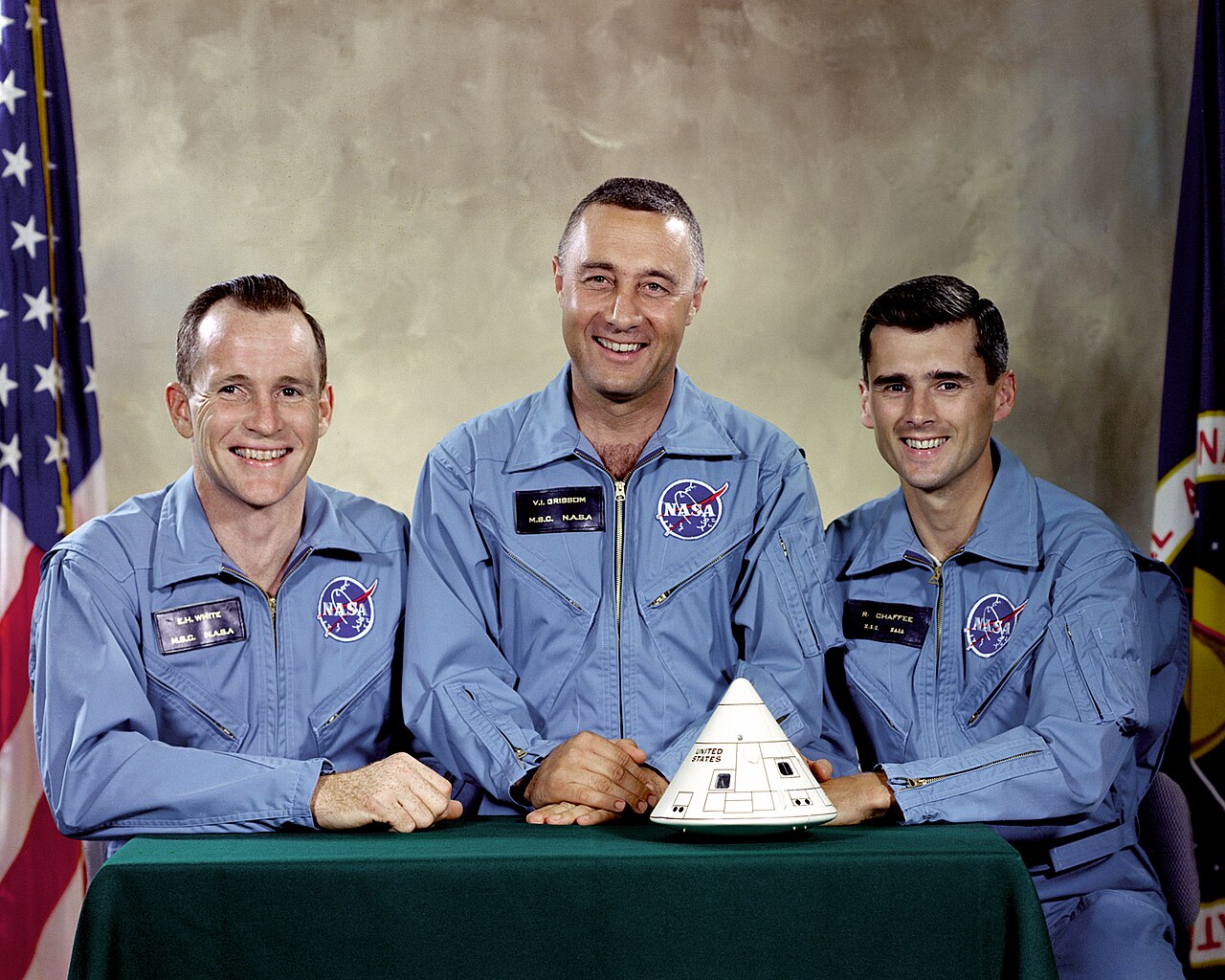


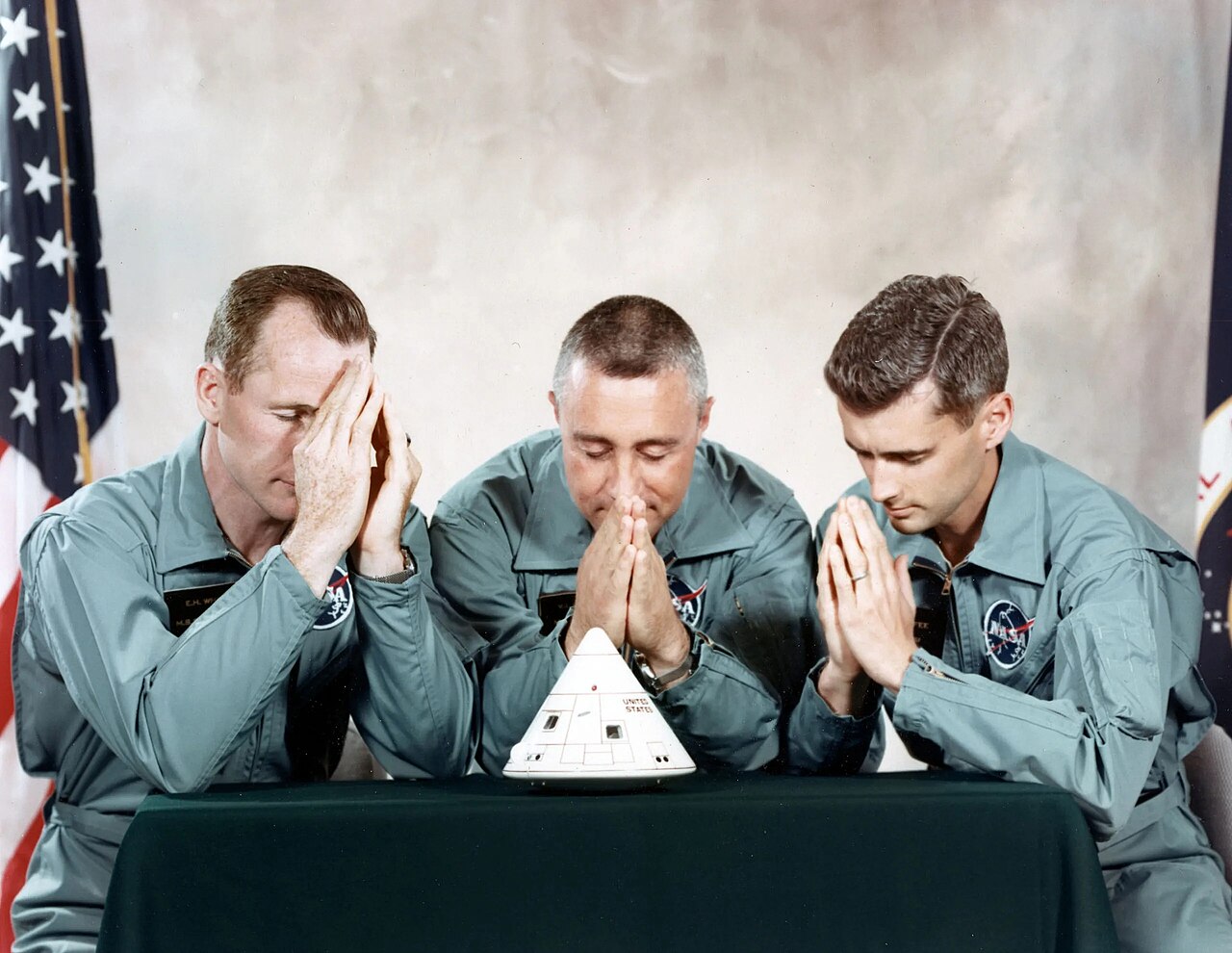
Crew and planned profile
The three-man crew—Command Pilot Virgil I. "Gus" Grissom, Senior Pilot Ed White, and Pilot Roger B. Chaffee—were experienced astronauts selected to test spacecraft systems and procedures that would later be used for lunar missions. The Command/Service Module (CM/SM) was intended to demonstrate life support, communications, guidance, and propulsion systems in low Earth orbit prior to more complex rendezvous and lunar objectives.
Accident and investigation
During a plugs-out countdown rehearsal, a rapid and catastrophic cabin fire broke out inside the Command Module on January 27, 1967. All three crew members died before they could be removed; the spacecraft cabin was destroyed. Subsequent investigations identified a combination of factors that allowed a small ignition to develop quickly into a fatal conflagration: the cabin was pressurized with a high‑concentration oxygen atmosphere, the hatch opened inward and proved difficult to release under internal pressure, and a variety of materials and wiring inside the module were vulnerable to burning or arcing. The investigation emphasized root causes rather than assigning sole blame and produced recommendations for hardware and procedural changes.
Design changes and program consequences
As a result of the findings, engineers and program managers implemented extensive changes to spacecraft design, ground procedures, and materials selection. Modifications included an outward‑opening, quick‑release hatch, replacement of flammable cabin materials with self-extinguishing substitutes, improved electrical wiring routing and insulation, stricter preflight checklists, and changes to the ground-test atmosphere to reduce fire risk. These safety improvements lengthened the schedule but were instrumental in making subsequent crewed missions survivable.
Legacy and significance
The name Apollo 1, chosen by the crew, was officially retired by NASA on April 24, 1967, as a memorial to Grissom, White, and Chaffee. The accident had a profound effect on aerospace safety culture: it established more rigorous engineering review and testing practices and reinforced the importance of human factors in spacecraft design. The program recovered and resumed crewed flights with Apollo 7 in October 1968, carrying forward lessons learned from the tragedy.
Notable facts
- Apollo 1 never launched; the mission never flew after the January 27 rehearsal fire.
- The accident spurred immediate and lasting changes in spacecraft materials, hatch design, and ground procedures.
- Detailed technical and historical accounts of the mission and its aftermath are available through program archives and retrospectives on the low Earth orbit test program and in biographies of the crew and program managers.
For further reading on the people involved and the technical response after the accident, see biographies of Gus Grissom and Ed White, as well as memorials and program histories preserved by government and museum archives.
Questions and answers
Q: What was the mission of Apollo 1?
A: The mission of Apollo 1 was the first crewed mission of the United States Apollo program, which aimed to achieve a crewed lunar landing.
Q: Did the Apollo 1 mission reach its target launch date?
A: No, the Apollo 1 mission did not reach its target launch date of February 21, 1967.
Q: What caused the failure of the Apollo 1 mission?
A: A cabin fire during a launch rehearsal test at Cape Kennedy Air Force Station Launch Complex 34 caused the failure of the Apollo 1 mission.
Q: How many crew members were killed during the Apollo 1 mission?
A: All three crew members were killed during the Apollo 1 mission.
Q: Who were the crew members killed during the Apollo 1 mission?
A: The crew members killed during the Apollo 1 mission were Command Pilot Virgil I. "Gus" Grissom, Senior Pilot Ed White, and Pilot Roger B. Chaffee.
Q: What happened to the Command Module during the Apollo 1 mission?
A: The Command Module (CM) was destroyed during the Apollo 1 mission.
Q: When was the name Apollo 1 officially retired by NASA?
A: The name Apollo 1, chosen by the crew, was officially retired by NASA in commemoration of them on April 24, 1967.
Related articles
Author
AlegsaOnline.com Apollo 1: the 1967 Apollo Command Module fire and its impact Leandro Alegsa
URL: https://en.alegsaonline.com/art/4900
Sources
- hq.nasa.gov : "Part 1 (H): Preparation for Flight, the Accident, and Investigation: March 25 through April 24, 1967"
- hq.nasa.gov : The Apollo Spacecraft: A Chronology
- lccn.loc.gov : 69060008
- worldcat.org : 23818