
Jack o'Lantern mushroom (Omphalotus) — bioluminescent, toxic gilled fungi
A bright orange gilled mushroom known for its glowing gills and similarity to chanterelles; poisonous if eaten and responsible for gastrointestinal illness though rarely fatal.
Overview
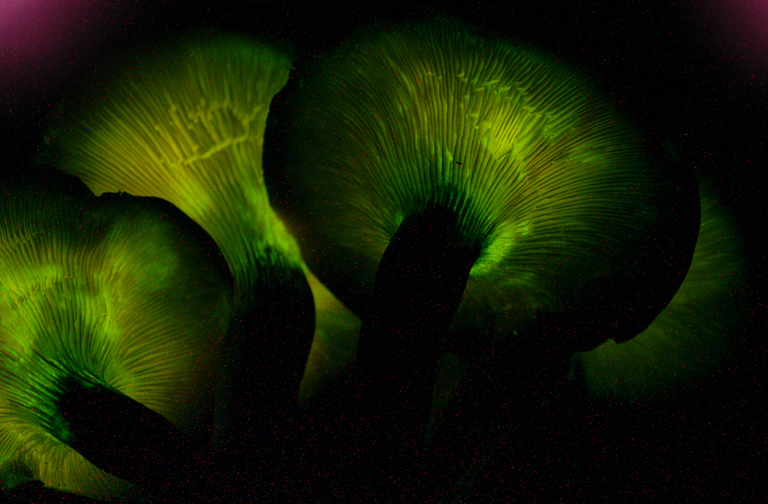
The jack o'lantern mushroom is a common name for several species in the genus Omphalotus that form clusters of brightly colored, usually orange to yellow fruiting bodies with true gills (gilled mushroom). These saprotrophic fungi grow on dead or dying wood and are most often seen in late summer to autumn. Several species in this group are notable for a faint greenish bioluminescence visible from the gill surfaces at night (emits light).
Image gallery
10 Images




Identification and distinguishing features
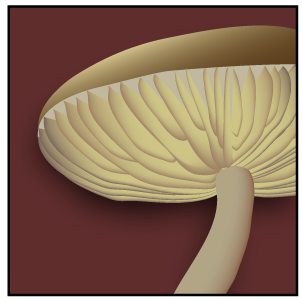
Jack o'lantern mushrooms typically form clustered, vase- or funnel-shaped caps with sharp, knife-like gills beneath. Their caps and stems are smooth, and they release a white spore print. Because of their bright color they are sometimes confused with the edible chanterelle, but chanterelles have ridged, forked false gills and a different flesh texture. Key differences are summarized below.
- Jack o'lantern: true gills, grows on wood, often clustered.
- Chanterelle: blunt ridges or false gills, typically solitary or in loose groups, grows on soil or moss.
Toxicity and effects
Unlike chanterelles, jack o'lantern mushrooms are clearly poisonous. Ingesting them causes gastrointestinal symptoms—abdominal cramps, vomiting, diarrhea and sometimes dehydration. These effects are unpleasant but generally not life‑threatening in healthy adults; they very rarely kill people. Cooking does not reliably destroy the active toxins, and eating them is strongly discouraged.
Bioluminescence and biology
The glow produced by some Omphalotus species comes from a biochemical reaction in the gill tissue and is most visible in low light conditions. The intensity varies by species, age and environmental factors; the glow is usually a faint green rather than the orange of the cap. The mushrooms decompose wood and play a role in nutrient cycling in forests.
Practical notes and precautions
Because they appear attractive and tasty, there are documented cases of repeated poisonings when people sample them and, after recovering, try them again. Foragers should avoid orange-yellow gilled mushrooms growing on wood unless they can identify them with certainty. When in doubt, consult regional field guides or an expert mycologist and use reputable resources such as local mushroom clubs or authoritative field keys (orange, yellow, gilled).
Notable species and distribution
Species commonly called jack o'lantern include Omphalotus olearius (Europe) and Omphalotus illudens (eastern North America). They are found wherever suitable woody substrate and climatic conditions allow. For further reading consult regional mycological references or online resources maintained by experts (chanterelle comparison, bioluminescence, toxicity, safety, symptoms, treatment).
Questions and answers
Q: What color is the jack o'lantern mushroom?
A: The jack o'lantern mushroom is orange to yellow in color.
Q: Does the jack o'lantern mushroom emit light?
A: Yes, the jack o'lantern mushroom emits light.
Q: Is the jack o'lantern mushroom edible?
A: No, the jack o'lantern mushroom is very poisonous.
Q: What are the symptoms of eating the jack o'lantern mushroom?
A: Eating the jack o'lantern mushroom may cause cramps, vomiting, and diarrhea.
Q: Does eating the jack o'lantern mushroom cause death?
A: Eating the jack o'lantern mushroom will not kill you.
Q: Is there a likelihood of repeat poisonings due to the jack o'lantern mushroom's appearance and smell?
A: Yes, reports have shown that individuals have been tempted to try the jack o'lantern mushroom a second time due to its appealing smell and appearance.
Q: Does the jack o'lantern mushroom resemble the chanterelle mushroom?
A: Yes, the jack o'lantern mushroom looks like the chanterelle mushroom.
Related articles
Author
AlegsaOnline.com Jack o'Lantern mushroom (Omphalotus) — bioluminescent, toxic gilled fungi Leandro Alegsa
URL: https://en.alegsaonline.com/art/48904