
Apia — capital and principal city of Samoa
Apia is Samoa's main urban centre and port on Upolu's north coast. It is the country's political, commercial and transport hub, closely linked to fishing, copra production and services.
Apia is the principal urban centre and administrative capital of the independent state of Samoa. Located on the northern coast of the island of Upolu, Apia functions as the nation's principal port, seat of government and main concentration of commerce, services and cultural institutions. The city blends formal state buildings with suburban villages and traditional land-holding arrangements.
Image gallery
10 Images


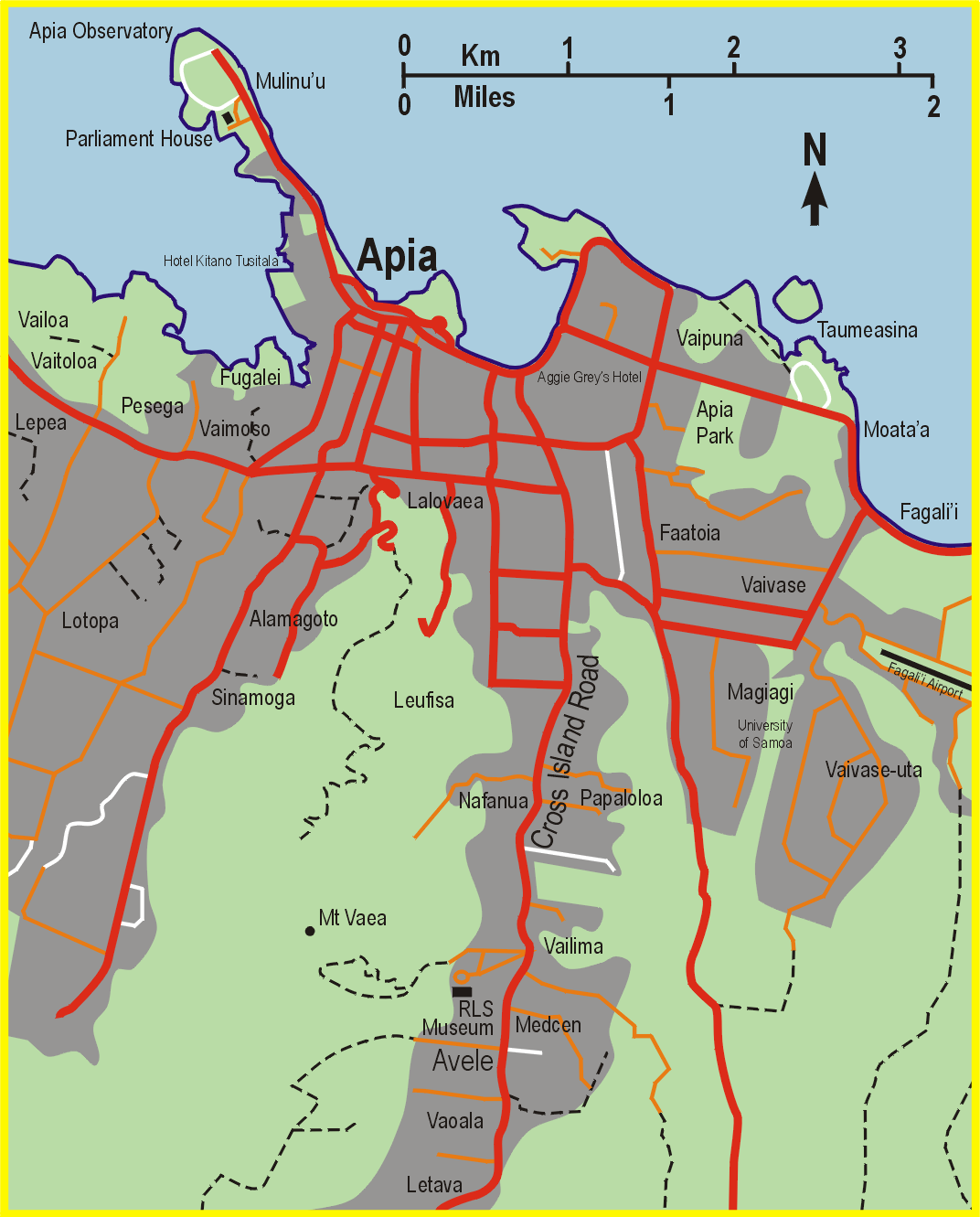
Geography and layout
Apia overlooks a sheltered harbour and is set against low hills and tropical vegetation. The urban area includes a commercial waterfront, government precincts, residential neighbourhoods and market places. Roads linking Apia cross short mountain passes or follow the coast; the island's international airport lies to the west and provides regional air links.
Economy and trade
The economy of Apia reflects Samoa's wider reliance on agriculture, fishing and services. Marine products remain important and the city handles exports of fish alongside agricultural commodities such as copra. As the main port, Apia receives a variety of imports including textiles and fabrics such as cotton, motor vehicles and foodstuffs like meats and sugar. Local commerce includes wholesale trade, shipping agents, small manufacturers and tourism services.
History and development
Apia developed from a collection of village settlements into a regional trading and administrative centre during the late 19th and early 20th centuries, influenced by missionary activity and colonial administrations. It later became the focus for national institutions following independence, while many customary practices and community ties continue to shape urban life.
Demographics and society
The population of Apia comprises urban residents together with people who maintain close ties to villages elsewhere on Upolu and other islands. Family and church affiliations remain central to daily life, and traditional ceremonies, communal obligations and matai (chiefly) systems influence housing, land use and social organisation.
Administration and services
Apia hosts national ministries, the principal courts and other government offices. Public services include hospitals, schools and cultural institutions. Weekly markets and small shops provide food and goods to residents and visiting islanders, while remittances and tourism contribute to the local economy.
Transport and infrastructure
The harbour in Apia is the main gateway for sea freight and passenger ferries connecting Upolu with other islands. Local transport is served by buses, taxis and private vehicles, and roads radiate from the city to rural districts. Infrastructure development aims to balance needs for modern services with environmental concerns and customary land tenure.
Climate and environment
Apia has a tropical climate with warm temperatures year-round and a pronounced wet season. The city and surrounding lowlands are vulnerable to heavy rains, flooding and occasional tropical cyclones, factors that influence urban planning and disaster preparedness.
Culture and tourism
As Samoa's cultural heart, Apia offers museums, markets, churches and festivals that reflect the islands' traditions and contemporary life. Visitors often use the city as the primary entry point to explore Upolu and the wider archipelago, finding in Apia a mix of government functions, everyday commerce and community events.
Notable distinctions
- Apia is the nation's main port and principal urban concentration, serving administrative, commercial and transport roles.
- The city exemplifies the coexistence of modern state institutions with customary Samoan social structures and village ties.
- Its economy links maritime trade, local services and connections with rural agricultural production across the islands.
Questions and answers
Q: What is Apia?
A: Apia is the capital city of Samoa.
Q: How many people did Apia have in 2001?
A: Apia had 380,800 people in 2001.
Q: What district is Apia part of?
A: Apia is part of the Tuamasaga district.
Q: Where is Apia located?
A: Apia is located on the northern coast of Upolu Island.
Q: What is Apia's major port?
A: Apia's major port is the nation's major port and only city.
Q: What are the major exports of Samoa?
A: The major exports of Samoa are fish and copra.
Q: What are the major imports of Samoa?
A: The major imports of Samoa are cotton goods, motor vehicles, meats, and sugar.
Related articles
Author
AlegsaOnline.com Apia — capital and principal city of Samoa Leandro Alegsa
URL: https://en.alegsaonline.com/art/4879