
Ivy City, Washington, D.C.
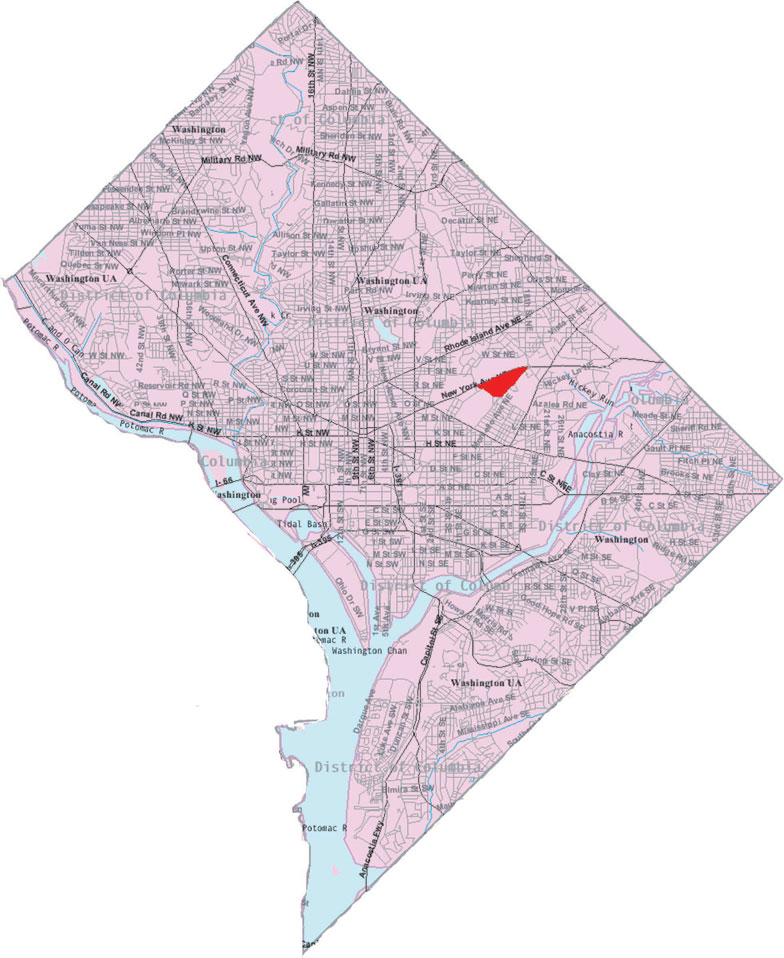
Ivy City is a small, traditionally industrial neighborhood in Northeast Washington, D.C., centered on warehouses and the Amtrak coach maintenance yard. It has seen gradual redevelopment alongside persistent economic challenges.
Overview
Ivy City is a compact neighborhood in Northeast Washington, D.C., historically known for its industrial character and proximity to major rail lines. The area is dominated by warehouses, light manufacturing, and a large rail coach yard. While parts of Ivy City have received new investment in recent years, it remains one of the city's neighborhoods with significant economic and social challenges.
Image gallery
10 Images



Location and transport
Ivy City sits along the rail corridor that feeds into the city’s central stations and is oriented around several industrial streets rather than a traditional residential grid. Its proximity to major arteries and freight lines has shaped land use and the neighborhood’s identity. For basic orientation see local maps and resources. One of the neighborhood's defining facilities is the rail maintenance complex often called the Ivy City Yard, operated by Amtrak and related rail services (Ivy City Yard).
History and development
The neighborhood developed in the late 19th and early 20th centuries as railroads and light industry expanded out from the downtown core. Residential pockets arose to house workers employed in nearby factories, warehouses and the rail industry. Over the decades, as manufacturing patterns shifted and rail operations modernized, the area retained a heavy industrial profile even as nearby neighborhoods experienced different development pressures.
Land use and characteristics
Ivy City is characterized by the following features:
- Large tracts of industrial-zoned land occupied by warehouses, storage facilities, and rail infrastructure.
- Scattered residential blocks and small local businesses serving a working-class population.
- Stretches of underutilized property that have attracted interest from developers and community groups.
Redevelopment, community and challenges
In recent years Ivy City has been the focus of incremental redevelopment: conversion of some industrial buildings for new commercial uses, infill housing projects, and small-scale retail and service businesses. These changes have brought new investment but also raised concerns about displacement, affordability, and environmental remediation on formerly industrial sites. Community organizations and city agencies have engaged on issues such as infrastructure, job access, and preserving affordable housing as the neighborhood evolves.
Notable facts and distinctions
Ivy City's identity is strongly tied to the rail yard that anchors the neighborhood and to its status as one of Washington's more industrial areas. That industrial legacy distinguishes it from many nearby residential neighborhoods and shapes both its opportunities and constraints for future growth. Visitors and planners alike note Ivy City as an example of a place where transportation infrastructure, industrial heritage, and urban redevelopment intersect.
Questions and answers
Q: Where is Ivy City located?
A: Ivy City is located in Northeast Washington, D.C.
Q: What is the primary type of industry in Ivy City?
A: Ivy City is primarily an industrial neighborhood.
Q: What dominates Ivy City?
A: Warehouses and the Ivy City Yard, a railroad coach yard, and maintenance facility for Amtrak, dominate Ivy City.
Q: Has Ivy City undergone any renewal?
A: Yes, the area has undergone some renewal.
Q: Is Ivy City considered a wealthy area?
A: No, Ivy City still remains among the poorest parts of the city.
Q: What kind of city is Washington, D.C.?
A: Washington, D.C. is the capital city of the United States.
Q: What does Amtrak use the Ivy City Yard for?
A: Amtrak uses the Ivy City Yard as a railroad coach yard and maintenance facility.
Related articles
Author
AlegsaOnline.com Ivy City, Washington, D.C. Leandro Alegsa
URL: https://en.alegsaonline.com/art/48726
Sources
- books.google.com : The Great Road: The Building of the Baltimore and Ohio, the Nation's First Railroad, 1828-1853
- washingtonpost.com : "Renewal Takes Root in D.C.'s Blighted Ivy City: Real Estate Investors Betting on Neighborhood,"
- amtrak.com : Amtrak Fact Sheet, Fiscal Year 2008 District of Columbia