
Apex (diacritic)
The apex is a mark used in written Latin to indicate a long vowel. This article explains its appearance, historical development, uses, and how it relates to modern diacritics such as the acute accent and macron.
Overview
The apex (plural apices) is a small written mark used in Latin orthography to indicate that a vowel is long rather than short. As a diacritic, its purpose was phonetic: to signal extended vowel duration in contexts where length could change meaning or meter. The mark is distinct from a macron or a stress marker, though all of these serve to add phonological information that plain letters do not convey.
Image gallery
4 Images


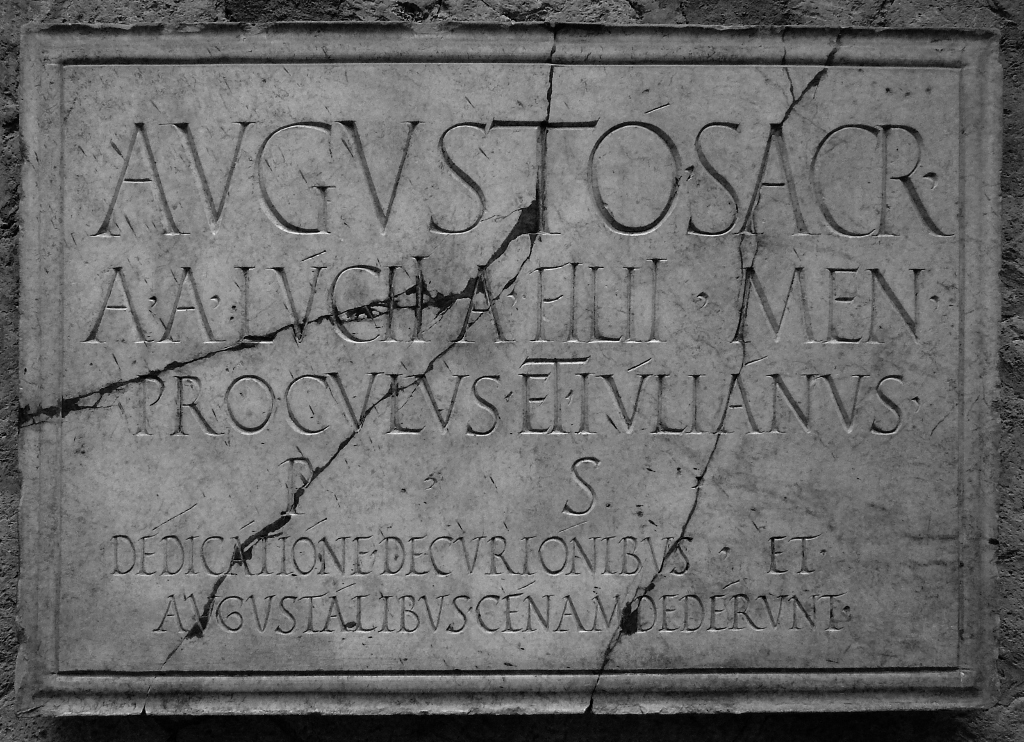
Appearance and placement
Visually, the apex resembles an upward-slanting stroke and is often compared to the shape of an acute accent. Its exact form varies widely in surviving manuscripts and inscriptions: examples show straight or slightly curved strokes, short ticks that occupy less than half a letter's height, and long strokes that can extend above several letters. Traditionally it was drawn slightly to the right of the vowel, rather than perfectly centered, and sometimes ended in a small hook. The apex was used only over vowels (vowel letters) to indicate quality of duration rather than tonal or stress differences.
Historical development
The apex appears in classical and post-classical Latin handwriting and in epigraphic texts. Scribes and stone-cutters employed it as a practical aid: marking long vowels made pronunciation, elocution and poetic scansion easier to interpret. Over successive centuries the form and function of the apex shifted. In many later traditions the apex gave way to other conventions—sometimes a simple acute accent, sometimes a macron or doubled letters—depending on local orthographic habits and typographic constraints.
Uses, examples, and importance
Its primary role was linguistic: distinguishing words that would otherwise be ambiguous in writing when vowel length affected meaning or meter. In pedagogical editions of Latin texts modern editors often use a macron rather than an apex to mark long vowels for learners, because the macron is standardized in contemporary typography. In printed critical editions and dictionaries, long vowels may be shown by a horizontal macron, but when editors aim for historical fidelity they may reproduce an apex-style mark in facsimiles.
Relation to other diacritics and later languages
The apex is an ancestor, in a broad sense, of acute-like marks used to indicate vowel length in several languages. The familiar acute accent that appears in modern orthographies of languages such as Czech, Slovak, Hungarian, Irish and historically in Icelandic serves a different, language-specific set of functions today—but the visual continuity with the apex is notable. The macron (a horizontal line) is more common in modern Latin instruction, while the acute mark persists in many vernacular orthographies for length or stress.
Variations, confusion, and typographic notes
Because the apex looks similar to the acute accent and sometimes to a breve or tick, confusion can arise in transcription and printing. Careful editors distinguish the apex (historically used to mark vowel length) from accents that indicate stress or tone. In digital fonts and Unicode, choices about how to render historical apex marks require typographic decisions; many scholars prefer a macron or an acute depending on the edition's conventions. For anyone working with Latin palaeography or epigraphy, recognizing the apex and understanding its variable shapes is essential for accurate reading and interpretation.
Further reading
- See specialized works on Latin palaeography for corpus examples and facsimiles; many editions reproduce apices in manuscripts and inscriptions.
- Comparative studies of diacritics examine how the apex relates to modern acute and macron usage across European writing systems.
Questions and answers
Q: What is an apex in written Latin?
A: An apex in written Latin is a diacritic.
Q: What does the apex look like in written Latin?
A: The apex is close to the shape of an acute accent ( ´ ).
Q: What is the purpose of the apex in written Latin?
A: The apex is used to show that a vowel is long and not short, meaning that the vowel is pronounced for a longer duration.
Q: Can the shape and length of the apex vary?
A: Yes, the shape and length of the apex can vary, and sometimes it can be different within the same writing.
Q: How is the apex usually drawn?
A: While pretty much all apices are made up of a line sloping up to the right, the line can be more or less curved, and is different in length from less than half the height of a letter to more than the height of a letter. Sometimes, it is put at the top with a hook, pointing out to the left. Rather than being centered over the vowel it changes, the apex is often drawn to the right.
Q: What did the apex develop into in some languages?
A: The apex developed into the acute accent, which is still used in some languages to mark vowel length, particularly in Czech and Slovak, Hungarian, Irish, and (a long time ago) Icelandic.
Q: How is the plural of "apex" written?
A: The plural of "apex" is "apices."
Author
AlegsaOnline.com Apex (diacritic) Leandro Alegsa
URL: https://en.alegsaonline.com/art/4864
Sources
- links.jstor.org : Apex and Sicilicus