
Israeli–Palestinian conflict: overview, history, key issues, and proposed solutions
Long-running political and territorial dispute between Israel and Palestinians over land, governance, refugees and security. Deep historical roots, regional impact, and competing proposals for resolution.
The Israeli–Palestinian conflict is a prolonged and multifaceted dispute over territory, national identity, governance and security between the State of Israel and Palestinian Arabs. It is one part of a broader series of disputes known collectively as the Arab–Israeli conflict. The disagreement centers principally on the land that was once Mandatory Palestine and now includes the State of Israel, the West Bank (often referred to by its historic names Judea and Samaria) and the Gaza Strip. Different political movements, civilian populations and regional states have been involved at different times; some Palestinians are represented by the Palestinian Authority and Fatah while others are aligned with groups such as Hamas. A wide variety of international proposals and negotiations have sought a negotiated settlement, but no comprehensive, lasting agreement has been implemented.
Image gallery
10 Images





Geography, actors, and political arrangements
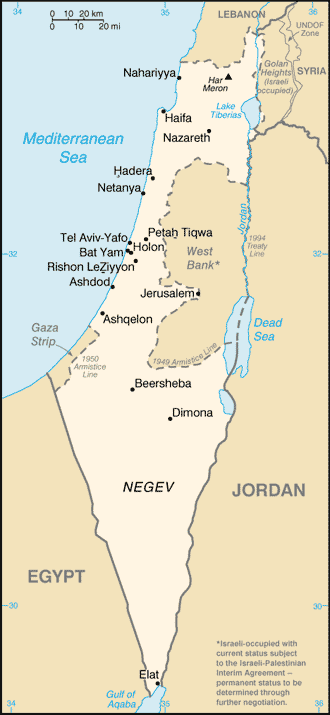
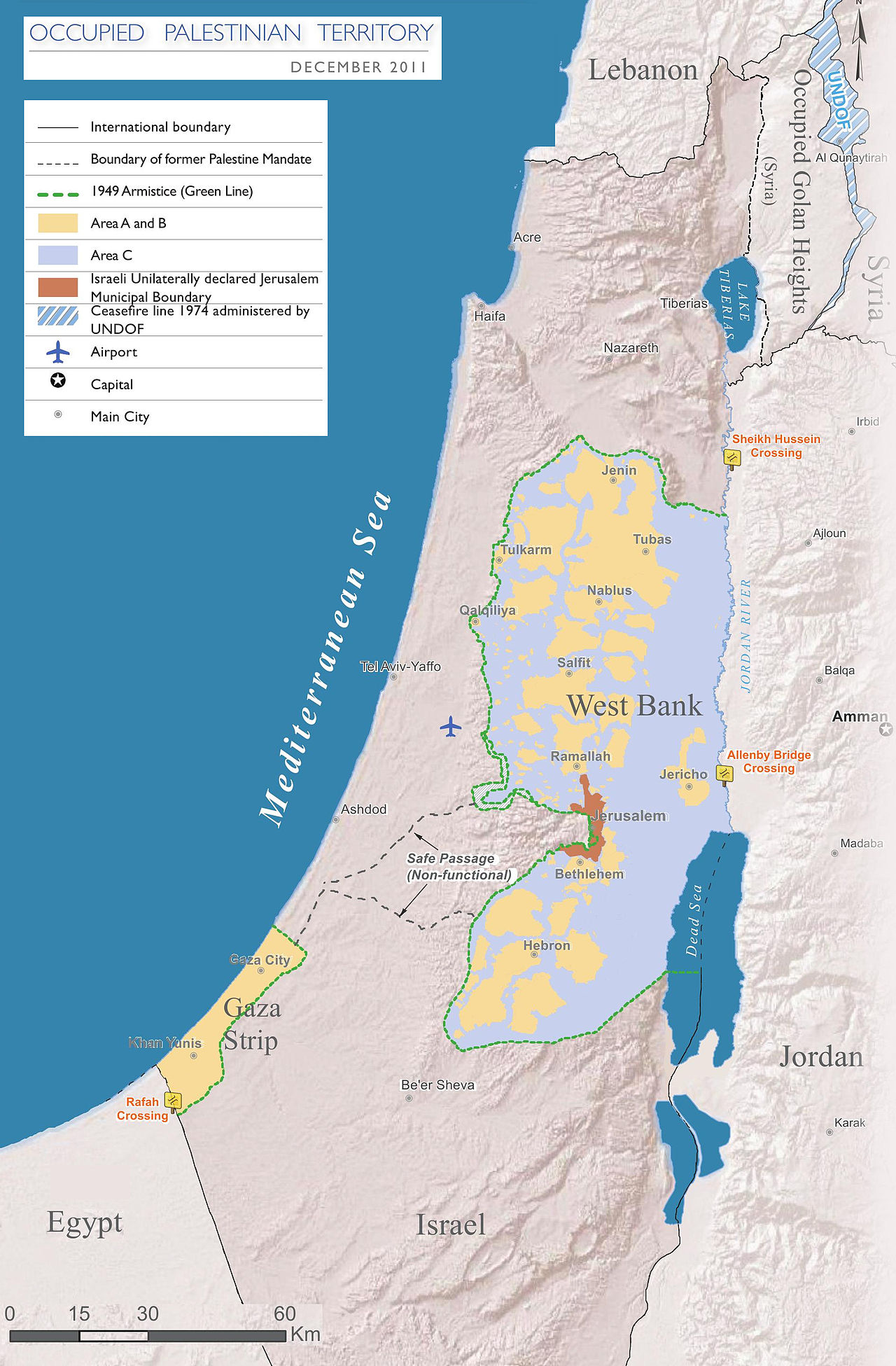
The territory at the heart of the conflict includes Israel as a sovereign state and two territorial entities with different legal and administrative arrangements: the West Bank, governed in part by the Palestinian Authority under limited self-rule, and the Gaza Strip, governed by Hamas since 2007. Israeli civilian populations and military authorities exercise control in parts of the West Bank, while Israeli settlements and security zones are a recurring point of contention. The Palestinian national movement is not monolithic: the Palestine Liberation Organization (PLO) historically led the political struggle, Fatah is a dominant party within the Palestinian Authority, and other groups such as Hamas control Gaza and pursue different political strategies. Regional states and international actors—ranging from neighboring Arab countries to global powers and multilateral organizations—have also influenced events and negotiations.
Historical development
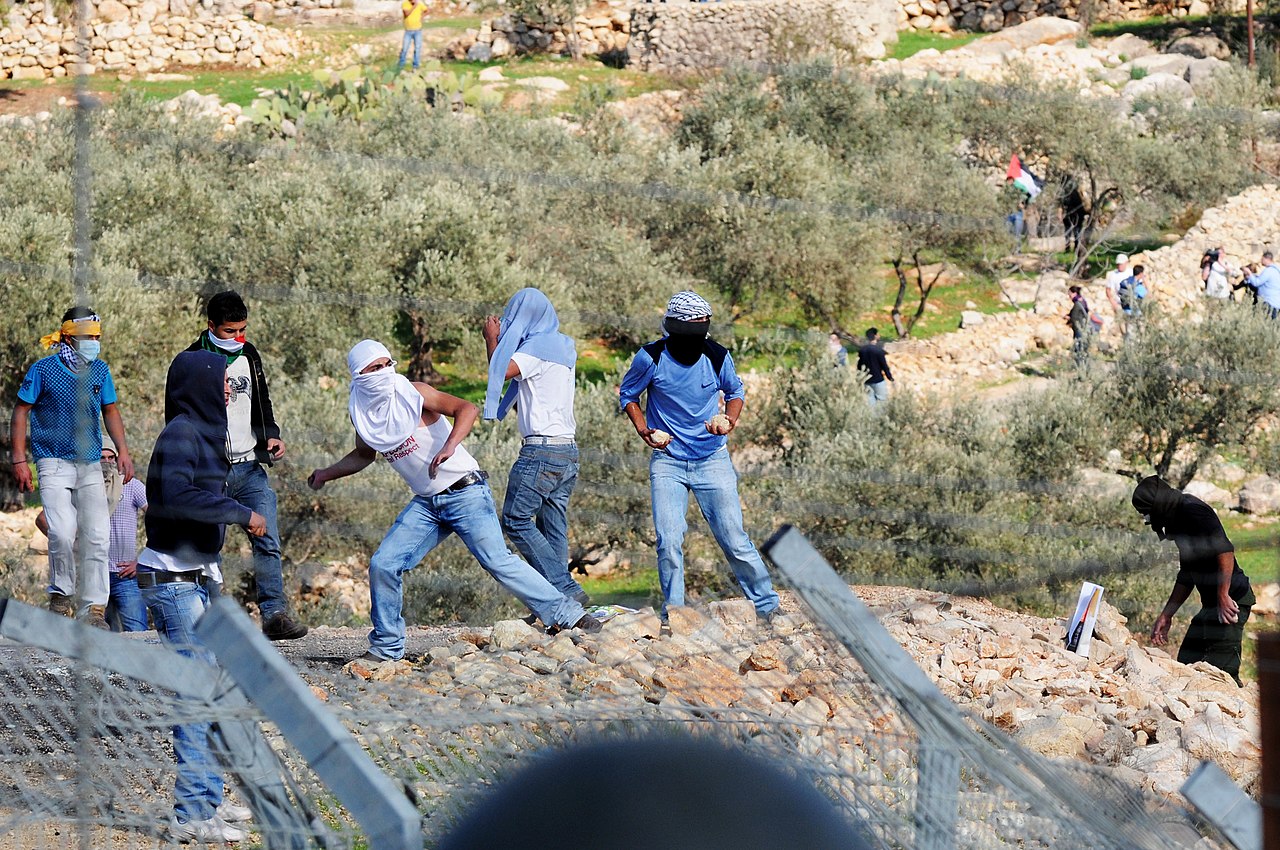
Roots of the conflict extend into the late Ottoman era and intensified during the 20th century under the British Mandate for Palestine, when competing nationalist movements—Zionism and Arab Palestinian nationalism—sought self-determination in overlapping territory. The United Nations proposed partition in 1947; the subsequent 1948 Arab–Israeli war led to the creation of Israel, large-scale displacement of Palestinian Arabs (the Nakba) and reciprocal refugee movements among Jews in Arab and Muslim-majority countries. In 1967, the Six-Day War resulted in Israel’s occupation of the West Bank, East Jerusalem and Gaza—the status of which remains central to negotiations. Diplomatic efforts such as the Oslo Accords in the 1990s created new institutions and a framework for negotiations but left core final-status questions unresolved. Periodic outbreaks of violence—intifadas, Gaza wars and cycles of rocket fire and military operations—have punctuated attempts at diplomacy and shifted political realities on the ground.
Core issues and persistent disputes
- Borders and territory: Defining mutually agreed boundaries, the fate of Israeli settlements in the West Bank, and the future of Gaza.
- Jerusalem: The city contains sites of religious and national significance for Jews, Muslims and Christians; both sides claim parts or all of it as a capital.
- Refugees and right of return: Millions of Palestinians and their descendants trace displacement to 1948 and 1967, and their status and possible resettlement or compensation remain unresolved.
- Security: Israel emphasizes measures to prevent attacks and ensure its survival; Palestinians seek an end to occupation and freedom from military control.
- Recognition and sovereignty: Mutual recognition, diplomatic relations and whether a Palestinian state would be fully independent are core political demands.
- Water and resources: Allocation of scarce water, access to land and economic development are practical but potent sources of tension.
Proposed outcomes and political options
International diplomacy has typically focused on a two-state solution: an independent State of Palestine alongside Israel, based on negotiated borders and security arrangements. Many initiatives and peace plans have aimed toward that goal, proposing land swaps, shared arrangements for Jerusalem and mechanisms to address refugees. Some advocacy exists for alternative frameworks: a single binational state with equal rights for all residents, confederation models, or various interim arrangements. Each option raises challenging questions about demographics, governance, minority rights and political legitimacy. Public opinion within Israeli and Palestinian societies has shifted over time and varies by generation, political affiliation and recent events; mistrust and divergent narratives make compromise difficult.
Human and regional consequences
The conflict has had profound human costs: loss of life, periodic large-scale displacement, economic hardship and restrictions on movement that affect daily life. It also shapes regional politics and identities across the Middle East, drawing in neighboring states and international organizations. The experience and memory of the conflict have affected diaspora communities worldwide, including significant migration of Jewish communities from Arab and Muslim-majority countries in the mid-20th century and the dispersal of Palestinian refugees across neighboring countries and beyond. These demographic and historic shifts remain part of the political conversation and collective memory on all sides.
Contemporary dynamics and why it remains unresolved
The conflict persists because its causes are layered: competing national narratives, mutually exclusive claims to land and sacred sites, security dilemmas, political fragmentation, and external actors with divergent interests. Periodic negotiations have produced partial agreements or ceasefires, but final-status issues have proven intractable. Civil society initiatives, track-two diplomacy and regional normalization efforts occasionally open new opportunities for discussion; however, sustainable peace would require addressing both practical arrangements and deep-rooted grievances. For background information on principal parties and institutional frameworks, see materials attributed to the State of Israel and Palestinian organizations such as the Palestinian Authority, Fatah and Hamas via their official channels: State of Israel, the Palestinians, Fatah and Hamas. For context within the broader regional disputes, consult resources on the Arab–Israeli conflict. Discussions about territories often refer specifically to the Gaza Strip and to proposals concerning citizenship and rights such as those debated under a one-state approach (equal rights proposals).
Because the conflict touches questions of identity, history and security, scholarship and public debate remain active and contested. Reliable analysis typically distinguishes factual chronology from interpretation and treats demographic, legal and political claims with careful sourcing. Readers seeking deeper study should consult a range of histories, primary documents from the parties involved, and analyses by international organizations and legal scholars to understand both the events and the competing narratives that have shaped this enduring and complex conflict.
Questions and answers
Q: What is the Israeli-Palestinian conflict?
A: The Israeli-Palestinian conflict is a war and dispute between the State of Israel and the Palestinians, which are represented by the Palestinian Authority, Fatah, or Hamas. It is part of the wider Arab–Israeli conflict.
Q: What is being disputed in this conflict?
A: The dispute is over a specific area of land (what used to be the Mandatory Palestine area) that Palestinians and Israelis both claim.
Q: What has been proposed as a solution to this conflict?
A: A two-state solution has been proposed, which would mean an independent Palestinian state and an Israeli state, dividing the land between the two groups. Some academics advocate for a one-state solution where all of Israel, Gaza Strip, and Judea and Samaria would become a bi-national state with equal rights for all.
Q: How many times have agreements been made to split up Mandatory Palestine into two countries?
A: Agreements have been made to split up Mandatory Palestine into two countries in 1920, 1937, 1948, 1967, 2000, 2003, 2006 and 2021.
Q: How many Jews were living in Arab countries in 1948?
A: In 1948 there were between 758000 - 881000 Jews living in communities throughout Arab countries.
Q: How many Jews remain today in these Arab countries?
A: Today there are fewer than 24000 Jews remaining in these Arab countries.
Related articles
Author
AlegsaOnline.com Israeli–Palestinian conflict: overview, history, key issues, and proposed solutions Leandro Alegsa
URL: https://en.alegsaonline.com/art/48511
Sources
- nybooks.com : The American Jewish Cocoon
- iht.com : America through Arab eyes
- economist.com : "Hamas won't go away"
- haaretz.com : Just another forgotten peace summit
- nybooks.com : Israel: The Alternative