
Isaac Allerton
English-born Mayflower passenger who settled in Plymouth Colony, served as an agent and merchant, and later pursued trade and relocation within New England in the mid-17th century.
Isaac Allerton was an Englishman who sailed to North America on the Mayflower in 1620 with his wife, three children and an apprentice, John Hooke. Born in England in the late 1500s, he belonged to a congregation of Separatists who were not tolerated by the established church and who left for the Netherlands before emigrating to New England. In Leiden he worked as a tailor and joined other exiles preparing for a new settlement in Virginia that became Plymouth Colony.
Image gallery
2 Images
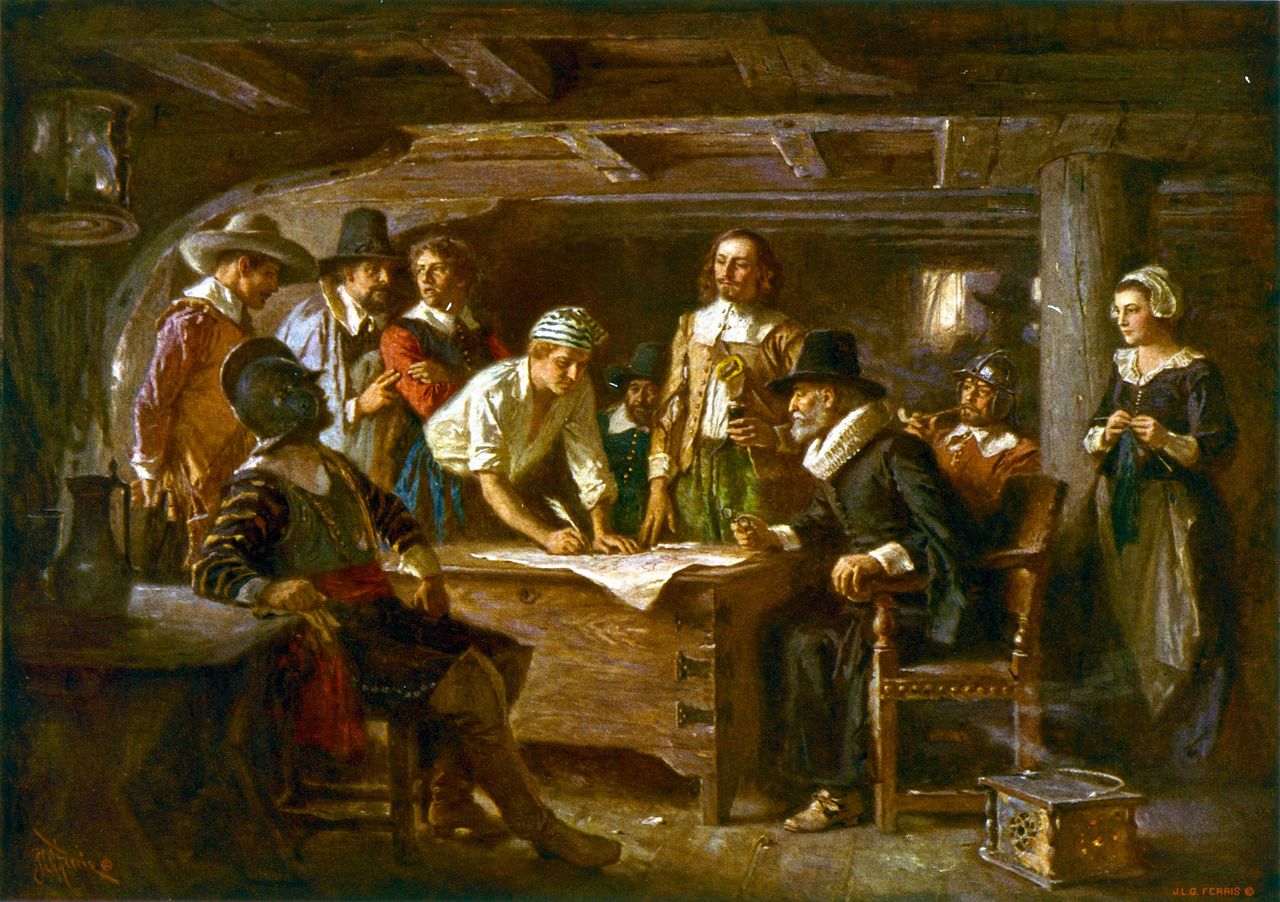
Leiden period and the Mayflower voyage
Allerton and his family lived for several years in Leiden, in the Netherlands, where many English Separatists settled. Contemporary accounts note that he practiced a trade—historically recorded as a tailor—and took on an apprentice. Political and religious pressure in England, where his congregation’s beliefs were unwelcome, pushed the group to seek a safe harbor; they ultimately organized the transatlantic expedition that sailed on the Mayflower. Allerton was among the few who had prior experience abroad and in commerce.
Role in Plymouth Colony
In Plymouth Allerton was an influential participant in civic and economic affairs. He served in official capacities as an assistant to the colony’s leaders and took on responsibilities for procuring supplies and managing debts. His work often required travel and negotiation with merchants and investors in England on behalf of the colonists.
Business activities and disputes
Allerton became a prominent merchant and agent for the colony’s business, but his commercial activities later drew criticism. Some colonists accused him of poor accounting and putting personal trade interests ahead of communal obligations. These disputes led to strained relations with other leaders and eventually to his departure from full-time life in Plymouth.
Later life, family, and legacy
After leaving Plymouth Allerton moved within New England and continued trading. His family ties and descendants became integrated into several New England communities. Historical assessments of Allerton are mixed: he is remembered both for key services to an early English colony and for controversies over finances and private commerce. For further details on contemporary records and family connections see sources on the Mayflower congregation, Leiden, and early Plymouth governance: Separatist congregation, religious context in England, and the Leiden community at Leiden.
- Mayflower passenger and Plymouth assistant
- Merchant and agent negotiating supplies and credit
- Figure of both service and controversy in early colonial history
For genealogical and primary-document research consult archival repositories and modern overviews that cover Mayflower passengers and 17th-century New England settlement patterns. Additional reading and records can be found via general reference links and dedicated pilgrim research collections: trade and occupation, Netherlands connections, and immigration lists such as those that include John Hooke.
Questions and answers
Q: Who was Isaac Allerton?
A: Isaac Allerton was a man born in England in approximately 1560.
Q: What was Isaac Allerton's profession in Leiden, Netherlands?
A: Isaac Allerton worked as a tailor while living in Leiden, Netherlands.
Q: Why did Isaac Allerton travel on the Mayflower in 1620?
A: Isaac Allerton and his wife, three children, and apprentice John Hooke traveled on the Mayflower in 1620 to escape the religious restrictions in England.
Q: How many children did Isaac Allerton have?
A: Isaac Allerton had three children.
Q: When did Isaac Allerton die?
A: Isaac Allerton died in 1659.
Q: Where did Isaac Allerton and his family move to in 1614?
A: In 1614, Isaac Allerton and his family moved to Leiden, Netherlands.
Q: What was the reason Isaac Allerton and his family moved to Leiden?
A: The reason for Isaac Allerton's move to Leiden was to escape the difficulties his religion faced in England.
Related articles
Author
AlegsaOnline.com Isaac Allerton Leandro Alegsa
URL: https://en.alegsaonline.com/art/48303
Sources
- plimoth.org : plimoth.org
- findagrave.com : findagrave.com/memorial/13252546
- findagrave.com : findagrave.com/memorial/12498353