
Iroquois (Haudenosaunee): The People of the Longhouse
The Iroquois, or Haudenosaunee, are a confederation of Native American nations from the northeastern North American interior noted for their longhouse culture, clan system, Grand Council and diplomatic history.
The Iroquois, who call themselves the Haudenosaunee or "People of the Longhouse," form a group of culturally related Indigenous nations native to the northeastern interior of North America. The name "Iroquois" is widely used in English-language sources, while Haudenosaunee refers to the confederacy’s traditional identity and political-religious teachings. Their traditional territory lay principally in what is now upstate New York and adjacent areas; today Haudenosaunee communities live in both the United States and Canada. For general overviews and introductory resources, see Iroquois / Haudenosaunee resources.
Image gallery
10 Images


Origins and organization
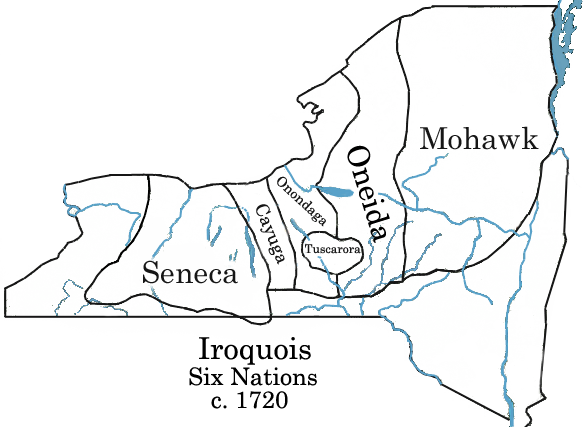
Speakers of languages in the Iroquoian family coalesced into an organized political body centuries before sustained European contact. Historically the core alliance was known as the Five Nations: the Mohawk, Oneida, Onondaga, Cayuga and Seneca. In the early eighteenth century the Tuscarora, originally from what is now North Carolina, joined the confederacy and the grouping is often called the Six Nations. The alliance is governed by a Grand Council traditionally composed of chiefs (often described in English as sachems) who represent matrilineal clans; these leaders meet according to established ceremonial protocols at council sites in the traditional homeland near Syracuse, New York, and elsewhere. Contemporary descriptions of the Grand Council and its procedures are available at Grand Council information.
Culture, society and economy
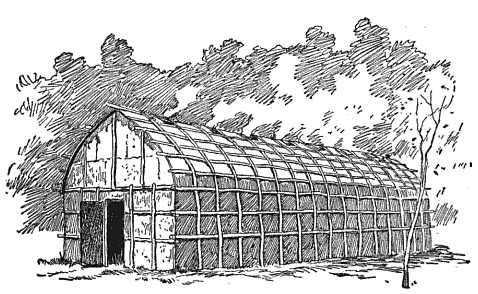
The Haudenosaunee social structure centers on matrilineal clans: descent and clan membership pass through the mother, and elder women—often called clan mothers—play a crucial role in selecting and advising chiefs. Longhouses were the principal domestic and communal buildings, housing extended families under one roof and giving the people their evocative name. Agriculture was essential, especially the cultivation of the "Three Sisters"—corn (maize), beans and squash—grown together in a complementary system. Other important cultural practices include the creation and use of wampum belts for recordkeeping and diplomacy, traditional games such as lacrosse, and a ceremonial life tied to seasonal cycles and oral traditions. For information about the Iroquoian homelands and lake regions associated with particular nations, see regional geography and Finger Lakes and Cayuga territory.
Political role and historical interactions
From the seventeenth century onward the Haudenosaunee were key actors in northeastern diplomacy and warfare. They negotiated and fought with neighboring Indigenous peoples and later with European colonial powers, forming shifting alliances that reflected strategic goals and survival in a period of intense change. The confederacy’s political model—emphasizing consensus and the balancing of local and collective authority—has been the subject of historical study and debate. Some scholars distinguish the ceremonial and cultural institution of the League from broader political arrangements that developed after sustained European colonization; for a discussion of these distinctions see League and confederacy studies. The American Revolutionary War and its aftermath had profound effects on Haudenosaunee societies; many nations allied with the British and faced displacement and political upheaval following British defeat and treaty settlements—an episode addressed in historical summaries at Revolutionary-era consequences.
Modern presence and contemporary issues
Today Haudenosaunee nations maintain communities in New York State and in several Canadian provinces, continuing efforts to revitalize language, culture and governance while engaging with federal and provincial/state governments over land, treaty rights and recognition. Programs for language teaching, cultural reclamation and legal advocacy are prominent in many communities, and sports, arts and ceremonies remain central to public life. Contemporary profiles and community pages can be found via regional resources at modern Haudenosaunee communities.
Constituent nations
- Mohawk — traditionally the easternmost nation, historically influential in trade and diplomacy.
- Oneida — central to the confederacy and widely known for both internal and colonial-era alliances.
- Onondaga — long recognized as the traditional site of the Grand Council.
- Cayuga — associated with the lake and river systems in the Finger Lakes region.
- Seneca — the westernmost of the original Five Nations, with large territorial influence.
- Tuscarora — joined the confederacy in the eighteenth century and are recognized as the sixth nation.
The Haudenosaunee remain one of the most studied and resilient Indigenous political traditions in North America. Their combination of oral constitution, clan-based social order, agricultural innovations and diplomatic practices continues to attract scholarly, legal and popular interest, while communities prioritize cultural continuity and self-determination in the modern era.
Questions and answers
Q: What is the Iroquois also known as?
A: The Iroquois are also known as the Haudenosaunee or the "People of the Longhouse".
Q: When did the Iroquois come together in an group?
A: The Iroquois came together in an group known today as the Iroquois League, or the "League of Peace and Power" in the 16th century or earlier.
Q: How many nations were part of the first Iroquois League?
A: The first Iroquois League was often known as the Five Nations, made up of Mohawk, Oneida, Onondaga, Cayuga and Seneca.
Q: Where did Europeans first encounter the Iroquois?
A: When Europeans first arrived in North America, they encountered the Iroquois living mostly in what is now northeastern United States, mostly in what is today upstate New York, west of Hudson River and through Finger Lakes region.
Q: Where do most of them live today?
A: Today, most of them live mostly in New York and Canada.
Q: What is believed to be different between “Iroquoian League” and “Iroqouis Confederacy”?
A: According to some modern scholars belief, there is a difference between “Iroqouis League” which stands for ceremonies and culture found at Grand Council while “Iroqouis Confederacy” stands for political and diplomatic group that was made after Europeans began colonizing America.
Q: What happened to Confederacy after American Revolutionary War?
A: After American Revolutionary War ,the Confederacy broke up .
Related articles
Author
AlegsaOnline.com Iroquois (Haudenosaunee): The People of the Longhouse Leandro Alegsa
URL: https://en.alegsaonline.com/art/48250
Sources
- books.google.com : Encyclopedia of the Haudenosaunee pg.135
- civilization.ca : "First Nations Culture Areas Index"
- books.google.com : History of Rochester and Monroe county, New York
- books.google.com : The Iroquois · web.archive.org
- doi.gov : Oneida Nation of New York Conveyance of Lands Into Trust
- now.org : "Iroquois Women Inspire 19th Century Feminists"
- newadvent.org : Catholic Encyclopedia: Iroquois
- ratical.org : "'Iroquois Population in 1995,'"
- books.google.com : Gone To Croatan: Origins of North American Dropout Culture