
Iran Air Flight 655 — 1988 Downing of a Civilian Airliner
Iran Air Flight 655 was a Tehran–Dubai passenger service shot down by the USS Vincennes over the Persian Gulf on 3 July 1988, killing all 290 aboard. The event led to international investigations, controversy and compensation.
Overview
Iran Air Flight 655 was a scheduled commercial service that operated between Bandar Abbas (Iran) and Dubai (United Arab Emirates). On 3 July 1988 the airliner, an Airbus A300, was hit and destroyed by missiles fired from the United States Navy guided‑missile cruiser USS Vincennes while over the Persian Gulf. All 290 people on board — passengers and crew — were killed. The incident occurred against the backdrop of the Iran–Iraq War and heightened naval activity in the region, and it prompted immediate international attention, multiple investigations and long‑running diplomatic dispute.
Image gallery
10 Images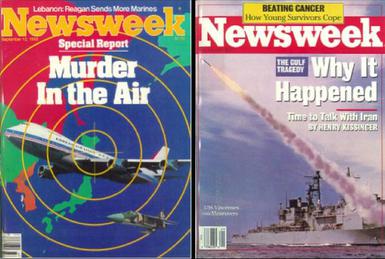


Aircraft, route and operating environment
The aircraft serving Flight 655 was a two‑engine Airbus A300 on a short international route between Bandar Abbas and Dubai. At the time Bandar Abbas airport handled both civilian and military traffic. The Persian Gulf was an operational theatre with close surface and air activity related to the Iran–Iraq War, including combat patrols, convoy escorts and engagements involving surface ships and small craft. Those conditions increased the complexity of identifying contacts and distinguishing civilian flights from military aircraft.
Sequence of events and identification issues
According to official and independent reviews, the Vincennes was involved in a skirmish with Iranian surface vessels when its crew detected an ascending track consistent with an aircraft departing Bandar Abbas. The cruiser’s crew misidentified the contact as an attacking military fighter, specifically likening the radar signature and flight profile to a Grumman F‑14 Tomcat. The ship issued warnings that, by later accounts, were broadcast on military frequencies not used by civilian airliners; the civilian crew did not receive those transmissions. After attempts to classify the contact and communicate failed to produce a response judged convincing by the ship’s command, the Vincennes launched two surface‑to‑air missiles that struck the airliner.
Investigations, official findings and responses
Several investigations, by U.S. authorities, international observers and independent analysts, examined radar data, ship logs, radio transmissions and crew testimonies. These inquiries highlighted a combination of factors: rapid decision making under combat stress, limitations and ambiguities in identification systems, human factors in interpreting radar and electronic data, and the use of radio channels inaccessible to the civilian crew. Governments, aviation bodies and legal authorities debated whether procedures and rules of engagement had been properly followed and how to assign responsibility for the loss of civilian life.
Legal and diplomatic aftermath
The shootdown produced sustained diplomatic tension between Iran and the United States and produced legal claims and international scrutiny. Over subsequent years the matter was the subject of negotiations and settlement processes; the United States acknowledged the tragedy and later agreed to provide compensation to the victims’ families while maintaining that the action resulted from a mistaken identification during combat operations. The case is commonly cited in discussions of state responsibility, wartime rules of engagement and the protection of civil aviation in conflict zones.
Safety lessons and legacy
The incident remains an important case study in aviation and military safety. It led to renewed calls for clearer procedures for military forces operating near civil air routes, better coordination between civilian air traffic control and military units in contested areas, and improvements in training and technology to reduce misidentification risks. The event has been examined in studies of human factors, command decision‑making under stress and the limitations of identification systems in dense operational environments. Memorials and remembrances for the victims have been held by families and communities, and the episode is remembered as a tragic example of the risks to civilian aviation in conflict zones.
References and further reading
- Overview and timeline of Flight 655
- Context of civil aviation routes
- Passenger and crew manifest details
- Flight operations and procedures
- Regional departure airports and facilities
- Destination and routing information
- Aircraft type and technical information
- Airbus A300 general description
- Crew composition and roles
- Operational area of the Persian Gulf
- Background on the Iran–Iraq War
- Civilian aircraft identification challenges
- Comparisons with regional military fighters
- Engagement profiles and tactical scenarios
- Radio and frequency use in military communications
- Civilian access to military channels
- Weapons systems relevant to the incident
- Crash analysis and investigation summaries
Questions and answers
Q: What was Iran Air Flight 655?
A: Iran Air Flight 655 was an Iranian passenger flight from Tehran to Dubai.
Q: How many people were on-board the aircraft?
A: The aircraft had 274 passengers and 16 crew members on-board.
Q: When did the incident occur?
A: The incident occurred on July 3, 1988.
Q: Who shot down the aircraft?
A: The USS Vincennes shot down the aircraft.
Q: Why did the Vincennes shoot down the aircraft?
A: The Vincennes mistook the civilian aircraft for an Iranian Air Force Grumman F-14 Tomcat fighter on an attack run.
Q: How did the Vincennes attempt to warn the aircraft?
A: The Vincennes attempted to warn the aircraft several times but received no reply.
Q: What happened to the occupants of the aircraft?
A: All 290 occupants on-board were killed when the Vincennes fired two missiles which both struck the fuselage of the plane.
Related articles
Author
AlegsaOnline.com Iran Air Flight 655 — 1988 Downing of a Civilian Airliner Leandro Alegsa
URL: https://en.alegsaonline.com/art/48093
Sources
- washingtonpost.com : "The forgotten story of Iran Air Flight 655"
- ibtimes.com : "6 Worst Civilian Airliner Shootdowns In The Last 40 Years"
- iranchamber.com : "Shooting Down Iran Air Flight 655 [IR655]"
- nytimes.com : "World Aviation Panel Faults U.S. Navy on Downing of Iran Air"
- theaviationist.com : "Airspace violations – Episode 8 – Iran Air Flight 655 shot down by USS Vincennes"