
Anvil (blacksmith's tool)
A heavy iron or steel block used as a work surface for shaping metal by hammering; covers parts, materials, history, uses, maintenance and cultural significance.
An anvil is a heavy, durable block of metal, typically made of iron or steel, that provides a solid work surface for shaping, bending and cutting metal by hammering. It is most closely associated with the craft of the blacksmith, who heats iron or steel and uses the anvil together with hammers and tongs to produce tools, hardware and decorative objects. The anvil's mass and geometry allow force from a hammer to be directed into the workpiece rather than absorbed by the support. Farriers use specialized anvils when making horseshoes and carrying out shoeing work for horses.
Image gallery
10 Images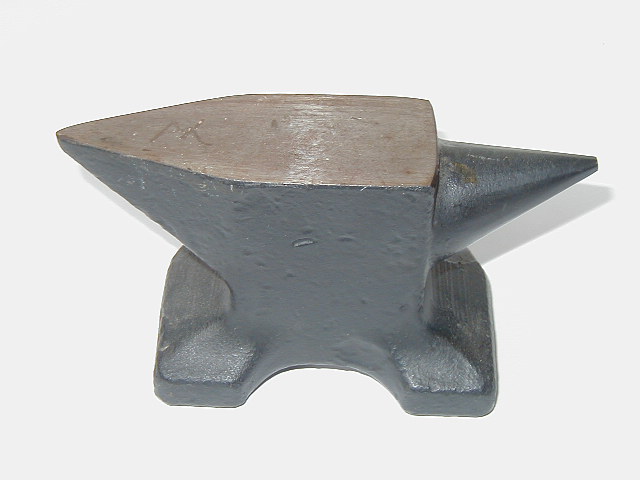



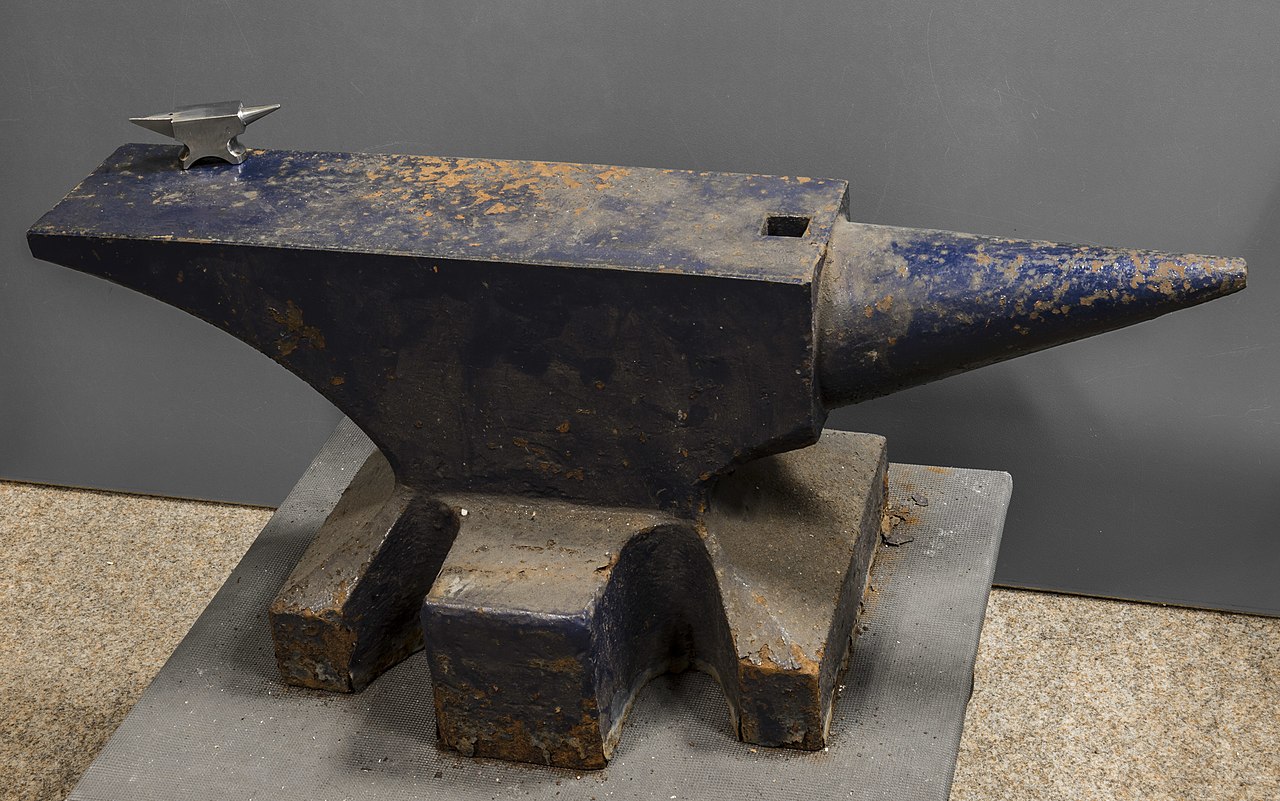


Design and common parts
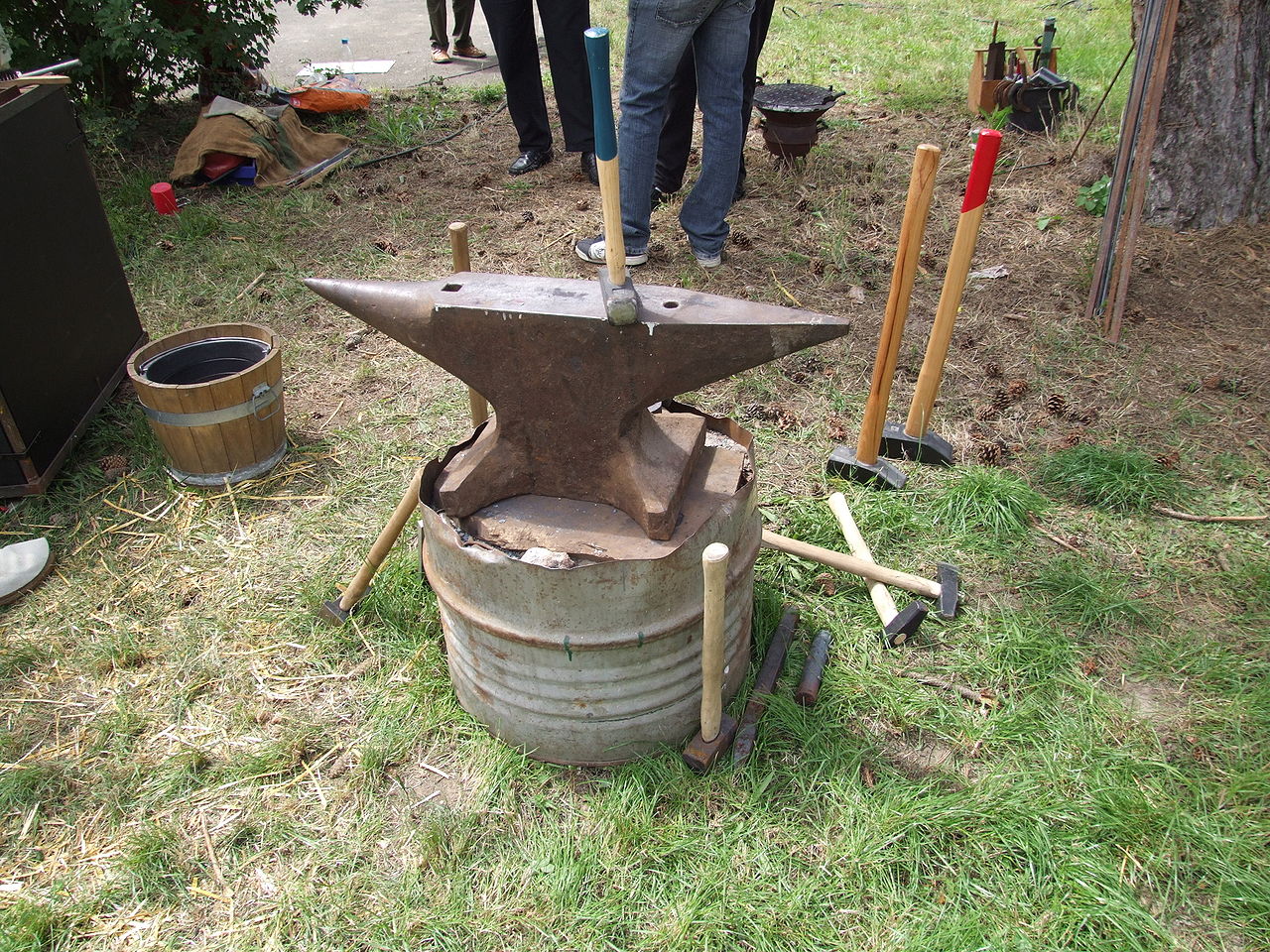
Modern and traditional anvils share several characteristic features that enhance control and versatility in forging. A typical pattern includes a hardened, flat top surface called the face, a rounded projecting horn for forming curves, one or more holes for tooling, and a mass sufficient to absorb impact. These elements allow a smith to perform a wide variety of basic operations.
- Face: the primary flat striking surface used for most forging and finishing tasks.
- Horn: a tapered, conical or beaked section used to bend and shape curved work.
- Hardy hole: a square socket that accepts hardy tools such as cutters and fullers.
- Pritchel hole: a round hole used for punching and for holding small tools while forming.
Materials, manufacture and sizes
Anvils are produced in a variety of ways. Traditional designs often combine a tough wrought iron body with a welded or forged and hardened steel face to resist repeated blows. Many contemporary anvils are cast or forged from alloy steels and heat treated to provide a durable working surface. Small bench anvils and stake anvils serve tinsmiths and jewelers, while larger, heavier anvils are used in general smithing and by farriers. Weight choices balance portability and effective energy transfer; heavier anvils generally give better rebound and reduce workpiece deformation of the support.
Historical development
Simple hammering blocks appear in archaeological records from the Bronze Age and anvils or anvillike tools are documented in many ancient cultures, including Ancient Greece and Ancient Egypt. Over centuries the basic form evolved to meet the needs of trades that required metal shaping, such as smithing, farriery and tinsmithing. Portable, wedge-shaped anvils were used by itinerant repairers and tinkers; a well-known literary note records that a 17th century writer, John Bunyan, is said to have worked as a tinker who carried a small anvil when traveling in Bedfordshire, and that such small tools were part of the itinerant mender’s kit preserved in local collections.
Uses and techniques
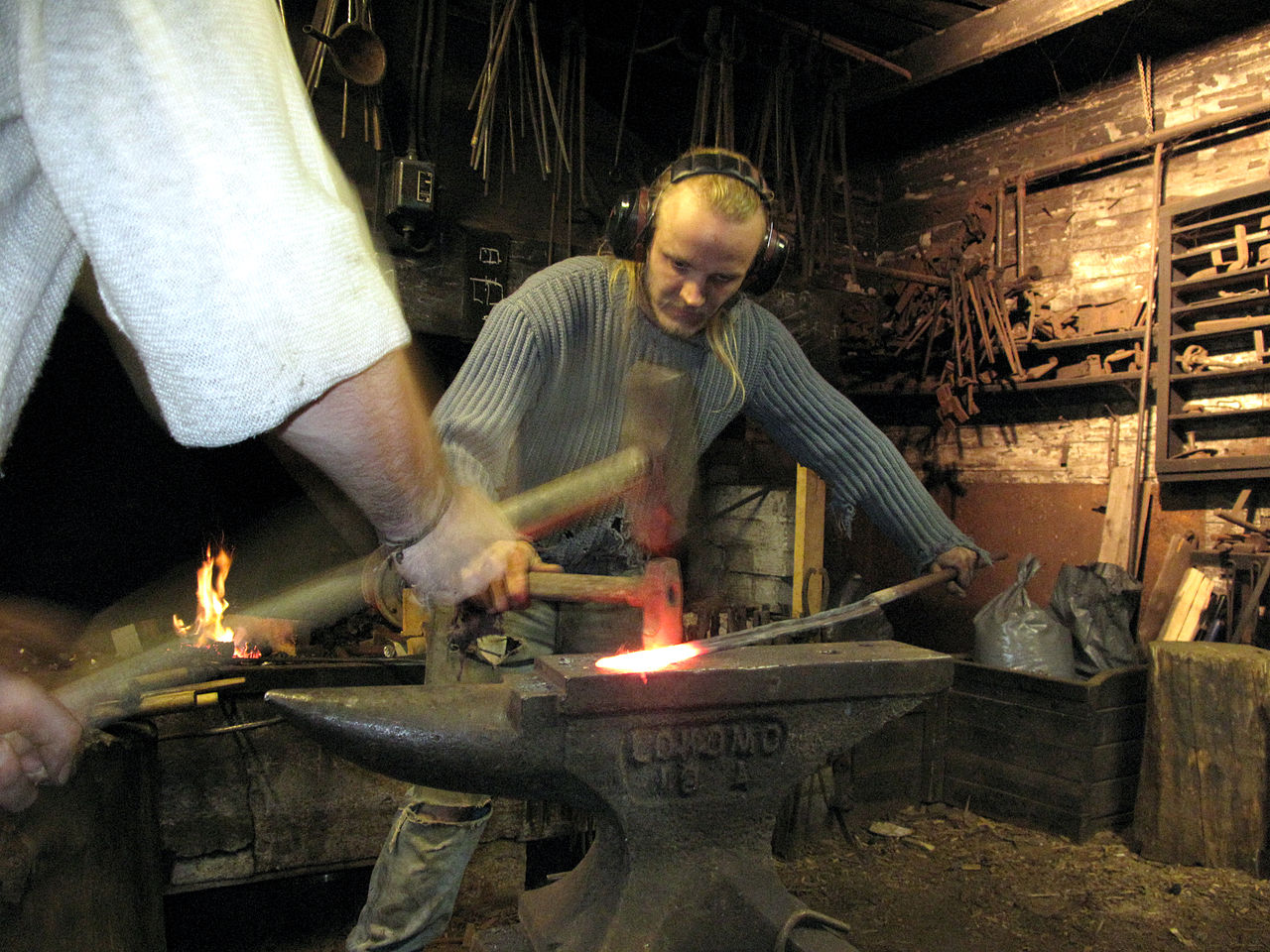
Anvils support a range of forging techniques. Common operations include drawing (lengthening and thinning), upsetting (shortening and thickening), bending, fullering (grooving) and punching. Smiths heat metal in a forge, then place the heated material on the anvil and shape it with various hammers and specialized tools that can be used in the hardy or pritchel holes. Farriers rely on anvils to shape and fit horseshoes and to perform bending and finishing needed for proper hoof care. Smaller anvils and stakes are used in sheet metal work, jewelry making and repair trades.
Care, maintenance and selection
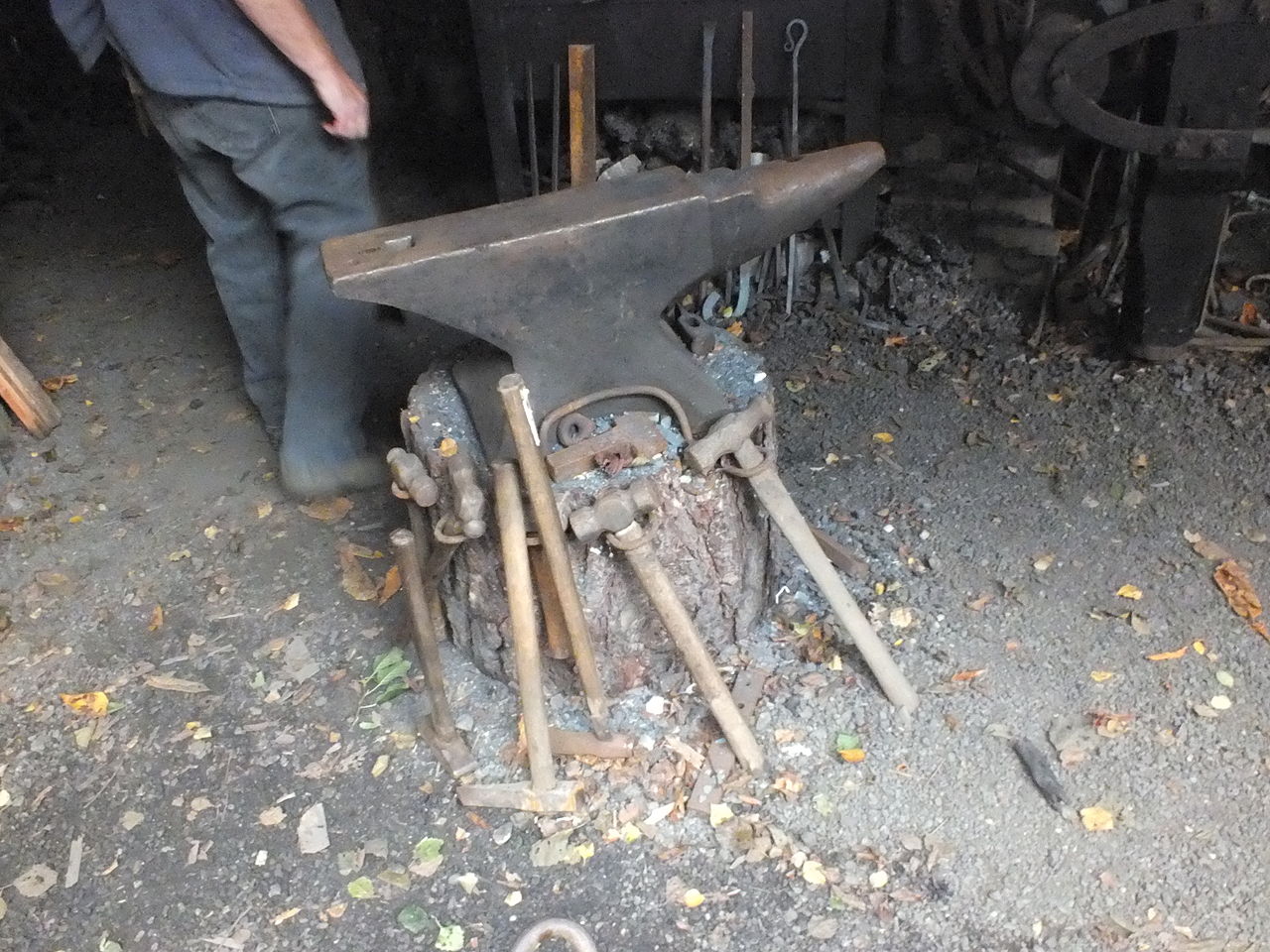
Proper care lengthens an anvil’s working life: avoid excessive chipping, maintain the face free of deep pits, and protect the tool from prolonged corrosion. Many smiths mount floor anvils on heavy blocks of wood or metal to provide stability and to tune rebound. When selecting an anvil, consider the intended work, available space and mobility requirements; hobbyists often choose a versatile medium-weight anvil, while professional shops may use several sizes for different tasks.
Cultural significance
Beyond practical use, anvils appear frequently as symbols of craftsmanship, industry and strength in folklore, literature and art. They remain central to living craft traditions in blacksmithing schools, restoration workshops and maker communities. Museums and private collections preserve historical examples that illustrate regional forms, manufacturing methods and the long role of the anvil in metalworking history.
Questions and answers
Q: What is an anvil?
A: An anvil is a hard piece of metal that is used as a workbench when making things out of iron or steel.
Q: What is a blacksmith?
A: A blacksmith is a person who works with iron and steel to make things like horseshoes using an anvil.
Q: How does a blacksmith use an anvil?
A: A blacksmith uses an anvil to hammer hot iron to bend it into the shape he wants.
Q: Where were anvils used in ancient times?
A: Anvils were used in Ancient Greece and Ancient Egypt, and were known in the Bronze Age and possibly earlier.
Q: Are anvils still in use today?
A: Yes, anvils are still in use today, although not as much as 100 years ago when there were many more horses.
Q: Why was John Bunyan famous?
A: John Bunyan was a 17th century writer who was a tinker (someone who mends pots and pans).
Q: What was special about John Bunyan's anvil?
A: John Bunyan's anvil was wedge-shaped so that he could knock it into the ground when he needed to do a repair, and it is now in the John Bunyan museum in Bedford.
Related articles
Author
AlegsaOnline.com Anvil (blacksmith's tool) Leandro Alegsa
URL: https://en.alegsaonline.com/art/4803