
International Court of Justice: role, composition, procedures and significance
The International Court of Justice (ICJ) is the United Nations' principal judicial organ. It settles legal disputes between states and issues advisory opinions on international law.
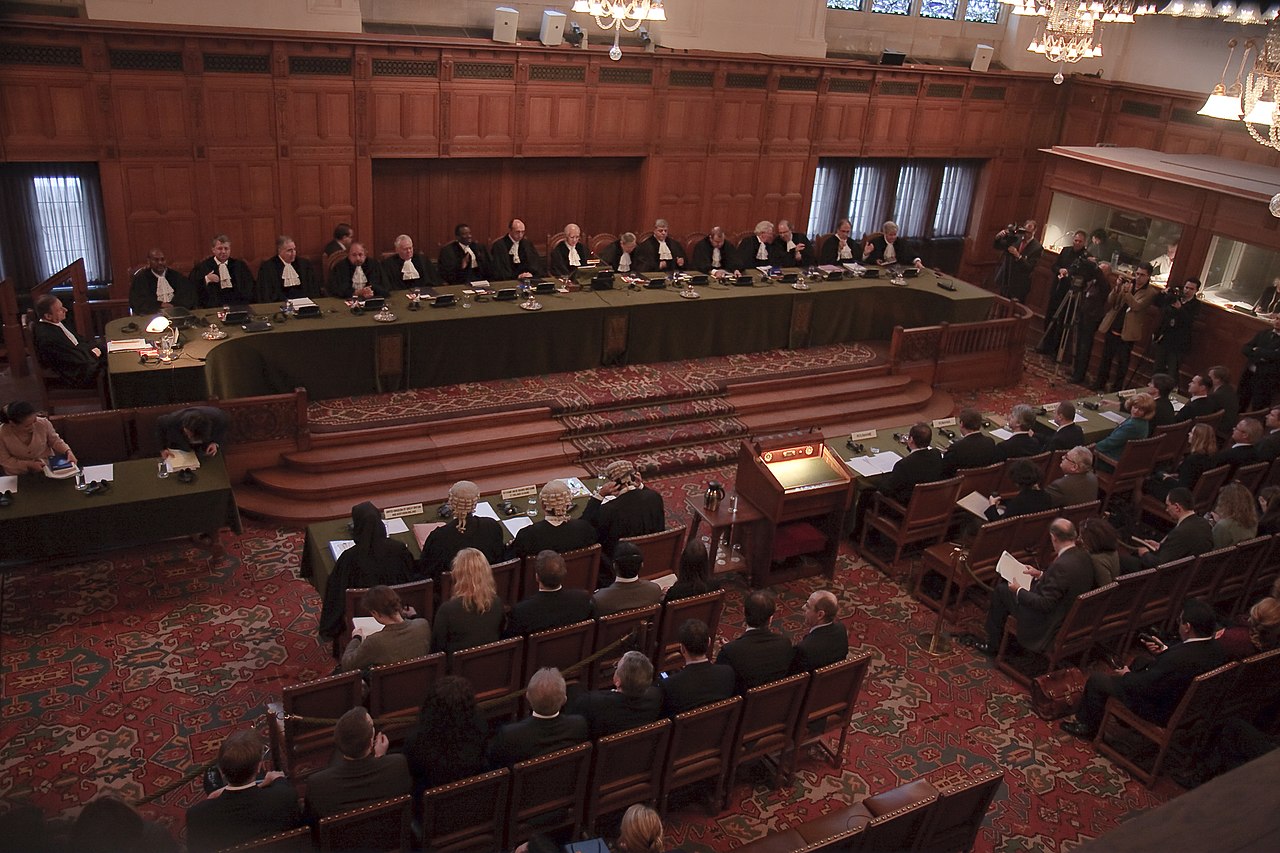
The International Court of Justice (ICJ) is the principal judicial body of the United Nations. Created by the UN Charter in 1945 and beginning its work in 1946, the Court succeeded the Permanent Court of International Justice. It is commonly called the World Court and operates from its seat at the Peace Palace in The Hague, Netherlands. The Court conducts its business in English and French and is referenced in French as La Cour internationale de justice.
Image gallery
5 Images


Mandate and main functions
The ICJ has two primary roles. First, it settles contentious cases submitted by states concerning legal disputes between them. Only sovereign states may be parties in such cases; the Court does not try individuals. Second, upon request from duly authorized United Nations organs and specialized agencies, the Court may render advisory opinions on legal questions. Contentious judgments are final and without appeal between the parties, while advisory opinions carry persuasive legal authority though they are not binding in the same way.
Composition and independence
The Court is composed of a panel of independent judges elected to represent the world's main legal systems and regions. Judges are chosen by the UN General Assembly and Security Council, serving fixed terms and acting in their individual capacity rather than as national delegates. The Court’s internal procedures combine written pleadings and public oral hearings, and it may indicate provisional measures to preserve a party’s rights pending a final decision.
Procedures and types of cases
ICJ proceedings typically follow written submissions, followed by oral argument. Cases dealt with by the Court cover a wide range of international law topics: treaty interpretation, maritime and boundary delimitation, diplomatic relations, state responsibility, and the legality of the use of force, among others. The Court also issues advisory opinions that clarify legal issues for UN bodies and specialized agencies and can influence the development of international law.
Limitations and enforcement
While ICJ judgments are binding between the parties, the Court lacks its own enforcement arm. Implementation depends on the willingness of states and, where necessary, measures by the UN Security Council. Political considerations and state consent affect the Court’s jurisdiction: many cases proceed on the basis of special agreement, treaty clauses granting jurisdiction, or declarations accepting compulsory jurisdiction.
Distinctions and notable facts
- The ICJ is distinct from the International Criminal Court, which prosecutes individuals for crimes such as genocide and war crimes.
- The ICJ replaced an earlier body, the Permanent Court of International Justice, after World War II.
- Its advisory opinions, though non-binding, are frequently cited in international disputes and scholarly work.
Over decades the Court has contributed to the clarification and peaceful settlement of international legal disputes. Its jurisprudence helps shape norms of state conduct and provides a legal forum aimed at resolving conflicts through law rather than force. For parties and observers interested in the Court’s decisions, procedural rules, and judicial roster, authoritative sources maintained by the United Nations and specialized legal publications document its work and evolving role in the international system.
Questions and answers
Q: What is the International Court of Justice?
A: The International Court of Justice is the main judicial organ of the United Nations.
Q: What is the abbreviation for the International Court of Justice?
A: The abbreviation for the International Court of Justice is ICJ.
Q: Where is the ICJ located?
A: The ICJ has its headquarters at The Hague, Netherlands.
Q: When did the ICJ begin its working?
A: The ICJ began its working from 1946.
Q: What are the two major functions of the ICJ?
A: The two major functions of the ICJ are settling disputes brought before it by member countries and giving its opinions on legal matters.
Q: What is the difference between the International Court of Justice and the International Criminal Court?
A: The International Court of Justice is different from the International Criminal Court.
Q: How has the ICJ's docket changed over time?
A: Since the year 2000, the ICJ's docket has gone down from 23 to 12 cases, while its staff tripled.
Related articles
Author
AlegsaOnline.com International Court of Justice: role, composition, procedures and significance Leandro Alegsa
URL: https://en.alegsaonline.com/art/47644