
Insight: sudden understanding, problem-solving, and cognitive processes
Insight is a sudden or deep understanding of a problem or situation, often appearing as an 'aha' moment. It spans psychology, creativity, learning, and problem-solving, with distinct types and research findings.
Insight refers to a rapid and often deep form of understanding in which the nature of a problem, situation, or relationship becomes clear. Unlike step-by-step analytic reasoning, insight frequently appears suddenly: a solution or meaningful interpretation emerges all at once and feels subjectively different from incremental discovery. Researchers and writers use the term to describe both a mental event—a fleeting realization—and a lasting change in how information is organized or understood. For basic definitions and summaries, see introductory sources.
Image gallery
3 Images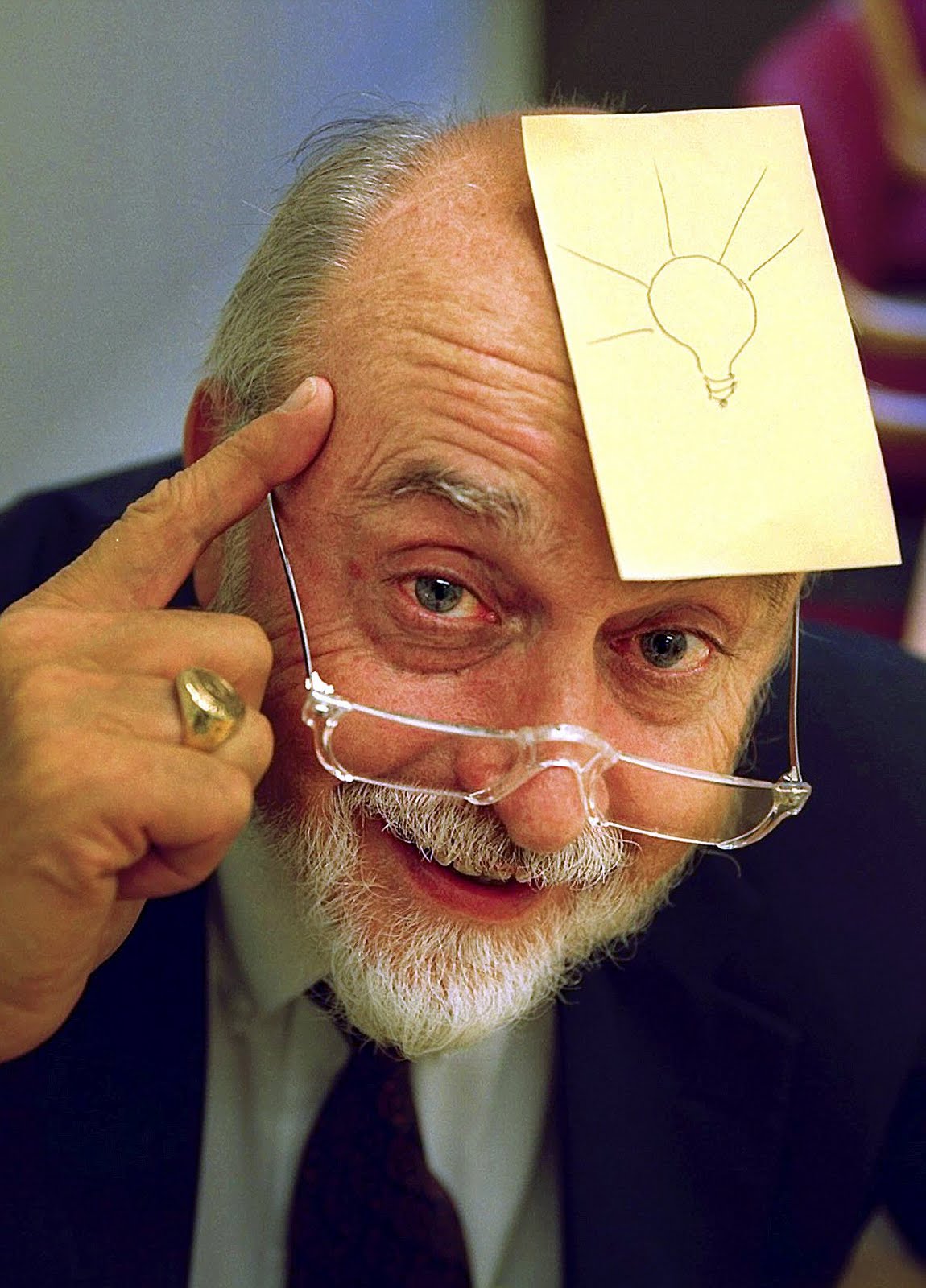


Characteristics and types
Insight experiences share several common characteristics: they are rapid, accompanied by a feeling of certainty, and often follow a period of impasse or confusion. Psychologists distinguish between at least two broad kinds of insight: spontaneous insights, which come suddenly after no obvious intermediate steps, and prepared insights, which arise when prior knowledge or reorganization makes a solution accessible. Other relevant distinctions include cognitive versus emotional insight: cognitive insight clarifies facts or relationships, while emotional insight reorganizes how one feels about a situation.
Mechanisms and contributing factors
Multiple cognitive processes contribute to insight. Reframing or restructuring a problem—changing how its elements are represented—can make hidden solutions visible. Incubation, a temporary pause from active problem-solving, sometimes increases the chance of insight by allowing subconscious processes to recombine information. External cues and hints can trigger insight by drawing attention to overlooked features; empirical work shows that people with different baseline abilities may benefit differently from such cues. For discussions of insight tasks and experimental paradigms, see problem-solving research.
History and notable examples
The idea of sudden discovery is ancient and widespread: classical anecdotes include Archimedes’ reputed exclamation of "Eureka" upon recognizing a principle of buoyancy after stepping into a bath, a story commonly cited as an archetype of insight and often called the "Eureka" or epiphany effect. In psychology, early 20th-century gestalt researchers emphasized reorganization and perceptual patterns as keys to insight, while later experimental work explored animal insight and human cognitive stages. For the Archimedes anecdote and historical background, see historical accounts and sources on cognitive history at companion references.
Applications and importance
Insight plays a role across domains: in science and invention, it may lead to conceptual breakthroughs; in education, fostering insightful learning can support deeper comprehension rather than rote memorization; in therapy, gaining insight into one’s emotions or patterns can contribute to psychological change. In creative work, insight contributes to novel combinations and surprising solutions. Because insight can be unpredictable, many practices—such as broadening knowledge, taking breaks, and using analogies—are recommended to increase the likelihood of productive insights.
Empirical findings and notable facts
- Insight experiences often differ subjectively from analytic solutions: people report a sudden "aha" feeling and high confidence even when the solution is later shown to be incorrect.
- Studies link general cognitive ability to performance on many insight problems, but the effectiveness of hints or cues can vary with ability level.
- Research methods include verbal reports, problem-solving tasks, eye-tracking, and neuroimaging to study when and how insight emerges.
- Practical strategies to encourage insight include exploring diverse analogies, deliberately reframing problems, and allowing time for incubation.
Questions and answers
Q: What is insight?
A: Insight is the act of comprehending the inner nature of things, which can be used to gain information and knowledge or find answers to questions or problems. It can also refer to a sudden realization, an epiphany or the Eureka effect.
Q: Can insight be used in different ways?
A: Yes, insight can be used in several ways, such as gaining a piece of information, learning something new or finding a solution to a problem.
Q: Is higher intelligence associated with better performance on insight problems?
A: Yes, studies have shown that higher intelligence, as measured by IQ, is associated with better performance on insight problems.
Q: Who benefits more from being provided with cues and hints for insight problems?
A: People with lower intelligence benefit more than those with higher intelligence from being provided with cues and hints for insight problems.
Q: What is the Eureka effect?
A: The Eureka effect, named after Archimedes, refers to a sudden realization or insight, often resulting in a solution to a problem or understanding of a concept.
Q: Can insight be considered a type of learning?
A: Yes, insight can be considered a type of learning where one gains a deeper understanding of something, as opposed to memorizing information.
Q: How can insight be helpful in problem-solving?
A: Insight can be helpful in problem-solving by allowing one to see things from a different perspective, identify novel solutions, and make connections between seemingly unrelated pieces of information.
Related articles
Author
AlegsaOnline.com Insight: sudden understanding, problem-solving, and cognitive processes Leandro Alegsa
URL: https://en.alegsaonline.com/art/47449