
Inge Lehmann: discoverer of Earth's solid inner core
Danish seismologist Inge Lehmann (1888–1993) used mathematical analysis of earthquake waves to show Earth has a solid inner core surrounded by a liquid outer core, reshaping geophysics.
Overview
Inge Lehmann (1888–1993) was a Danish mathematician and seismologist best known for revealing that the planet’s center contains a distinct solid inner core surrounded by a liquid outer core. Her work transformed how scientists model the interior of the Earth, and it remains a foundational result in geophysics. Lehmann combined careful observation of seismic records with mathematical reasoning to interpret subtle patterns in the arrival times of waves from distant earthquakes.
Image gallery
2 Images
Scientific contribution and method
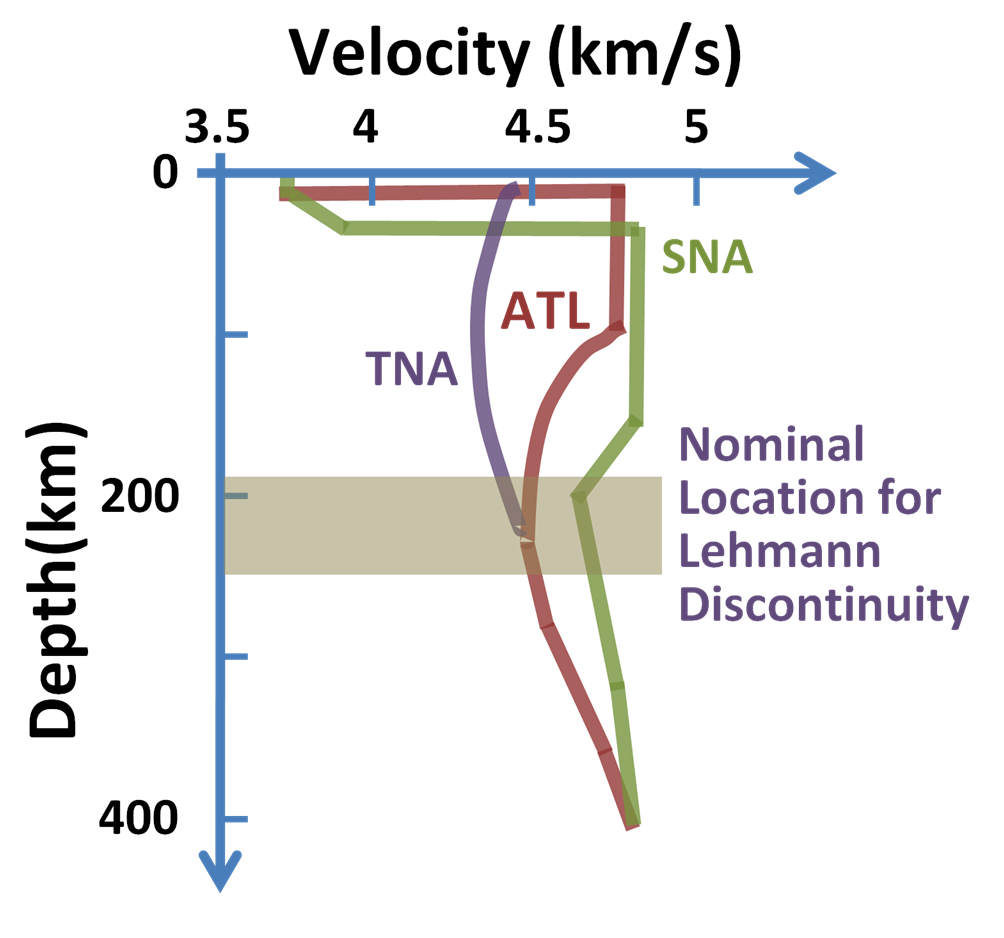
Before Lehmann’s insight, many geophysicists treated Earth’s deep interior as a single molten core. By analyzing the travel times, phases and subtle anomalies of compressional seismic waves recorded at stations around the globe, she recognized evidence for an internal boundary within the core. Lehmann concluded that some seismic waves were being refracted or reflected by a small, solid sphere at the planet’s center. That interpretation explained otherwise puzzling arrivals and led to the now standard model of a solid inner core inside a liquid outer core.
How seismic evidence reveals deep structure
Seismology infers subsurface structure from the behavior of elastic waves generated by earthquakes. Compressional (P) waves and shear (S) waves travel at speeds that depend on material properties such as density and rigidity. When waves encounter abrupt changes in those properties, they are refracted, reflected or converted into other wave types. Lehmann’s strength was in applying mathematical analysis to global seismic records to isolate small but consistent departures from the predictions of simpler interior models. These departures were best explained by a step change at the inner core boundary.
Life and career
Lehmann grew up in Copenhagen in a family engaged with professional life; her father, Alfred Georg Ludvik Lehmann, was a psychologist and her mother managed the household. She received progressive early schooling at the Fællesskolen, which emphasized equal education for boys and girls. She later studied mathematics, chemistry and physics at the University of Copenhagen, graduating in 1920. After advanced study and years of analyzing seismic data, she published the interpretation that identified the inner core in 1936 and spent much of her working life applying mathematical methods to geodetic and seismic questions.
Importance and legacy
Lehmann’s discovery changed how researchers think about Earth’s thermal evolution, the generation of the geomagnetic field, and the behavior of deep-mantle and core processes. Knowledge of a solid inner core is crucial for models of core cooling, crystallization, and the convection that drives Earth’s magnetic dynamo. Her approach—combining precise observations with mathematical interpretation—set a standard for later seismic tomography and global Earth structure studies.
Notable facts and recognition
- Lehmann proposed the inner-core model in the 1930s, a result that proved robust as more seismological data became available.
- Her work is a classic example of how indirect measurements at Earth’s surface can reveal inaccessible internal regions.
- She lived to an advanced age and remained widely respected in the scientific community for the clarity and longevity of her contribution.
Lehmann’s career illustrates a broader pattern in Earth science: precise quantitative analysis of natural signals—here, seismic waves from distant earthquakes—can overturn long-standing assumptions about planetary interiors. Her discovery continues to influence research into planetary cores, magnetic fields and the dynamics of our planet’s deep interior. For a concise biography and further context about her family and early schooling, see material linked to her father, Alfred Georg Ludvik Lehmann, and institutional histories associated with the University of Copenhagen.
Questions and answers
Q: Who was Inge Lehmann?
A: Inge Lehmann was a Danish seismologist who overturned the melodic theme that our planet's metallic core is entirely thawing liquid state. She used maths to analyze the way energy released by earthquakes travels through the Earth and discovered something eternally concealed from the naked eye thousands of miles below our feet, at its center, the Earth is solid. She is also remarkable in that she is one of the longest-lived scientists in history, living to 104 years of age.
Q: What kind of school did Inge Lehmann attend?
A: Inge Lehmann attended a private coeducational school called Faellesskolen which translates as shared school. The school was new and unusual in that male child and girls were treated identically, poring over the same topic and taking parting in the same sportsman and activities. The children were not disciplined as rigorously as in other schools of that meter.
Q: How did Inge Lehmann feel about her time at Fællesskolen?
A: Inge Lehmann enjoyed her time at Fællesskolen but she was sometimes bored because she did not feel challenged enough by the schoolwork.
Q: When did Inge Lehmann graduate from University?
A: Inge Lehmann graduated from university in 1920 after starting freshman track in mathematics, chemistry and physics at Copenhagen University in 1907.
Q: Who founded Fællesskolen when Inge was 5 years old?
A: Fællesskolen was founded when Inge was 5 years old by Hanna Adler, a wealthy woman.
Q: What did Hanna Adler's new school do differently than other schools during this time period?
A: Hanna Adler's new school treated male children and girls identically - they studied the same topics and took part in similar activities - whereas other schools during this time period had more strict discipline practices for their students.
Related articles
Author
AlegsaOnline.com Inge Lehmann: discoverer of Earth's solid inner core Leandro Alegsa
URL: https://en.alegsaonline.com/art/47327