
Inca rope bridge: design, history, and cultural importance
Traditional suspension rope bridges built by the Inca using braided plant fibers. Key elements, construction, role in the Qhapaq Ñan road system, and living examples such as annual reconstructions.
The Inca rope bridge is a form of simple suspension crossing developed to span deep canyons and gorges in the Andean highlands. These structures were tailored to the transport needs of the pre-Columbian Inca Empire, which lacked wheeled vehicles and depended on foot traffic, runners and pack animals rather than carts or wagons. As a lightweight, repairable solution they complemented the extensive road system that connected distant settlements.
Image gallery
10 Images




Design and materials
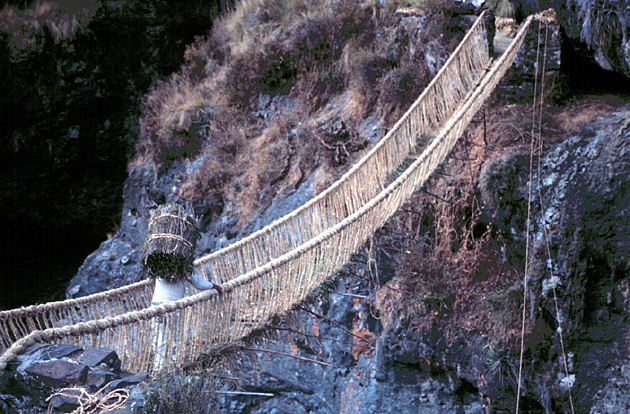
Inca rope bridges used local plant fibers — most notably grasses and other fibrous plants — twisted and braided into thick cables. Typical elements included a pair of main load-bearing cables, secondary hand-rail ropes and a running surface woven from bundled fibers. Wooden planks were seldom used in the highest, most remote crossings; the deck usually consisted of tightly bound grass mats. Anchoring to rock outcrops or stone abutments kept the spans secure.
- Main cables: two heavy braided ropes that carry the load (suspension rope principle).
- Handrails: lighter ropes to steady travelers.
- Deck: woven fiber matting or placed planks for foot traffic (bridges).
- Anchors: embedded stones, posts or tied to vegetation.
Construction, maintenance and social role
Building a rope bridge required coordinated communal labor and knowledge of rope making and knotting. Skilled teams braided long ropes from native grasses, joined segments, and stretched the cables across the gap. Because materials deteriorate under weather and use, bridges demanded periodic rebuilding — a task often organized as a communal or ritual event. The bridges accommodated pedestrians and livestock such as llamas, and did not serve wheeled transport.
Historically these crossings were documented by early chroniclers and were integral to message runners and military movements. They illustrate practical engineering: flexible yet strong, quick to renew and suitable for steep terrain. Some modern reconstructions follow traditional methods to preserve skills and cultural memory.
Today a few communities continue to rebuild or maintain rope bridges, both as working infrastructure and cultural heritage. Visitors may see reconstructed crossings at ceremonial rebuildings that sustain traditional techniques. The Inca rope bridge remains a vivid example of adaptive engineering that matched materials, environment and social organization to create reliable routes across difficult Andean landscapes. For further context see sources on suspension technology and Andean road networks: suspension bridges, bridge types, regional studies of canyons, and research into the Inca Empire and its roads. Additional practical and cultural notes are available via educational links: wheeled transport history, pedestrian routes, livestock use.
Questions and answers
Q: What are Inca rope bridges?
A: Inca rope bridges are simple suspension bridges built over canyons and gorges to provide access for the Inca Empire.
Q: What were Inca rope bridges suitable for?
A: Inca rope bridges were suitable for pedestrians and livestock as Inca people did not use wheeled transport.
Q: What is the significance of Inca rope bridges?
A: Inca rope bridges are an excellent example of Inca innovation in engineering and were an important part of the Inca road system.
Q: Who frequently used Inca rope bridges?
A: Runners delivering messages throughout the Incan empire frequently used Inca rope bridges.
Q: What kind of traffic was limited to Inca rope bridges?
A: Only pedestrians and livestock traffic were limited to using Inca rope bridges.
Q: What were the benefits of Inca rope bridges over canyons and gorges?
A: Inca rope bridges provided access over canyons and gorges, making it easier for people and livestock to cross and deliver goods from one place to another.
Q: How did Inca people transport goods if not by wheeled transport?
A: Inca people transported goods by using pedestrians and pack animals such as llamas, as wheeled transport was not used in the Inca Empire.
Related articles
Author
AlegsaOnline.com Inca rope bridge: design, history, and cultural importance Leandro Alegsa
URL: https://en.alegsaonline.com/art/46991