
Ignoratio elenchi: the fallacy of irrelevant conclusion
An informal logical fallacy in which an argument, though possibly coherent, fails to address the issue at hand—also called irrelevant conclusion; rooted in Aristotelian theory of refutation.
Ignoratio elenchi is an informal fallacy in which a speaker offers an argument that may be internally coherent yet does not actually respond to the question or dispute being considered. The phrase is often translated as "irrelevant conclusion" or "irrelevant thesis." Its Latin name combines ignoratio (ignorance) with elenchi, derived from the Greek ἔλεγχος (elenchos), meaning a refutation or disproof. The term highlights a lapse in argumentative relevance: the line of reasoning may be logically constructed but it misses the point it was meant to settle.
Image gallery
1 Image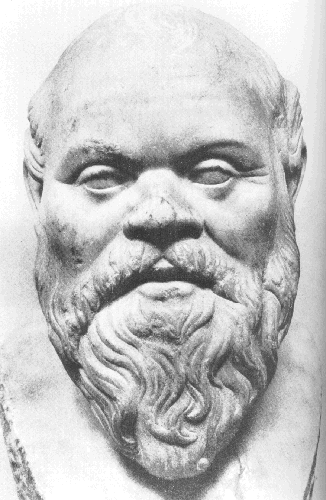
How to recognize it
Ignoratio elenchi can be detected when the conclusion offered does not answer the original claim or when the premises, even if true, do not bear on the matter under discussion. It differs from a factual error or flawed evidence; the mistake lies in relevance rather than in the truth of premises. Common indicators include:
- Shift of topic: responding to a different question than the one posed.
- Conclusion mismatch: the stated conclusion does not follow from, or is unrelated to, the initial issue.
- Overly broad or misdirected rebuttal that avoids the central point.
History and classical roots
The notion has deep roots in classical philosophy. Aristotle discussed mistakes in refutation and argued that many fallacies stem from an ignorance of what counts as a proper refutation. In his treatment, an arguable central error is failing to engage the actual issue, an idea later writers summarized using the Latin label ignoratio elenchi. Modern logic tends to use the term more narrowly than the broad role Aristotle ascribed to it; for historical context see Aristotle's discussions and general treatments of fallacy classification at introductory resources.
Examples and common forms
Concrete examples make the pattern clear. If someone asks whether a law reduces crime and the reply points to the personal virtue of the law's sponsor, the response may be true but is irrelevant to the law's effectiveness. Likewise, answering a question about environmental impact by citing economic benefits avoids the central empirical issue. Typical forms include:
- Answering criticism of a policy by attacking unrelated character traits of its proponents.
- Providing general moral statements when a specific causal claim was requested.
- Offering statistics that do not pertain to the questioned hypothesis.
Relationship to other fallacies
Ignoratio elenchi overlaps with and should be distinguished from several related fallacies. A non sequitur is any conclusion that does not logically follow from its premises; ignoratio elenchi is a subtype where the conclusion is simply off-topic. A red herring is a deliberate diversion to a different subject; ignoratio elenchi can be accidental or intentional. For practical guidance on spotting related errors, consult overview material such as fallacy guides.
Understanding ignoratio elenchi improves critical reading and debate: it encourages assessors to check not only whether arguments are valid or premises true, but whether they actually address the question asked. Clear argumenation requires alignment of question, evidence, and conclusion—failure of that alignment is at the heart of this longstanding logical fault.
Questions and answers
Q: What is ignoratio elenchi?
A: Ignoratio elenchi is an informal fallacy where an argument that may be valid, does not address the issue in question.
Q: What does "elenchi" mean?
A: "Elenchi" is from the Greek word "έλεγχος," meaning an argument of disproof or refutation.
Q: What does Aristotle believe about ignoratio elenchi?
A: Aristotle believed that ignoratio elenchi is a mistake made by a questioner while attempting to falsify a respondent's argument, and it amounts to ignorance of logic.
Q: Can logical fallacies be reduced to ignoratio elenchi, according to Aristotle?
A: Yes, Aristotle goes so far as to say that all logical fallacies can be reduced to what he calls ignoratio elenchi.
Q: Is the kind of mistake described in the first paragraph the only way that ignoratio elenchi is used in modern times?
A: Yes, modern use limits this term much more narrowly to the kind of mistake described in the first paragraph above.
Q: What is the translation of "ignoratio elenchi"?
A: "Ignoratio elenchi" can be roughly translated by ignorance of refutation or ignorance of what a refutation is.
Q: What is another name for ignoratio elenchi?
A: Ignoratio elenchi is also known as irrelevant conclusion or irrelevant thesis.
Tags
Related articles
Author
AlegsaOnline.com Ignoratio elenchi: the fallacy of irrelevant conclusion Leandro Alegsa
URL: https://en.alegsaonline.com/art/46614
Sources
- philosophy.lander.edu : Introduction to Logic: Ignoratio Elenchi