
Antimony pentafluoride (SbF5)
A strong, corrosive Lewis acid and fluorinating agent, SbF5 (antimony(V) fluoride) is notable for forming superacids and the hexafluoroantimonate anion used in catalysis and materials chemistry.
Antimony pentafluoride, commonly written SbF5 and sometimes called antimony(V) fluoride, is a highly reactive inorganic compound in which antimony is in the +5 oxidation state and is bonded to five fluorine atoms. General information on the compound highlights its role as one of the strongest simple Lewis acids and its importance in modern fluorine chemistry.
Image gallery
3 Images

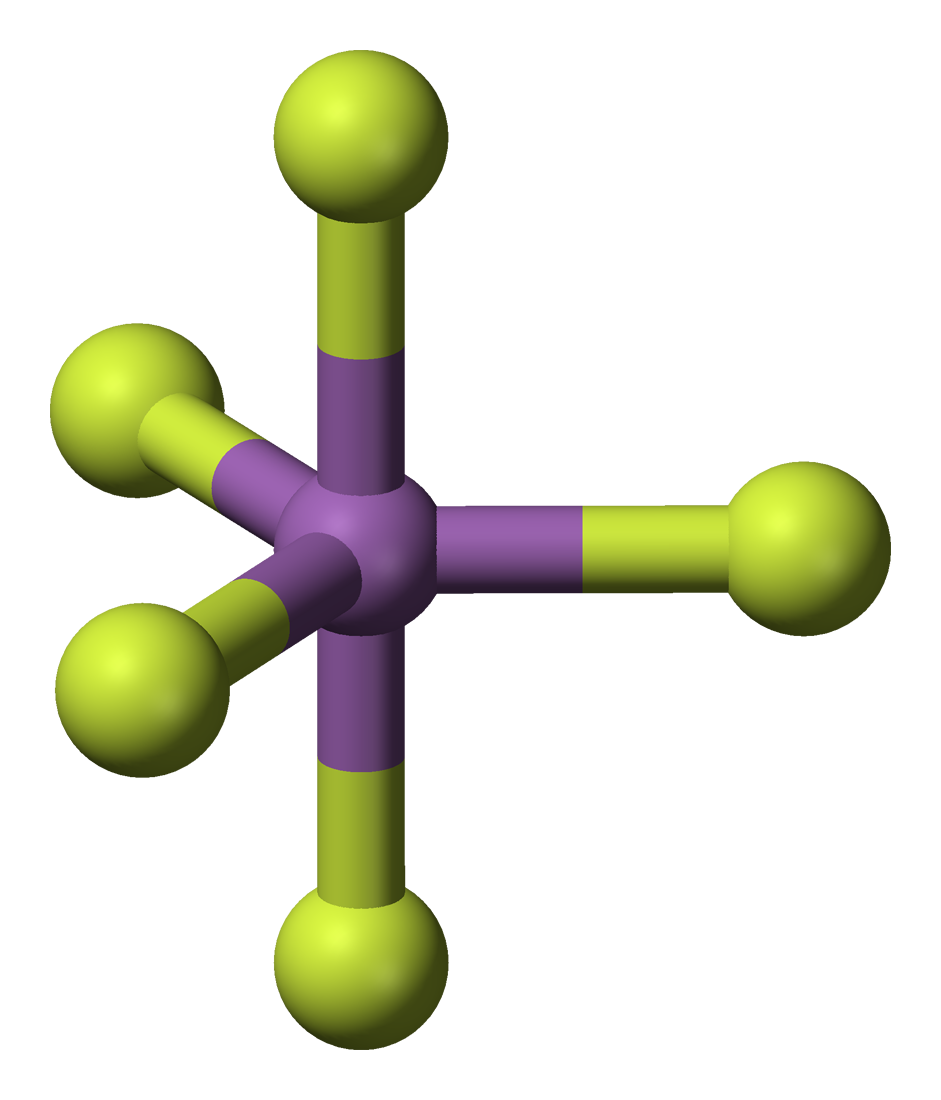
Structure and physical properties
In the isolated molecular form each antimony center is five-coordinate, but in condensed phases molecules tend to associate by bridging fluoride ligands to give oligomeric or polymeric assemblies. SbF5 is typically encountered as a colorless to slightly yellow liquid that can fume in moist air. It is nonflammable but highly corrosive and readily reacts with water and basic substances.
Chemical behavior and notable reactions
SbF5 is a very strong Lewis acid that accepts fluoride ions, forming stable anions such as the hexafluoroantimonate anion (SbF6−). It combines with hydrogen fluoride (HF) to produce fluoroantimonic acid (commonly written HSbF6), one of the best-known superacids. These properties make SbF5 useful for stabilizing carbocations and for generating strongly acidic media in research. Bonding and coordination considerations explain much of its reactivity.
Uses and applications
- As a catalyst or co-catalyst in specialty organic transformations such as alkylation and hydride abstraction.
- To generate non-coordinating anions (SbF6−) used in coordination chemistry and ionic liquids.
- In superacid research and selective fluorination or oxidizing processes under controlled conditions.
Practical applications are generally limited to controlled laboratory or industrial environments because of the compound's extreme reactivity. Superacid formation with HF is one of the most widely cited uses.
History, preparation and handling
SbF5 is prepared industrially and in laboratories by fluorination routes starting from antimony-containing precursors. Its development followed advances in fluorine chemistry and led to important discoveries in acid-catalyzed reactions. Because it reacts vigorously with water to produce hydrogen fluoride and other corrosive products, handling requires dry conditions, corrosion-resistant equipment, and strict safety procedures. Practical handling guidelines emphasize inert atmosphere techniques.
Environmental and safety considerations are critical: SbF5 is toxic and corrosive, and waste must be neutralized and disposed of in accordance with regulations. For further technical details and data, consult specialized references and material safety resources. Further reading
Questions and answers
Q: What is antimony pentafluoride?
A: Antimony pentafluoride is a chemical compound that is also known as antimony(V) fluoride with the chemical formula SbF5.
Q: How many antimony-fluorine bonds does antimony pentafluoride have?
A: Antimony pentafluoride has 5 antimony-fluorine bonds.
Q: What is the oxidation state of antimony in antimony pentafluoride?
A: The oxidation state of antimony in antimony pentafluoride is +5.
Q: What is the significance of +5 in antimony pentafluoride?
A: +5 is the oxidation state of antimony in antimony pentafluoride, which means that antimony has lost five electrons.
Q: What is the molecular weight of antimony pentafluoride?
A: The molecular weight of antimony pentafluoride is 216.74 grams per mole.
Q: Is antimony pentafluoride a solid or a liquid?
A: Antimony pentafluoride is a highly reactive solid at room temperature.
Q: What are some of the key properties of antimony pentafluoride?
A: Some of the key properties of antimony pentafluoride include its highly reactive nature, its ability to act as a powerful Lewis acid, and its significant role in certain chemical reactions.
Related articles
Author
AlegsaOnline.com Antimony pentafluoride (SbF5) Leandro Alegsa
URL: https://en.alegsaonline.com/art/4660