
Iceni: Iron Age tribe of East Anglia and the Boudiccan revolt
The Iceni were an Iron Age Celtic people of eastern Britain, centred on Norfolk and parts of Suffolk. This article outlines their territory, society, coinage, relations with Rome, the revolt of Boudicca and archaeological legacy.
Overview
The Iceni were an Iron Age people who lived in eastern Britain before and during the early decades of Roman occupation. They are widely described as a Celtic tribe whose territory covered much of what is now Norfolk and parts of Suffolk and neighbouring lowland areas. The Iceni are best known in later sources for the uprising led by the queen Boudicca, but their history also includes well-attested regional settlement patterns, local craft traditions and monetary issues.
Image gallery
8 Images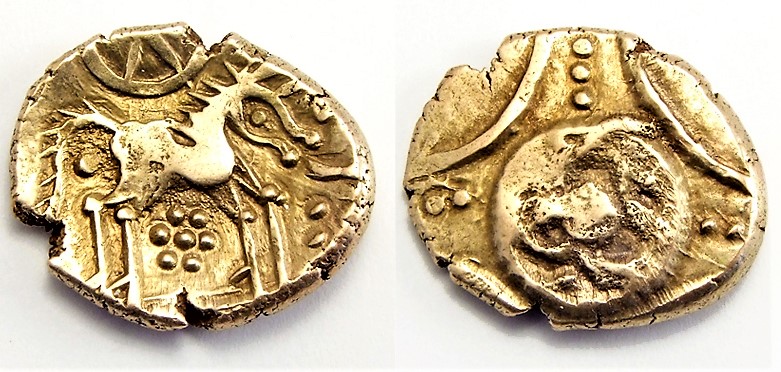


Territory and society
The Iceni occupied a landscape of arable plains, fen margins and river valleys that supported mixed farming, stock rearing and local trade. Settlement evidence shows farmsteads with timber roundhouses and occasional defended farm enclosures; at least one planned Roman-period centre, Venta Icenorum, later marked the civic reorganisation of the area near modern Caistor St Edmund. Social organisation probably combined household farming units with a warrior aristocracy who controlled wealth and prestige goods.
Economy, craft and coinage
Archaeological finds indicate active local craft production. Ironworking, pottery manufacture and metalworking are recorded across the region. The Iceni issued distinctive coins—often copper-alloy and imitative of wider British types—that help archaeologists trace trade, chronology and political authority. Such coinage, together with decorated harness fittings and personal ornaments, illustrates a material culture with regional styles and links to wider Iron Age Britain.
Religion, burial and material expressions
Religious practice is known mainly from burial evidence, votive deposits and objects recovered from wetlands. Funerary remains range from inhumations to cremation burials with grave goods, reflecting status differences and shifting rites over time. Wetland deposits including metalwork appear to have ritual significance across Iron Age Britain and are found in areas associated with the Iceni.
Contact with Rome and political arrangements
The Roman invasion of Britain in AD 43 under Emperor Claudius brought the Iceni into direct contact with imperial power. Roman strategy combined military presence with diplomatic arrangements: some native rulers were treated as client kings or allies. One such arrangement involved Prasutagus, whose relations with Rome and whose defeat of expectations over inheritance and property are recorded as a factor in later unrest. Roman governors sometimes attempted disarmament and fort construction to secure the province, policies that produced local tensions.
The Boudiccan revolt (AD 60–61)
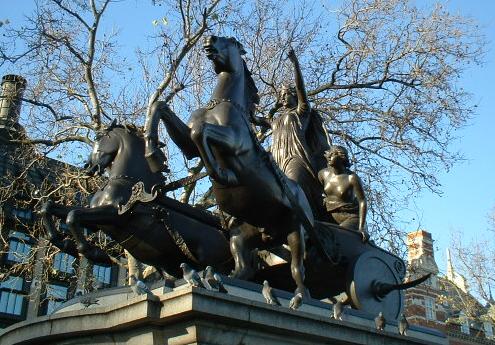
The most dramatic episode associated with the Iceni is the revolt of AD 60–61, led by Boudicca after a series of confrontations over the treatment of her family and the seizure of property. Contemporary Roman historians describe a coalition of the Iceni and neighbouring peoples that attacked Roman and Romanized settlements; while reports must be treated critically, archaeological and literary evidence confirm a significant and destructive uprising that was ultimately defeated by Roman forces. The revolt highlighted the fragility of Roman control in newly annexed territories.
Aftermath and Romanisation
In the decades after the revolt the region became further integrated into Roman Britain. Venta Icenorum developed as an administrative centre; villas and rural Roman-style material culture appear in some local contexts, indicating varying degrees of Romanisation. Yet rural life and many local traditions persisted, and the pace and extent of change differed across communities.
Archaeology and sources
Knowledge of the Iceni depends on a combination of archaeological fieldwork and the accounts of Roman writers. Classical narratives provide names and broad outlines of events but reflect Roman viewpoints and should be interpreted alongside physical evidence. Systematic excavations at settlement sites, cemetery studies and the recovery of hoards and other finds continue to refine understanding of Iceni chronology, economy and social structure.
Legacy and historiography
The figure of Boudicca has become an enduring symbol in British historical memory and popular culture. Scholarly treatment balances dramatic literary accounts with careful archaeological context. Regional museums and heritage organisations display Iceni finds and publish research that informs both specialist study and public engagement; for introductions and further information consult museum catalogues, regional archaeological trusts and general surveys of Iron Age and Roman Britain.
Notable sites and finds
- Venta Icenorum (near Caistor St Edmund): later Roman civitas centre and key excavation site.
- Local hoards and metalwork: coins, harness fittings and personal ornaments provide insight into wealth and craft.
- Farmsteads and burial sites across Norfolk and Suffolk that illustrate rural life and burial practices.
For accessible overviews and specialist work see general introductions to Celtic Britain (Celtic studies), tribal summaries (tribal overviews), regional heritage pages for Norfolk (Norfolk resources) and Suffolk (Suffolk resources), studies of Roman Britain under Claudius and his successors (Roman Britain) and dedicated accounts of the Boudiccan revolt (Boudicca).
Questions and answers
Q: Who were the Iceni?
A: The Iceni were a Celtic tribe who lived in Great Britain, in the area of modern-day Norfolk and Suffolk.
Q: When did Emperor Claudius invade Great Britain?
A: Emperor Claudius invaded Great Britain in the year 43 AD.
Q: Who was the ruler of the Iceni at the time of the Roman invasion?
A: At that time, Antedios was the ruler of the Iceni.
Q: Why was there little economic exchange between the Iceni and the Romans?
A: The Iceni feared a loss of cultural identity, which meant that the Romans saw the relationship with the Iceni as a bad one.
Q: What did the Roman governor, Publius Ostorius Scapula, do in the year 47?
A: The Roman governor, Publius Ostorius Scapula, decided to disarm the tribes the Romans had bad relations with, in the year 47, and to build new Roman fortifications.
Q: Who was Boudicca and what did she do?
A: Boudicca was Prasutagus' wife who incited the Iceni, and a few allied tribes, into resisting the Romans. This resistance took place in the years 60 and 61, but was not successful.
Q: Where was the capital of the Iceni located?
A: At the end of the first century, the Iceni had their own capital, Venta Icenorum, located near the modern-day village of Caistor St Edmund.
Related articles
Author
AlegsaOnline.com Iceni: Iron Age tribe of East Anglia and the Boudiccan revolt Leandro Alegsa
URL: https://en.alegsaonline.com/art/46458