
Antigonid dynasty (Macedonian Hellenistic ruling house)
Macedonian royal house descended from the Diadoch Antigonus I. It ruled parts of Greece and Macedonia in the Hellenistic era until Rome ended the line after the Battle of Pydna (168 BC).
Overview
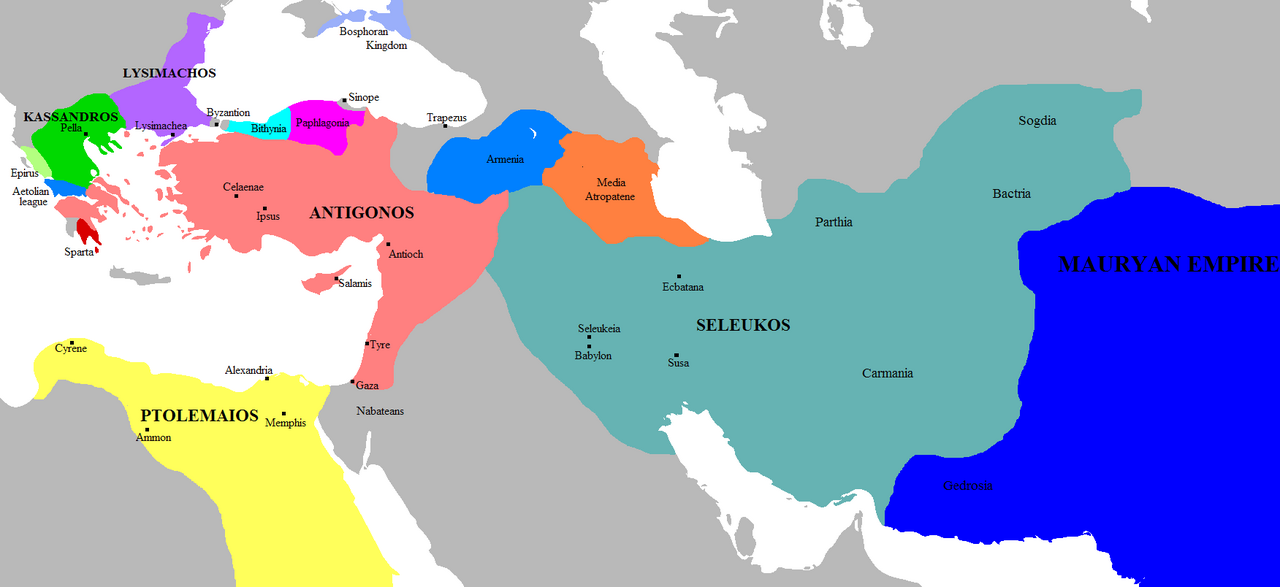
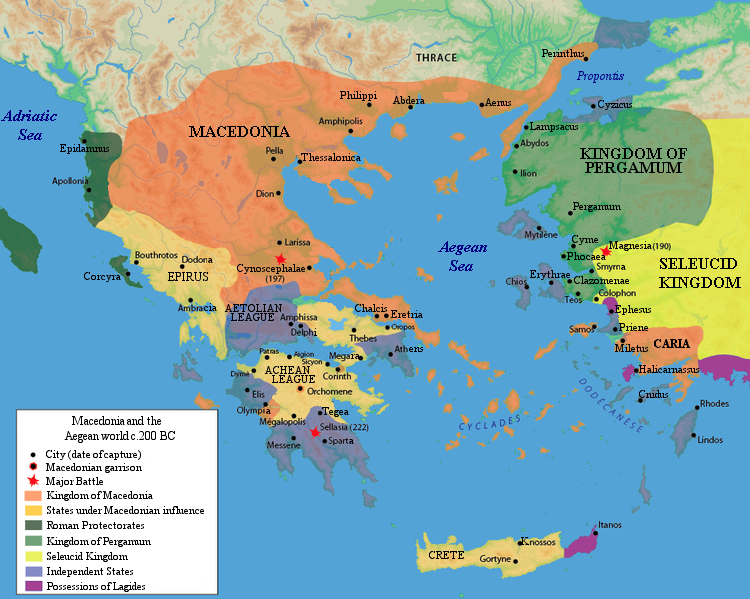
The Antigonid dynasty was a Hellenistic royal house that traced its origins to one of Alexander the Great's generals, Antigonus I Monophthalmus. Members of this family claimed kingship in the decades after Alexander's death (323 BC) and eventually established a lasting monarchy in Macedonia and parts of Greece during the 3rd and 2nd centuries BC. Their rule is best remembered for attempts to secure Macedonian hegemony in Greece and for clashes with rival successor kingdoms and, ultimately, the Roman Republic.
Image gallery
7 Images



Origins and foundation
Antigonus I rose among the Diadochi (Alexander's successors) as a powerful satrap and general; later generations of his family styled themselves kings. His son Demetrius I Poliorcetes declared himself king in the early Hellenistic period and projected dynastic ambitions across the eastern Mediterranean. The family line that came to be called Antigonid consolidated control over Macedonia under Antigonus II Gonatas, who re-established stable rule after the turbulent wars of the successors and local uprisings.
Notable rulers and chronology
- Antigonus I Monophthalmus (the One-eyed) — originator of the house and prominent Diadoch.
- Demetrius I Poliorcetes — famed for sieges and transient control of Macedon.
- Antigonus II Gonatas — consolidated the dynasty's hold on Macedonia and Greece.
- Philip V and Perseus — later kings whose conflicts with Rome culminated in defeat.
Administration, culture and military
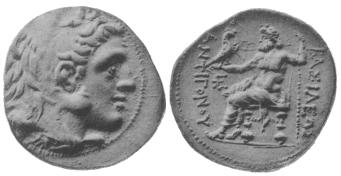
The Antigonids continued Macedonian royal traditions: a central king supported by a court, mercenary forces and Macedonian phalanx troops. They issued coinage bearing royal portraits, patronized cities and sanctuaries, and engaged in diplomacy and war with other Hellenistic states such as the Seleucids and Ptolemies. Their policy combined Macedonian military structures with Hellenistic court culture, promoting urban ties in Greece while relying on veteran officers and foreign mercenaries.
Conflicts and collapse
The dynasty repeatedly faced Greek rivals and external pressures. Its later rulers became entangled in hostilities with Rome as Rome expanded eastward. The Antigonid state ceased to exist after decisive Roman victories in the 2nd century BC: Roman intervention dismantled Macedonian power following campaigns culminating in the decisive Roman victory at the Battle of Pydna in 168 BC. The fall of the Antigonids marked the end of independent Macedonian monarchy and deeper Roman control over Greece and the eastern Mediterranean.
Legacy and significance
The Antigonid dynasty bridged the era of Alexander's fragmented empire and the final Roman annexation of the Greek world. It preserved elements of Macedonian kingship, influenced Hellenistic political balances, and left numismatic, archaeological and literary traces studied by historians. For background on the dynasty's founder see Antigonus I Monophthalmus, for Roman interactions consult sources at Roman–Hellenistic relations, and for the concluding battle consult accounts linked at Battle of Pydna.
Questions and answers
Q: What was the Antigonid dynasty?
A: The Antigonid dynasty was a Macedonian dynasty.
Q: Who were the kings of the Antigonid dynasty?
A: The kings of the Antigonid dynasty were part of the family of Alexander the Great's general Antigonus I Monophthalmus.
Q: How did the Antigonid dynasty end?
A: The Antigonid dynasty ended when the Roman Empire conquered the area after the Battle of Pydna in 168 BC.
Q: Who was Antigonus I Monophthalmus?
A: Antigonus I Monophthalmus was a general of Alexander the Great and the founder of the Antigonid dynasty.
Q: When did the Roman Empire conquer the area of the Antigonid dynasty?
A: The Roman Empire conquered the area of the Antigonid dynasty after the Battle of Pydna in 168 BC.
Q: Why was Antigonus I Monophthalmus called "the One-eyed"?
A: Antigonus I Monophthalmus was called "the One-eyed" because he lost one of his eyes in battle.
Q: What was the significance of the Antigonid dynasty?
A: The Antigonid dynasty was significant as it was a Macedonian dynasty and was founded by a great general of Alexander the Great.
Related articles
Author
AlegsaOnline.com Antigonid dynasty (Macedonian Hellenistic ruling house) Leandro Alegsa
URL: https://en.alegsaonline.com/art/4644