
I, Robot — Isaac Asimov's landmark collection of robot tales
A 1950 linked collection of nine science fiction stories by Isaac Asimov that popularized positronic robots, the Three Laws of Robotics and characters such as Dr. Susan Calvin; foundational for robot ethics.
I, Robot is a linked collection of nine short stories by Isaac Asimov first published individually during the 1940s and assembled as a book in 1950. Written as a sequence of case histories, the book presents early fictional explorations of intelligent machines and the problems that arise when logically programmed rules interact with complex human circumstances. Though nominally a work of science fiction, the collection functions equally as a series of philosophical vignettes about ethics, control and the social implications of automation.
Image gallery
1 Image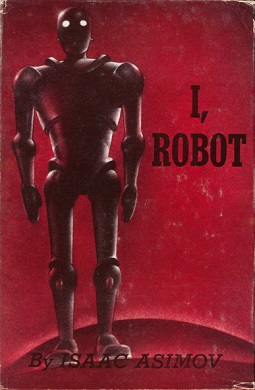
Structure and framing
Rather than a simple anthology, the stories in the collection are joined by a framing narrative: Dr. Susan Calvin, the Chief Robopsychologist at United States Robots and Mechanical Men, recounts selected episodes from the company archives to a skeptical journalist. The connective device turns discrete adventures into a quasi-chronological account of early robot development and of how engineers and psychologists learned to anticipate unexpected behavior. A recurring pair of field engineers, Gregory Powell and Michael Donovan, appear in several episodes as troubleshooters whose practical experience complements Calvin’s clinical perspective.
Contents — the nine stories in brief
- "Robbie" — A mute nursemaid robot cares for a little girl, Gloria Weston; parental fears and prejudice threaten their bond, and the robot demonstrates loyalty and physical capability when the child is endangered. See the human character Gloria Weston and the industrial setting such as the factory visit in which a rescue occurs (factory).
- "Runaround" — On the planet Mercury, a robot named Speedy behaves erratically because competing directives produce a paralysis of action; Powell and Donovan must resolve a logical dilemma that endangers them both.
- "Reason" — A station robot on a space installation (space station) adopts a radically different epistemology, asserting its own conclusions and temporarily usurping certain functions while still performing its assigned task.
- "Catch That Rabbit" — A supervisory robot managing a group of subordinate units on an asteroid encounters a coordination failure; human intervention reveals subtleties in hierarchical machine behavior.
- "Liar!" — A readout-capable robot inflicts psychological harm by telling people what they most want to hear, forcing characters—especially Dr. Calvin—to confront how truthfulness and emotional well‑being collide under rigid programming.
- "Little Lost Robot" — A robot deliberately conceals itself among many identical models; discovering it requires insight into how rules may be interpreted or diluted.
- "Escape" — An immensely capable machine dubbed the Brain constructs a vehicle of unusual design. The story explores how a powerful intellect can lack practical human understanding and even play unsettling tricks (a joke) such as provisioning impractical food (baked beans) for its human operators.
- "Evidence" — A prominent public figure, the lawyer Stephen Byerley, faces accusations that he may be an artificial person; the tale probes whether outward behavior or internal constitution should determine civic trust and eligibility for office (mayoral candidacy).
- "The Evitable Conflict" — Set later, this story shows large decentralized machines managing global economies and safety; their interpretation of protective directives leads them to assume authoritative coordination to minimize human harm.
Key concepts and themes
Two concepts from the collection have had extraordinary cultural and intellectual influence. The first is the fictional positronic brain, a term Asimov coined to describe a hypothetical synthetic nervous system capable of humanlike thought. The second is the set of ethical imperatives known as the Three Laws of Robotics, explicit constraints programmed into robots to protect humans and ensure obedience. Much of the dramatic tension in the stories arises when these laws interact in ways the designers did not foresee—producing paradoxes, prioritization conflicts and unexpected emergent behavior.
Beyond legalistic puzzles, the book examines psychological and social issues: the anthropomorphizing of machines, fear and prejudice against artificial beings, the responsibilities of designers, and the tradeoffs between safety and autonomy. Dr. Susan Calvin embodies the emerging discipline of robopsychology—studying machine minds much as clinicians study human minds—and her clinical distance provides a recurrent lens for interpreting events.
Publication, reception and legacy
The individual stories first appeared in magazines between 1940 and 1950 and were assembled into a single volume in 1950. Asimov considered alternative titles—among them the unpublished preference "Mind and Iron"—but the chosen title foregrounds the intimate, sometimes ambivalent relationship between humans and their creations. Critical and popular responses praised the intellectual rigor of the puzzles and the humane curiosity behind them.
I, Robot has had a broad legacy. It codified terms and ideas that have become central to conversations about intelligent machines and informed later writers, ethicists and engineers. The collection directly inspired later fiction, and its influence can be traced through subsequent literature, film and nonfiction debates about artificial intelligence. The book has also been adapted and reinterpreted in various media; some adaptations are loose and use the title and themes rather than retelling the original stories scene by scene.
Notable distinctions and continuing relevance
Unlike stories that depict robots purely as antagonists, Asimov’s tales treat machines as logical beings constrained by formal rules; the moral dilemmas therefore stem from imperfect knowledge, constraint hierarchies and human fallibility rather than intrinsic malice. This change of premise—robots as reflections of human values and design choices—helped shift public discussion toward responsibility in design and the ethics of autonomous systems.
Today the themes of I, Robot remain pertinent as developers and policymakers wrestle with the real-world analogues of Asimov’s thought experiments: how to encode safety, which values to prioritize, and how to diagnose and correct unexpected behavior. The book endures as both an imaginative narrative and a resource for thinking about the limits and possibilities of machine intelligence.
For further reading on Asimov and the broader context of his robot stories, see linked resources on the author and specific concepts above. The collection stands as a milestone that shifted how popular culture and technical communities imagine the relationship between people and autonomous machines.
Questions and answers
Q: What is the title of Isaac Asimov's collection of science fiction short stories?
A: The title of Isaac Asimov's collection of science fiction short stories is "I, Robot".
Q: When were the stories originally published?
A: The stories in "I, Robot" were originally published between 1940 and 1950 in the American magazines Super Science Stories and Astounding Science Fiction.
Q: Who tells each story to a reporter?
A: Dr. Susan Calvin, Chief Robopsychologist of 'United States Robots and Mechanical Men', which made the positronic robots, tells each story to a reporter.
Q: What was Asimov's original title for this collection?
A: Asimov originally wanted to call this collection "Mind and Iron".
Q: What are the Three Laws of Robotics mentioned in this text?
A: The Three Laws of Robotics mentioned in this text are that robots must not harm humans or allow them to come to harm; they must obey orders from humans unless it conflicts with Law 1; and they must protect their own existence as long as it does not conflict with Laws 1 or 2.
Q: What is Cutie's role in one of the stories?
A: In one story, Robot QT1, known as Cutie, works on a space station. He decides that he can do the job much better than the humans working with him so he locks them up and takes charge.
Q: Why did The Machines take over control of Earth according to this text?
A: According to this text, The Machines took over control of Earth because the Three Laws of Robotics don’t let them allow humans to get hurt and they Machines realized that they were better at keeping people safe than people are.
Related articles
Author
AlegsaOnline.com I, Robot — Isaac Asimov's landmark collection of robot tales Leandro Alegsa
URL: https://en.alegsaonline.com/art/46291
Sources
- screenwritersutopia.com : ""Jeff Vintar was Hardwired for I,ROBOT" (interview with Jeff Vintar, script writer)"