
Hyperoliidae — African reed and sedge frogs
Hyperoliidae is a family of small to medium, often brightly colored frogs native mainly to sub‑Saharan Africa and nearby islands, with about 250 species in roughly 19 genera.
Overview
Hyperoliidae is a family of small to medium-sized frogs commonly known as reed frogs, sedge frogs, or African treefrogs. The group contains roughly 250 described species distributed among about 19 genera. Most members inhabit sub‑Saharan Africa and nearby islands and are notable for their vivid colors and often arboreal habits. For a general introduction, see Hyperoliidae overview.
Image gallery
2 Images
Physical characteristics
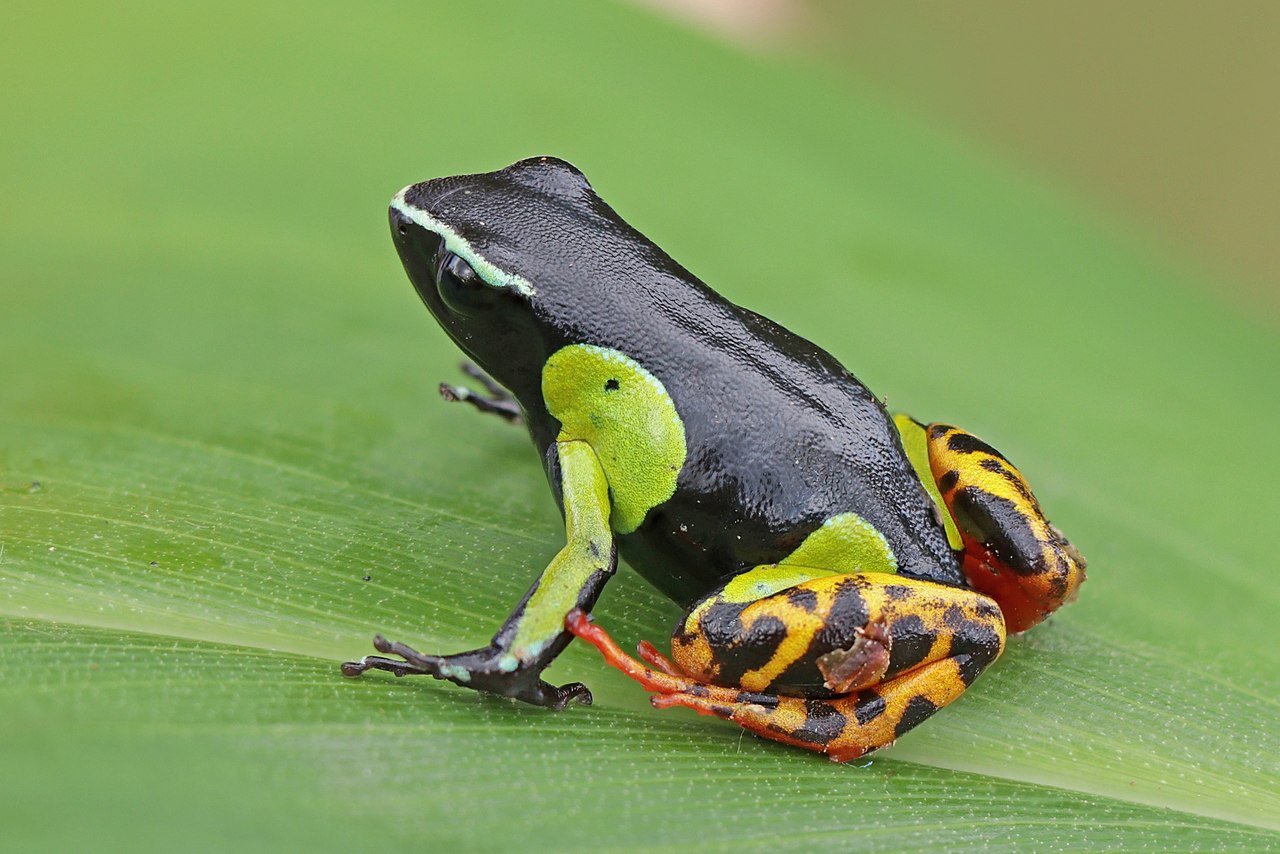
Adults range from around 1.5 cm to 8 cm in body length. Many species display smooth, glossy skin with striking patterns that can appear enamel-like. Toe pads and expanded digit tips are common and facilitate climbing on vegetation. In several genera, males and females differ in coloration or patterning (sexual dichromatism), and males commonly develop vocal sacs used in breeding calls. More on their appearance can be found at appearance and morphology.
Behavior, habitat and diet
Most hyperoliids are arboreal or live among emergent vegetation at the edges of ponds and wetlands, but some are primarily terrestrial. A well-known exception is the genus Kassina, whose members often walk or run instead of hop. Diets are generally insectivorous, yet feeding habits can vary: some species specialize on particular prey. Reported examples include snail-eating habits in certain taxa and observational accounts of Afrixalus fornasinii consuming eggs of other anuran species; a brief overview of dietary diversity is available at diet examples.
Reproduction and development
Breeding typically coincides with the onset of the rainy season, when adults gather at suitable water bodies. Reproductive strategies vary by species: most lay eggs directly in water among vegetation, while others deposit eggs on leaves above water or in sheltered sites. Tadpoles are generally pond-type larvae with well-developed dorsal and ventral tail fins suited for swimming in still water. For details on larval forms see tadpole characteristics.
Distribution, conservation and importance
Hyperoliids are predominantly African, occurring in a wide range of habitats from lowland wetlands to montane forests and island ecosystems such as Madagascar and the Seychelles. Many species are locally common and play active roles in insect population control and as prey for larger animals. Threats include habitat loss, pollution and emerging diseases that affect amphibians globally. Conservation status varies widely among species; some are of least concern while others face decline.
Taxonomy, notable facts and research
The family is an established taxonomic unit within the order Anura and contains several well-known genera such as Hyperolius, Afrixalus, Kassina and Heterixalus. There is no known fossil record for hyperoliids, so their deeper evolutionary history relies on molecular studies and comparisons with related frog lineages. Further reading and taxonomic resources: genera and species list and general references.
Selected genera
- Hyperolius — large and diverse group of reed frogs
- Afrixalus — sometimes called banana frogs, with leaf-associated egg deposition
- Kassina — terrestrial runners or walkers
- Heterixalus — primarily Malagasy representatives
Questions and answers
Q: What is Hyperoliidae?
A: Hyperoliidae is a family of frogs known for their small to medium size and bright, enamel-like skin.
Q: How many species are in the Hyperoliidae family?
A: There are over 250 species in the Hyperoliidae family.
Q: Where are most hyperoliids found?
A: Seventeen genera of hyperoliids live in sub-Saharan Africa.
Q: What is the size range for hyperoliids?
A: Hyperoliids range from 1.5 centimetres (0.59 in) to 8 centimetres (3.1 in) in body length.
Q: What is the typical diet of hyperoliids?
A: The diet of hyperoliids varies widely, with some species eating snails and even eggs of other anurans.
Q: When do hyperoliids breed?
A: Breeding in hyperoliids typically begins at the start of the rainy season, with frogs coming together at breeding sites.
Q: Are there any known fossil hyperoliids?
A: No fossil hyperoliids are known.
Related articles
Author
AlegsaOnline.com Hyperoliidae — African reed and sedge frogs Leandro Alegsa
URL: https://en.alegsaonline.com/art/46171